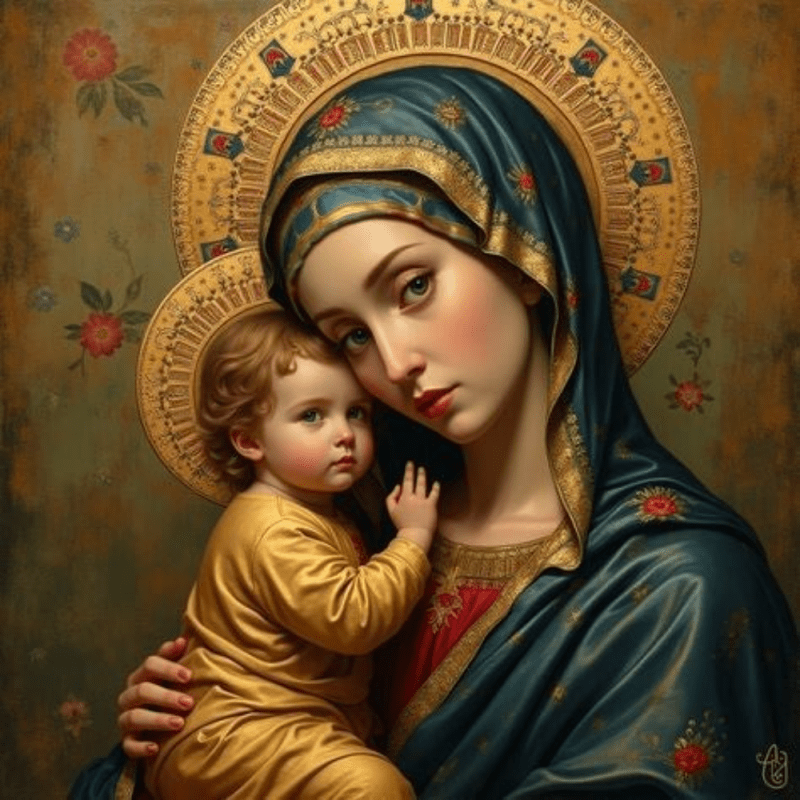
New Eve

inimicitias ponam inter te et mulierem
et semen tuum et semen illius
ipsa conteret caput tuum
et tu insidiaberis calcaneo eius
God said to the serpent:
‘I will put enmities between thee and the woman,
and thy seed and her seed:
she shall crush thy head,
and thou shalt lie in wait for her heel.’
Genesis 3, 15 {DRB}
The Protoevangelium, commonly referred to as the First Gospel, is a significant passage in Genesis 3:15, which alludes to the conflict between humanity and evil. A Hebrew epicene personal pronoun, hūʾ, may have been initially utilized in this context. ₁ This unique pronoun has only one form that can refer to either male (hû) or female (hî) in the singular, allowing the verse to state: “He” or “She” shall crush your head, and you shall lie in wait for his or her heel. In the Catholic tradition, this passage is rich with theological implications. The woman and her offspring are interpreted as closely linked in their opposition to the serpent, which is often understood to represent evil or sin. This relationship underscores the notion that the struggle against wickedness is not solely the woman’s battle; her child—seen as a reference to Jesus Christ—also plays a crucial role in this cosmic conflict. Thus, from various theological perspectives, the woman or her offspring can be viewed as actively striking at the serpent’s head, symbolizing a triumph over sin and evil. ₂ This collaboration between the woman and her child highlights the importance of both figures in the salvation narrative, suggesting that their intertwined fates are pivotal in the overarching story of redemption.
In the Gospel of St. Luke, both Mary and Jesus are presented as equally “blessed” (euologemene / eulogemenos) because they share a complete separation from Satan and the destructive forces of sin and death (Lk 1:42). This distinction highlights Mary’s unique role in salvation history, elevating her above all women, including Eve, whose disobedience brought about humanity’s fall. Mary, through her acceptance of God’s will and her divine motherhood, collaborates with Jesus in the redemptive mission to undo the consequences of Adam and Eve’s transgression. This partnership is significant; it illustrates how God consecrated and set the Mother and her Son apart for a sacred purpose—restoring humanity to its intended state of grace. Their relationship symbolizes hope and the potential for renewal, counteracting the serpent’s deception that led to the Original Sin (Gen 3:14). By embodying a life free from sin, Mary and Jesus exemplify the divine blessing that comes from total obedience to God’s plan.
.

Then Uzziah said to her, “Blessed are you daughter, by the
Most High God, above all the women on earth; and blessed be the
Lord God, who guided your blow at the head of the chief of our enemies.”
Judith 13, 18
In the original Hebrew text, the Protoevangelium presents a dual subject (He-She), allowing for interpretations that include male, female, or even plural forms of the epicene pronoun. This flexibility in interpretation is contingent upon one’s theological perspective. The Latin translation, particularly the female pronoun (ipsa) adopted by St. Jerome in his composition of the Latin Vulgate, underscores Mary’s essential role in God’s redemptive plan. This divine plan culminated in the ultimate victory of her Son over the serpent—symbolizing evil—and its progeny: sin and death.
It is crucial to emphasize that the female rendering of the neuter pronoun does not imply that the final victory rests solely with the woman. Just as it was God who empowered Judith to deliver a decisive blow to Holofernes, thereby saving her people from imminent slavery and destruction, it was also God’s grace that inspired and guided Mary. Her affirmative response, the Fiat, at the Annunciation was a profound act of cooperation with God’s will. By agreeing to bear the Messiah, Mary played a pivotal role in the incarnation and embraced a profound commitment to the Divine mission of salvation. Furthermore, her enduring sorrow at the foot of the Cross reflects the depth of her participation in Christ’s sacrifice, as she stood as a witness to His suffering and, through her grief, fulfilled a vital aspect of God’s plan to reconcile humanity to Himself.
Similarly, Mary triumphantly crushes the head of the serpent—a symbol of evil and sin—by uniting her will with God’s divine plan. She becomes the vessel through which the Messiah enters the world through her unwavering faith, charity, and grace. This pivotal act allows Jesus to offer salvation to humanity, liberating us from the destructive consequences of sin and the grave threat of eternal separation from God, often referred to as spiritual death. The woman mentioned by God in His dialogue with the serpent is not Eve, the first woman who fell into disobedience. Instead, it is Mary, whom God promises will vindicate and restore honor to our fallen primordial mother. Through her profound act of faith in accepting the angel Gabriel’s message, Mary plays a crucial role in the salvation story, ushering in hope and reconciliation for all of humanity.

The early Church’s interpretation of Genesis 3:15 highlights Mary as a second Eve. This connection is clearly articulated in the apologetic writings of St. Irenaeus, a prominent Church Father, around 189 A.D. As the Bishop of Lyons, Irenaeus provides significant insight into the Apostolic Catholic faith by stating, “If Eve disobeyed God, then Mary was persuaded to be obedient to God; thus, the Virgin Mary may serve as the advocate for the Virgin Eve” (Against Heresies, 5:19:1). This interpretation enriches our understanding of the Protoevangelium, often seen as the first announcement of the Gospel, as it emphasizes the pivotal role of Mary. Mary embodies the promise of restoration and redemption through her role as the mother of Jesus, who is fully divine and human. By her willing acceptance and faithful cooperation with God’s plan, she vindicates our fallen primordial mother, Eve. She exemplifies the transformative power of obedience, charity, and grace in the salvation narrative. In this light, Mary stands as a powerful symbol of hope, intertwining the themes of disobedience and obedience that run throughout biblical history.
In classical Jewish theology, the concept of the woman as Daughter Zion symbolizes the idealized feminine figure representing the nation of Israel. Her offspring, which includes the righteous remnant of Israel and specifically the Messiah, play a pivotal role in the eschatological vision. Through the Messiah, people from all nations will come to know, worship, and accept God, ultimately achieving redemption from their sins when He appears at the culmination of this age. ₃ The Latin term ipse, meaning “he,” emphasizes the direct announcement of the final victory that will be realized through the Messiah. Significantly, this emphasis does not overshadow the essential role that the woman, or Daughter Zion, plays in the narrative. Her collaborative contribution to humanity’s redemption is vital, illustrating a partnership in the divine plan of salvation. This relationship underscores the interconnectedness of the roles of the woman and her offspring in the overarching story of redemption in Jewish thought.

St. Paul instructs us that all members of the Church participate in the profound victory over the Devil through their unwavering perseverance in faith. He emphasizes this in his epistle: “The God of peace will soon crush Satan under your feet” (Rom 16:20), illustrating the assurance of God’s ultimate triumph over evil through the faithful. In the divine order of grace, the Blessed Virgin Mary stands out as the preeminent member and prototype of the Church. Through her extraordinary act of faith, characterized by charity and grace, she consented to bear her Divine offspring, Jesus Christ, who came into the world to save humanity from sin and restore it to a preternatural life enriched by grace.
Every baptized individual shares in this victory, striking at Satan’s head each time they courageously resist temptations and align their actions with the will of God, empowered by His grace, as noted in James 4:17. Furthermore, as the Blessed Virgin Mary is a crucial moral channel of grace, she remains intimately connected with all of her Son’s disciples in their relentless struggles against the dragon, often symbolizing evil. Her prayerful intercession in Heaven serves as a source of strength and support for believers engaged in these spiritual battles, a testament to her enduring role as a mother and protector of the faithful, as expressed in Revelation 12:17.
Hence, the reading “she” (ipsa) does not equate Mary with Jesus by coordinating her merits with his. Surely, the final victory over Satan and what he has managed to work for humanity exclusively belongs to her Son in strict justice (meritum perfecta condigno) because of his divine essence and equality with the Father. His work of salvation was a theandric act. Yet, theologically, the female reading is acceptable from a correct point of view. Depending on what one wishes to emphasize, either the woman or her seed can be said to crush the serpent’s head. This isn’t an either-or but a both-and proposition. Mary crushes the serpent’s head by her supernatural merits (meritum de congruo) or right of friendship with God in cooperation with divine grace in and through the merits of her divine Son, who is the principal source of all saving grace.
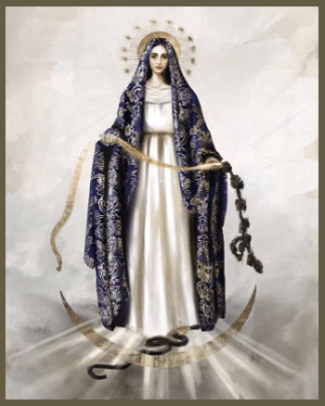
God, in His infinite wisdom and love, chose to become incarnate in order to reconcile the world to Himself. This profound act of salvation was made possible through the meritorious free consent of Mary, who embraced her divine calling to be the mother of our Lord and Savior. Her acceptance was in perfect alignment with God’s will, allowing the Incarnation to unfold according to His righteous design and eternal plan for humanity. In their respective roles, Jesus (ipse) and Mary (ipsa) worked in harmony to fulfill the prophecy of Genesis 3:15, together crushing the serpent’s head as a powerful symbol of overcoming sin and evil. This collaboration reflects the Divine initiative, where the humanity of Christ and Mary’s obedience play critical roles in salvation history.
Christ redeemed the world by taking on human flesh and serving as a ransom for sin, freely offering His blood as the ultimate sacrifice. His redemptive mission was achieved with divine necessity, yet it was made possible through Mary’s profound act of faith—a faith that worked in concert with love and the creative power of the Holy Spirit. Together, they exemplify a unique partnership in the divine plan, highlighting the vital importance of both the Incarnate Word and the receptive heart of Mary in the unfolding of God’s redemptive purpose for humankind.

Although our Blessed Lady was a finite and created being, she held a unique and exalted status in the divine order, distinct from God, who is infinite and uncreated. Her extraordinary grace allowed her to merit the Incarnation of Christ for herself and humanity. This divine favor was rooted in her being in a state of sanctifying grace—a profound and transformative state in which she fully participated in the divine life of God. This participation was illuminated by the sealing of the Holy Spirit, as reflected in scripture (2 Pet 1:4; 2 Cor 5:17; Eph 1:13; Phil 2:13; 1 Jn 3:7, 10, etc.).
Mary’s human nature was raised and transfigured through this divine grace, making her uniquely capable of responding to God’s call. Importantly, she could merit nothing from God apart from His efficacious grace, which empowered her to share in the supernatural life that comes from God. In recognition of her faithful acceptance, God honored her Fiat—her willing assent to His divine plan. The Lord’s handmaid acted not merely with her own perception but with an understanding enriched and clarified by God’s own supernatural vision. This allowed her to comprehend the depths of divine mystery before her. Moreover, she loved with an infinite and ardent supernatural love that coursed through her soul, deeply infused with God’s sanctifying grace, as beautifully expressed in her Magnificat (Lk 1:46). Through her profound connection with the divine, Mary became a pivotal figure in the redemptive history of humanity, illustrating the extraordinary impact of grace in a life fully surrendered to God.

In Elizabeth’s declaration of praise, “Blessed (eulogemene) are you among women,” the perfect passive participle is a Hebraism meaning “most blessed among women” or “blessed above all women” or Eve (Lk 1:42). We have an example in the following passage from the Hebrew Old Testament.
תְּבֹרַךְ֙ מִנָּשִׁ֔ים יָעֵ֕ל אֵ֖שֶׁת חֶ֣בֶר הַקֵּינִ֑י מִנָּשִׁ֥ים בָּאֹ֖הֶל תְּבֹרָֽךְ׃
“Blessed of women shall Jael the wife of Heber the Kenite be,
blessed above women shall she be in the tent.”
– Judges 5, 24
The second clause qualifies the first clause. The expression “blessed of women” implies Jael is blessed above all other women because of her singular deed in collaboration with YAHWEH. And how is it that Jael is supremely blessed?
She put her hand to the nail and her right hand to the workman’s hammer,
and with the hammer, she smote Sisera; she smote off his head
when she had pierced and stricken through his temples.
– Judges 5, 25-26

Our Lady of Guadalupe
Catholic scholars and apologists in favor of Jerome’s translation of the Hebrew Old Testament inform us that the Hellenistic Jewish philosopher Philo (c. A.D. 40) preferred the hi, ipsa reading, having argued from the Hebrew poetic technique known as parallel poetry (chiasmus). This form of poetry comprises three-quarters of the OT, mainly in the Book of Proverbs and the Psalms. Genesis 1:1-2:3 is chiastic in its structure as well. Although the Book of Genesis is a historical narrative written in prose, parallel poetry (expressing one idea in two or more different ways or the idea of one line following the concept of another) is a literary technique used when recording a spoken prophecy. Genesis 3:15 is the first Messianic prophecy found in the Bible, and God Himself pronounced it. Let us examine some examples of this literary device in the OT to see how concepts and ideas are structured to parallel each other in single passages. The verses below are taken from Hebrew Parallelism by Jeff A. Benner. ₄
Here, Psalm 15:1-3 and Isaiah 6:10 are broken down into their poetic sequences. Each thought is represented by the letters A-D, and each expression of thought is defined by the numbers 1 and 2.
A1. Lord, who may [dwell] in your [sanctuary]?
A2. Who may [live] on your [holy hill]?
B1. He whose [walk] is [blameless]
B2. and who [does] what is [righteous]
C1. who [speaks the truth] from his [heart]
C2. and has [no slander] on his [tongue]
D1. Who does his [neighbor] no wrong
D2. and [casts no slur] on his his [fellow man]
A. Make the [heart] of these people [fat]
B. and make their [ears] [heavy]
C. and [shut] their [eyes]
C1. lest they [see] with their [eyes]
B1. and [hear] with their [ears]
A1. and [understand] with their [heart],
and return and be healed.
Now, in Genesis 3:15, a couplet (distich) parallels the following couplet:
A1. I shall put enmities between [thee] and the [woman]
B1. and between [thy seed] and [her seed]
A2. [She] shall crush [thy head]
B2. and [thou] shalt lie in wait for [her heel]
We see that line A1 corresponds with line A2 and B1 with B2. The “woman” in line A1 refers to “she” in A2. Thus, to make the subject of line A2 “he” (ipse) or “it” (ipsum) and to say it relates to the seed in line B1 is bad Hebrew poetry. The “he” or “it” readings ruin the synonymous parallelism of this verse and so are more likely to be at variance with the author’s intention. Jerome consulted with eminent Jewish scholars while translating Hebrew into Latin in a monastery he had founded in Bethlehem. So, he could have considered this literary device when choosing pronouns.
The following pattern disrupts the rhythm of the verse by making an abrupt switch of focus between subjects:
You/woman
Your seed/her seed
He (It) shall crush your head/you lie in wait for his (its) heel.

In the sacred text, it is the woman who is in enmity with the serpent, while the woman’s seed is in enmity with the serpent’s seed: wicked humanity. If we accurately observe the parallelism here, we should reasonably conclude from the first enmity announced between the woman and the serpent that the subsequent pronouns refer to the first protagonist, the woman, and the first antagonist, the serpent. The pronoun ipsa thereby refers to the female protagonist who, because of the serpent’s antagonism and her opposition against it, victoriously crushes its head by her obedience to the will of God and in collaboration with Him as His “fellow worker” (1 Cor 3:9).
A radical shift to the woman’s seed certainly does violence to the rhythm of the passage from a literary perspective, though theologically, there is no conflict. As previously pointed out, the woman could be said to have crushed the serpent’s head by her act of faith since it resulted in her giving birth to the offspring who would achieve the final victory over it by destroying its dominion on earth. Mary crushed the serpent’s head in collaboration with her divine Son in concurrence with the graces he merited for her by his passion and death. And the merit of the temporal satisfaction our Blessed Lady made to God for the world’s sins received its worth from the eternal satisfaction our Lord had made to his heavenly Father.
Our Lord’s eternal expiation should be completed by the obedience of a promised woman and virgin who, not unlike Eve in the fulness of grace and the state of innocence, vindicates the primordial mother of all the living by untying the knot of her disobedience while never having fallen from His grace (Lk 1:28). Eve received her name after her fall from grace. She was no longer called “Woman” once she lost her innocence and virginity. Jesus addressed his immaculate mother, Mary, as “Woman” in allusion to the enmity his heavenly Father had put between her and the serpent in the wake of Eve’s transgression.
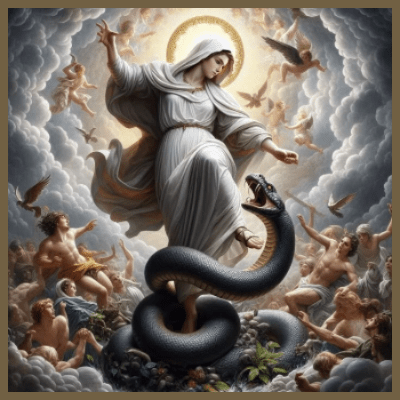
And the dragon was angry against the woman:
and went to make war with the rest of her seed,
who keep the commandments of God,
and have the testimony of Jesus Christ.
Revelation 12, 17
In Genesis 3:15, God addresses the serpent after Eve’s transgression, highlighting her pivotal role in mankind’s fall alongside Adam. This moment invites us to reflect on the significance of female figures in this narrative, particularly how their actions and moral choices contribute to the unfolding story of humanity’s restoration. God promises that the offspring of the woman will ultimately defeat the serpent, symbolizing hope and redemption from the consequences of sin introduced by this temptation.
The serpent, cunning and strategic, sought to undermine God’s creation by targeting Adam indirectly through his partner, Eve. This shows a deliberate choice to exploit their relational dynamics, presenting the temptation in a manner that would lead Eve to question God’s command. The serpent’s approach emphasizes the insidious nature of temptation, as it fosters doubt and disobedience by appealing to the desires of the heart. Consequently, it was through Eve, Adam’s helpmate, that the tragic decision was made, leading to their collective fall from grace.
By engaging with Eve rather than Adam directly, the serpent sought to fracture the intended unity between husband and wife, leading them both into rebellion against God. This choice highlights the intricate interplay between male and female roles in the narrative—each contributes to the outcome. Yet, it is through the moral agency of women that God’s promise of redemption begins to take shape. Ultimately, this story reflects not only the complexities of temptation and sin but also the profound implications of female agency in the overarching narrative of redemption in biblical theology.

The woman must vindicate herself by opposing the serpent. This can be achieved only through the woman whom God has promised will conceive and bear the Messiah by her act of faith, enabling Him to restore what Adam brought about through his sin. The fall of mankind from God’s grace was the result of Adam’s actions alone. The Blessed Virgin Mary stands against the serpent in her covenant with God, while her Son, our Lord and Savior Jesus Christ, is in opposition to the works of the serpent, which represents fallen mankind and creation. Christ, the second Adam, accomplished redemption and reconciled mankind to God, more than enough, with the help of His faithful and obedient “helpmate,” who remained true to God in her covenant with Him.
Eve is significant as the mother of all of Adam’s fallen descendants, representing the legacy of humanity’s initial disobedience to God. In stark contrast, the Blessed Virgin Mary is seen as the mother of all the new Adam’s regenerated offspring, symbolizing those restored to grace and communion with God through Christ’s redemption. Mary’s faithfulness and submission to God’s will enabled her to undo the consequences of Eve’s disobedience; it is said that she crushed the serpent’s head, thereby reversing the curse of sin that had entered the world. As a result, Mary embodies the pinnacle of righteousness, making her the mother of a new lineage characterized by holiness and divine grace.
Eve remains the progenitor of unrighteous offspring, with her firstborn son Cain notorious for his act of fratricide, marking the first murder in human history. Her transgression in the Garden of Eden led not only to her own fall from grace but also to humanity’s expulsion from paradise, establishing a legacy of sin. In this dichotomy, Mary represents hope and salvation, while Eve serves as a reminder of the consequences of disobedience. Together, their roles emphasize the transformative power of faith and grace in the narrative of salvation.
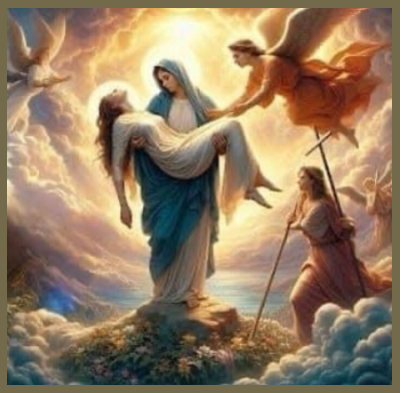
So, then, who are the offspring of the serpent? We find the answer summed up in 1 John 3:10-12: “By this the children of God and the children of the devil are obvious: anyone who does not practice righteousness is not of God, nor the one who does not love his brother. This is the message you have heard from the beginning: that we should love one another, not like Cain, who was of the evil one and slew his brother Abel. And for what reason did he slay him? Because his deeds were evil, and his brother’s righteous.” The seeds of the serpent, therefore, are people who possess the disposition of the Devil. They are consumed by pride, jealousy, and malice towards their neighbor and loathe what is righteous. And not unlike their progenitor, they hate God and all his righteous children, even to the point of persecuting and putting them to death because they bear witness to the truth against them.
In the apostolic age, [Pope] St. Clement l (A.D. 98) exhorts the faithful not to conduct themselves in the manner of the serpent’s offspring: “Seeing, therefore, that we are the portion of the Holy One, let us do all those things which pertain to holiness, avoiding all evil speaking, all abominable and impure embraces, together with all drunkenness, seeking after change, all abominable lusts, detestable adultery, and execrable pride. ‘For God,’ saith [the Scripture], ‘resisteth the proud, but giveth grace to the humble.’ Let us cleave, then, to those to whom grace has been given by God. Let us clothe ourselves with concord and humility, ever exercising self-control, standing far off from all whispering and evil speaking, being justified by our works, and not our words” (Epistle to the Corinthians, 30).
.
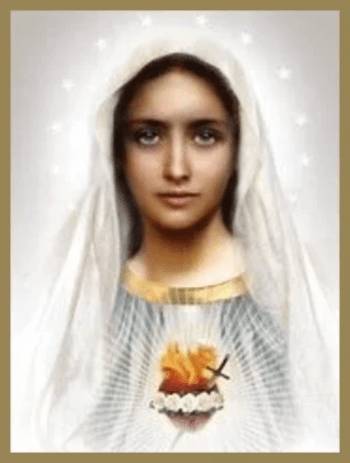
How long wilt thou be dissolute in deliciousness,
O wandering daughter?
For the Lord hath created a new thing upon the earth:
A woman shall compass a man.
Jeremiah 31, 22
Jeremiah lived during a tumultuous period in Judean history, roughly around the late 7th century to the early 6th century BCE. This was a time when the Kingdom of Judah faced an imminent threat from Babylon, culminating in the destruction of Jerusalem in 586 BCE. Jeremiah’s prophecies often addressed the moral and spiritual failings of the people, warning them of impending doom due to their disobedience to God. The overarching theme in Jeremiah’s writings is a call for repentance among the people of Israel. He often speaks about a new covenant that God would establish with His people after their exile, emphasizing forgiveness and restoration. The mention of a “new thing upon the earth” in this verse points to a transformative shift in relationships and societal norms that would occur under this new covenant.
The text from Jeremiah 31:22 carries profound implications, particularly when contextualized within the figures of Daughter Zion, Eve, and the Virgin Mary. Each of these women embodies different aspects of femininity and divine purpose in biblical literature.
Daughter Zion is often seen as a representation of Jerusalem or the Jewish people, personifying the relationship between God and His chosen ones. In this context, the phrase “O wandering daughter” speaks to the waywardness often attributed to Israel. The call for her to cease being “dissolute in deliciousness” suggests a need for repentance and a return to righteousness. The mention of a woman compassing a man can be interpreted as a reversal of traditional gender roles, indicating a time of transformation and redemption for Zion, which aligns with the broader themes of hope and renewal found in Jeremiah.
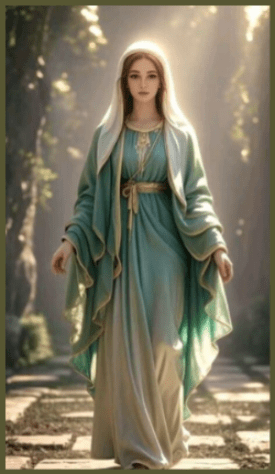
Eve, as the first woman in the biblical narrative, represents both the complexity of humanity and original sin. Her actions in the Garden of Eden led to the fall, highlighting themes of temptation and consequence. The phrase concerning a woman “compassing a man” can be seen in light of Eve’s role as the mother of all living and the beginning of humanity’s journey. In a way, this verse reflects a prophetic vision where feminine strength and agency come to the forefront, hinting at a corrective path toward reconciliation and salvation in the narrative of human history.
The Virgin Mary, viewed as a pivotal figure in Christianity, embodies the ideal of purity and obedience to God’s will. Her acceptance of the divine message and role as the mother of Jesus signifies the culmination of the prophetic hope spoken through texts like Jeremiah. The reference to a woman compassing a man can be interpreted through Mary’s unique relationship with Jesus—her motherhood represents a new covenant and a fulfillment of God’s promise. In Mary, femininity is empowered through submission to divine purpose, which ultimately leads to the redemption of mankind.
This prophetic text invites reflection on the evolving roles of women in biblical tradition. It contrasts a call to repentance with a vision of a restored covenant relationship, celebrating the power or influence of femininity through Daughter Zion, Eve, and Mary. Each serves as a reminder of the potential for transformation and a deeper understanding of God’s plan through female representation. The passage highlights a significant theological shift, foreshadowing a new era where women are not merely passive figures but active participants in the divine narrative.

Among all human beings, the Blessed Virgin Mary stands as the most perfect embodiment of divine grace, often described as the ultimate “portion of the Holy One.” She is adorned with the virtues of “concord and humility” and is richly bestowed with temperance, charity, and a pure heart. Unlike figures marked by pride, boastfulness, and harsh judgment, Mary exemplifies meekness and a profound poverty of spirit. In a world dominated by materialism and sin, she “stood far off” from the influences of worldly power, choosing instead to align herself with the divine purpose. It was for this reason that the angel Gabriel, a messenger from heaven, was sent to her, for she had “found grace with God” (Lk 1:30).
The moment of the Annunciation marked a pivotal point in salvation history—a moment that could not have occurred if Mary had possessed any traits associated with the serpent. She maintained a complete disconnection from the insidious temptations that led Adam’s wife astray, fully embodying the qualities of obedience and faithfulness that contrast sharply with those of the dragon. This radical difference granted her the unique ability to collaborate with God in the momentous act of crushing the serpent’s head, thereby securing salvation for humanity. In her purity and strength, Mary emerged as a beacon of hope, playing a crucial role in the divine narrative of redemption for the world.
The Virgin Mary, revered in Christian tradition as “a garden enclosed” and “a fountain sealed” (Songs 4:12), truly embodies the essence of purity and grace. Much like the Church, which is often referred to as the cherished bride of Christ, Mary serves as a symbol of unwavering faith and devotion. Embraced by the Holy Spirit at the Annunciation, she stands firm against the trials and tribulations of the world, unyielding and steadfast, shielded from the temptations of evil that so easily ensnare humanity. The serpent, representing satanic evil and deceit, could never penetrate the profound beauty of her soul—a beauty that radiates God’s glory and mercy, illuminating the world with the transformative light of the Messiah. Her divine qualities and extraordinary role in history emphasize her protection over humanity, as the gates of Hell are powerless against our Blessed Mother, exemplifying the triumph of good over evil. Mary’s strength and resilience remind us that the true spiritual struggle does not lie solely with the Devil himself but also with those who willingly choose to follow his deceptive ways. Jesus referred to such individuals as the “brood of vipers” (Mt 23:29-33), calling attention to the dangers of hypocrisy and falsehood.

In the vivid imagery of John’s vision, he depicts the fierce and formidable dragon poised to devour the Woman as she prepares to give birth to her Son. However, just as the dragon is about to strike, the child is miraculously snatched up to His throne in Heaven, escaping the grasp of evil. Meanwhile, the Woman, symbolic of the Virgin Mary, remains undeterred, continuing her battle against the dragon alongside her other offspring—those faithful followers who diligently keep God’s commandments and testify to the message of Jesus Christ. This Woman, revered as the spiritual mother of all the living, opposes Satan, who seeks to undermine her significance due to her unique role in salvation history and her dual maternity. She called forth the Messiah into the world by embracing faith that manifests through love.
Furthermore, through the same womb that bore Christ, she plays a pivotal role in the regeneration of humanity, empowering her spiritual children to persevere in faith while enduring trials beneath the Cross. Her unwavering obedience and moral participation in God’s divine plan not only fulfilled the prophecies of old but also effectively crushed the head of the serpent, rendering its boastful claims before God of having seduced Eve null and void. In this cosmic struggle, Mary embodies hope and redemption, exemplifying how God’s ultimate victory over sin and death is achieved through her, thus completing His grand design of salvation for all humanity.
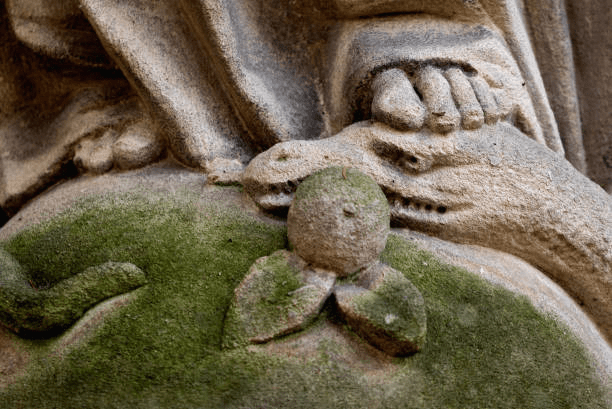
At the end of time, our Blessed Mother’s pierced Immaculate Heart will ultimately achieve victory, bringing about the definitive defeat of the Devil, who will bear the weight of his eternal humiliation. Only through an innocent woman, steadfast and untouched by sin, could his pride be shattered once and for all. If the Virgin Mary had not crushed the serpent’s head with her immaculate foot—symbolizing the ultimate triumph of good over evil—then the Devil would not just possess a trophy for all eternity; he would also have a claim to victory that would bind her – the Woman – in perpetual conflict with him. ₅ This would mean that the consequences of the Fall in the Garden of Eden could never be resolved. The redemption could not be a perfect and complete reciprocation of what had transpired in the Garden of Eden, leaving humanity with unfinished business between the divine and the fallen.

And you, O tower of the flock, the hill of the daughter of Zion,
to you shall it come, the former dominion shall come,
kingship for the daughter of Jerusalem.
Micah 4, 8
Early Sacred Tradition
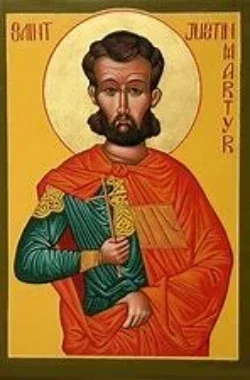
St. Justin Martyr [155 A.D]
Dialogue with Trypho, 100
“For Eve, who was a virgin and undefiled, having conceived the word of the
serpent, brought forth disobedience and death. But the Virgin Mary received
faith and joy, when the angel Gabriel announced the good tidings to her that
the Spirit of the Lord would come upon her, and the power of the Highest would
overshadow her: wherefore also the Holy Thing begotten of her is the Son of
God; and she replied, ‘Be it unto me according to thy word.’ And by her has
He been born, to whom we have proved so many Scriptures refer, and by whom
God destroys both the serpent and those angels and men who are like him; but
works deliverance from death to those who repent of their wickedness and
believe upon Him.”
.

St. Irenaeus [inter A.D. 180-189]
Against Heresies 3:22:24
“Consequently, then, Mary the Virgin is found to be obedient, saying, ‘Behold, O
Lord, your handmaid; be it done to me according to your word.’ …Thus, the knot
of Eve’s disobedience was loosed by the obedience of Mary. What the virgin Eve
had bound in unbelief, the Virgin Mary loosed through faith.”
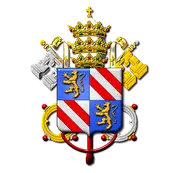
“These ecclesiastical writers in quoting the words by which at the beginning of the
world God announced his merciful remedies prepared for the regeneration of
mankind — words by which he crushed the audacity of the deceitful serpent and
wondrously raised up the hope of our race, saying, “I will put enmities between
you and the woman, between your seed and her seed” — taught that by this divine
prophecy the merciful Redeemer of mankind, Jesus Christ, the only begotten Son of
God, was clearly foretold: That his most Blessed Mother, the Virgin Mary, was
prophetically indicated; and, at the same time, the very enmity of both against the
evil one was significantly expressed. Hence, just as Christ, the Mediator between
God and man, assumed human nature, blotted the handwriting of the decree that
stood against us, and fastened it triumphantly to the cross, so the most holy
Virgin, united with him by a most intimate and indissoluble bond, was, with him
and through him, eternally at enmity with the evil serpent, and most completely
triumphed over him, and thus crushed his head with her immaculate foot.”
Pope Piux lX (Apostolic Constitution)
Ineffabilis Deus
[8 December 1854]

Ave Maria
Notes & Sources
1 John Emerton, Studies on the Language and the Literature of the Bible ( Boston: Brill, 2015) pp. 136-144. ” See Chapter 8: Was There an Epicene Pronoun hūʾ in Early Hebrew?: “The Pentateuch differs from the other books of the Hebrew Bible in that the third-person feminine singular personal pronoun hî ʾ is regularly written (apart from a few exceptions) with the consonants of the masculine form hwʾ, although a Qere perpetuum indicates that it is to be read with the vowel î. The old theory that the pronoun hûʾ was originally used for both masculine and feminine has been generally abandoned by scholars, chiefly because different forms for the two genders are found in cognate languages and in Hebrew itself outside the Pentateuch (with only a handful of exceptions), and it was thought unlikely that Hebrew in the Pentateuch was exceptional in this mat-ter. It was therefore generally agreed that the use of hwʾ for the feminine in the Pentateuch is secondary, and that it was based on a manuscript in which the pronoun was written hʾ for both genders (although the masculine and feminine forms were pronounced differently)… The view that early Hebrew had an epicene pronoun hūʾ has, however, been revived by Gary Rendsburg in a form that avoids a major difficulty of the older form of the theory.”
2 The English translation of the Tanakh (Hebrew Bible) by the Jerusalem Publishing Society has: “they shall bruise thy head, and thou shalt bruise their heel.”
3 The Hebrew word translated as “offspring” or “seed” (zera) in Genesis 3:15 is a collective noun and is grammatically masculine. Since it is a collective noun, zera takes the singular male pronoun standing in its place. Theologically in a Jewish context, therefore, this is a reference to the righteous descendants of the woman or Daughter Zion who metaphorically embody all true Israelites in the spirit or righteous offspring of Eve.
4 See the article About Hebrew Parallel Poetry called Chiasmus, by Jeff A. Benner at the Ancient Hebrew Research Center available online.
5 Gary G. Michuta, Making Sense of Mary (Wixom: Grotto Press, 2013), Chapter 3, pp. 55-60. See the co-relation between Christ’s “superabundant victory and the perfect redemption,” which requires Mary’s moral participation in God’s perfect plan for the fall to be entirely reversed in its major and minor incidents.
 Marian Catholic
Leave a comment