But when the time had fully come, God sent forth his Son,
born of a woman, born under the law,
Galatians 4, 4
For in him dwelleth all the fulness of the Godhead bodily.
Colossians 2, 9
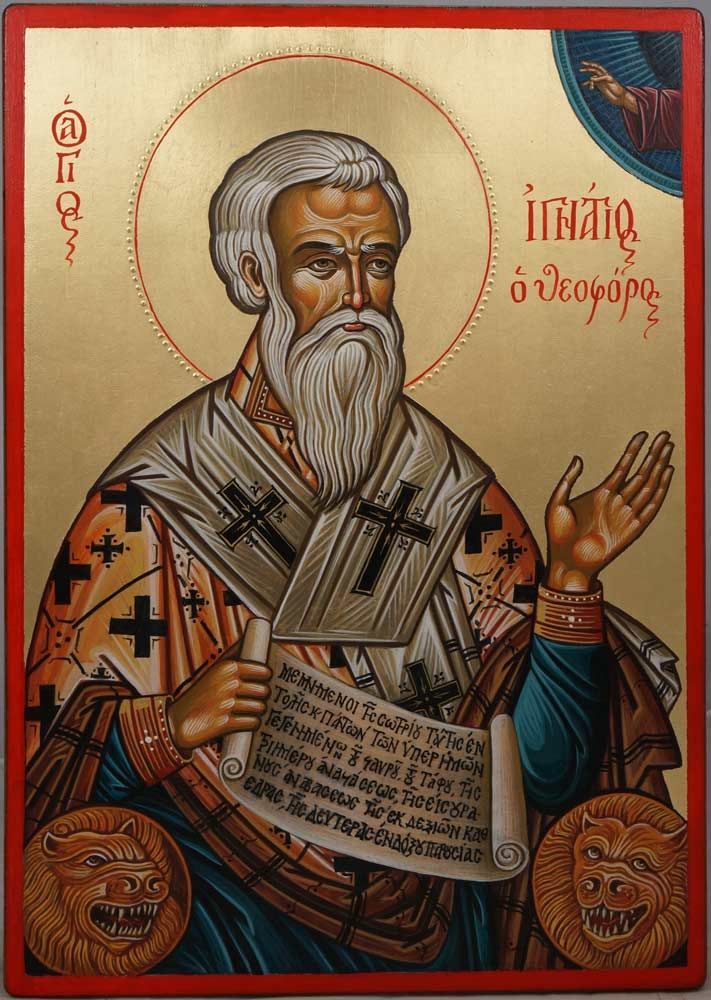
St. Ignatius of Antioch (c A.D. 110)
To the Ephesians, 7
“There is one Physician who is possessed both of flesh and spirit;
both made and not made; God existing in flesh; true life in death;
both of Mary and of God; first possible and then impossible,
even Jesus Christ our Lord.”
Ignatius of Antioch’s epistle to the Ephesians, 7, provides a profound exploration of the nature of Jesus Christ from the perspective of one of the early Church’s most influential bishops. Ignatius, who lived in the first century A.D., wrote this letter as the early Christian community grappled with various interpretations of Christ’s identity, especially amid Gnostic teachings. The Gnostics posited that Jesus was not truly human, but rather a phantom or spiritual illusion, devoid of physical existence. In response to these heretical views, Ignatius articulates a robust theology that emphasizes the true humanity and divinity of Jesus Christ.
The Bishop of Antioch begins by presenting Jesus as the “one” physician, a metaphor that encapsulates his dual nature—fully human yet fully divine. Ignatius emphasizes that Jesus possesses both flesh and spirit, reinforcing the belief in the Incarnation, in which God took on human form. In a striking affirmation of the Virgin Mary’s role, he asserts that she conceived and bore a divine person, underscoring that Jesus was as truly human as any person in the world. This vital aspect of Christian doctrine asserts that the Incarnation was not merely symbolic but a genuine union of the divine and human natures in one person.
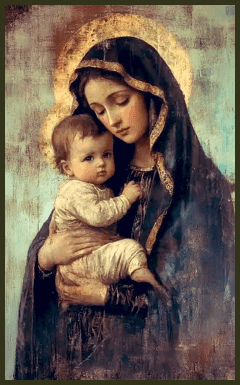
The phrase “both made and not made” is particularly significant, as it captures the theological nuance that while Jesus was born into the world and thus made as a human being, he is simultaneously uncreated and eternal in his divine essence. Ignatius describes Jesus as “God existing in flesh,” a powerful declaration that underscores the belief that Jesus is not just an extraordinary man but the very embodiment of God, who chose to reveal Himself in a tangible, relatable way through humanity.
Moreover, Ignatius refers to Jesus as “true life in death,” a poignant expression that highlights the central Christian tenet of resurrection. This phrase conveys the belief that through his death, Jesus triumphed over mortality and sin, offering eternal life to all who believe in him. Ignatius stresses that this resurrection is foundational to the Christian faith, providing hope and a promise of life beyond death.
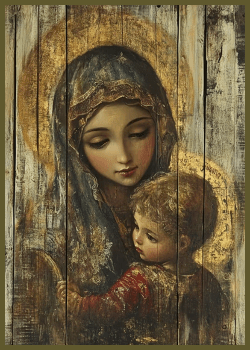
Additionally, Ignatius articulates the idea that Jesus is “both of Mary and of God.” This statement points to the mystery of the Incarnation, asserting that Jesus, also known as the Divine Logos, was born from a human mother, Mary, yet conceived by the Holy Spirit. This dual origin emphasizes the belief that Jesus embodies both human and divine attributes, a core mystery that defines orthodox Christian belief.
Finally, Ignatius’ description of Jesus as “first possible and then impossible” captures the paradox of the Incarnation. He acknowledges that Jesus entered the world as a vulnerable human baby, experiencing the same earthly existence as everyone else. However, this ordinary beginning contrasts sharply with his divine mission. As the Son of God, he performed miraculous deeds, transcending human limitations, and ultimately, through his resurrection, he overcame death itself. This transformative belief that Jesus is both human and divine shapes the foundation of Christian faith and practice, as articulated by Ignatius of Antioch.
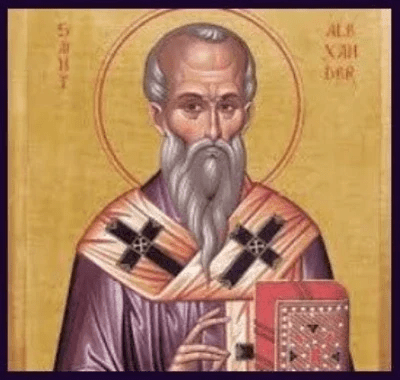
St. Alexander of Alexandria (A.D. 324)
Epistle to Alexander, 12
“After this, we receive the doctrine of the resurrection from the dead, of
which Jesus Christ our Lord became the first fruits; Who bore a Body, in
truth, not in semblance, derived from Mary the mother of God in the fullness
of time sojourning among the race, for the remission of sins: who was
crucified and died, yet for all this suffered no diminution of His Godhead.
In the Epistle to Alexander, Alexander, Bishop or Patriarch of Alexandria, addresses one of the core tenets of Christianity: the doctrine of the resurrection from the dead. This doctrine asserts that Jesus Christ, our Lord, was the inaugural figure to rise from the dead, often referred to as the “first fruits” of the resurrection. This event is profound in its implications, as it not only demonstrates God’s supreme power over death but also instills hope for eternal life among believers.
Alexander emphasizes the tangible, physical nature of Jesus’ resurrection, arguing that He possessed a real, corporeal body rather than merely appearing to rise. This distinction is vital; it confirms that Jesus’ resurrection was an actual, bodily resurrection, not merely a spiritual or metaphorical one. The author goes on to clarify that Jesus’ body was made of Mary, the Mother of God, at an appointed time in history, specifically to deliver forgiveness of sins to humanity. This point underscores the doctrine of the incarnation, which holds that Jesus is both fully human and fully divine. To reject the concept of Mary’s divine maternity essentially denies the reality of Christ’s incarnation, as well as His bodily resurrection, entwining these beliefs in their hypostatic order—the union of divine and human natures in Jesus.
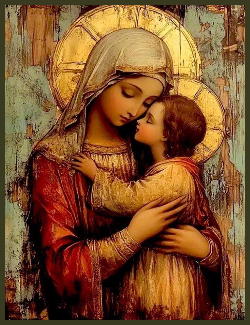
Furthermore, Alexander asserts that, despite undergoing crucifixion and death, Jesus did not forfeit any aspect of His divine nature. This belief illustrates that Jesus remained fully God and fully human, even after His death and resurrection. Such understanding is crucial as it elevates Jesus beyond the status of a mere human prophet, affirming Him as the divine Son of God.
The text captured in Alexander’s epistle affirms the Christian understanding of the resurrection of Jesus Christ as an essential element of the faith. It highlights the physical reality of His resurrection and the importance of the incarnation, asserting that Jesus embodies both human and divine essence. Ultimately, it presents the promise of eternal life for believers, made attainable through Jesus’ triumphant victory over death, reinforcing the foundational hope that lies at the heart of Christian belief.
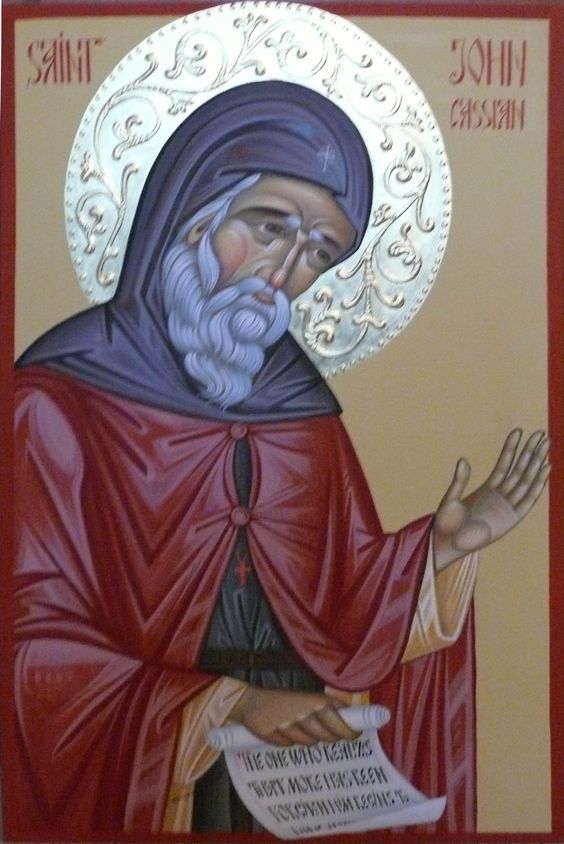
St. John Cassian (A.D. 430)
The Incarnation of Christ, II:2
“And so you say, O heretic, whoever you may be, who denies that God was born of the
Virgin, that Mary the Mother of our Lord Jesus Christ, ought not to be called Theotokos,
i.e., Mother of God, but Christotokos, i.e., only the Mother of Christ, not of God. For no
one, you say, brings forth what is anterior in time. And of this utterly foolish argument
whereby you think that the birth of God can be understood by carnal minds, and fancy
that the mystery of His Majesty can be accounted for by human reasoning, we will, if God
permits, say something later on. Meanwhile, we will now prove by Divine testimonies that
Christ is God and Mary is the Mother of God.”
John Cassian’s The Incarnation of Christ, II:2, offers an insightful theological response to heretical views that reject the divinity of Christ and ultimately challenge the title Theotokos (“Mother of God”) as applied to Mary, the mother of Jesus. In this section, St. John meticulously dismantles the arguments presented by those who would deny Christ’s divine nature. He underscores that such arguments stem from a misguided assumption: that human reasoning alone can adequately comprehend the mystery of the divine incarnation.
Cassian acknowledges the complexities surrounding the topic and promises a more in-depth exploration of these theological intricacies in subsequent writings. His commitment to future discourse indicates the seriousness with which he approaches the subject, signaling to his audience that these theological disputes warrant careful, thoughtful consideration.
In the interim, Cassian offers a robust analysis of various Divine testimonies that not only affirm the divinity of Christ but also establish the rightful use of the title “Mother of God” for Mary. He draws upon a diverse array of theological sources and engages deeply with prior theological debates, enriching his argument with references and terminology that would resonate with early Christian theologians. For instance, while he acknowledges the term “Christotokos,” which emphasizes Mary as the mother of Christ, he argues that this terminology fails to encapsulate the fullness of her role in the mystery of the incarnation. He asserts that Mary, through her willing acceptance of God’s plan, holds a unique and elevated status in salvation history.
Overall, John Cassian’s text serves as a passionate and articulate defense of orthodox Christian belief. He employs a mix of rigorous theological reasoning and scriptural evidence to argue compellingly that Christ is indeed divine and deserving of worship and that Mary’s role as the Mother of God is not merely a title but a profound truth reflecting the nature of the incarnation itself. His elevated, scholarly language epitomizes the gravity of the issues at hand and demonstrates the depth of theological insight required to engage the challenges posed by heretical thought.
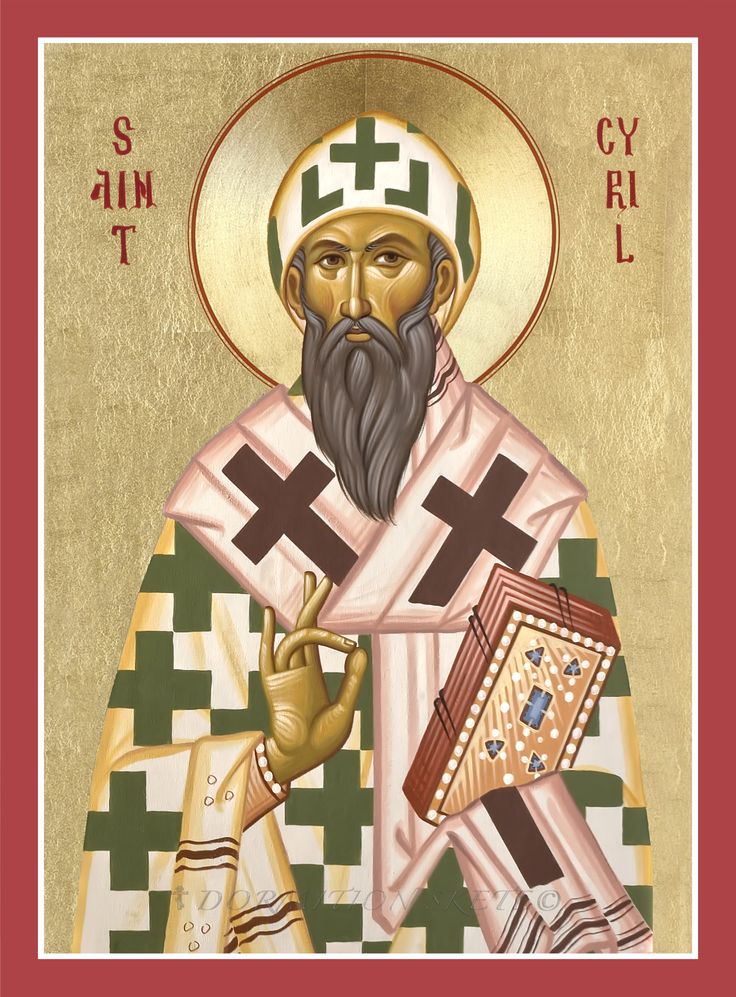
St. Cyril of Alexandria (A.D. 430)
To Nestorius, Epistle 17:11
“But since the Holy Virgin brought forth after the flesh, God personally
united to the flesh; for this reason, we say of her that she is Theotokos, not as
though the nature of the Word had its beginning of being from the flesh, for
he was in the beginning, and the Word was God, and the Word was with
God…but, as we said before, because having personally united man’s nature
to himself…”
The text is a theological statement that explains the nature of Jesus Christ and the role of the Virgin Mary in Christian theology. It is a complex statement that requires a closer examination of its various components to fully appreciate its meaning. Nestorius, Patriarch of Constantinople, rejected the title ‘Theotokos’ for the mother of the incarnated Word. He insisted that Mary, as a human being, could give birth only to a human being and not to God. He persisted in calling the Virgin Mary “Christotokos.” Nestorian Christology promotes the prosopic union of two persons (divine and human) in Jesus Christ, thus trying to avoid and replace the hypostatic union of two natures in one divine person.
The Patriarch of Alexandria begins his discourse by focusing on the Holy Virgin Mary, who holds a paramount position as the mother of Jesus Christ. He emphasizes that Mary gave birth to a child with a physical body, underscoring the extraordinary truth that this child was not merely human but, in fact, God himself, fully united with human flesh. This fundamental concept is at the heart of the doctrine of the Incarnation, which articulates that Jesus Christ embodies both complete divinity and full humanity.
Cyril elaborates on the profound significance of this doctrine by introducing the term “Theotokos,” a Greek title meaning “God-bearer” or “Mother of God.” By giving birth to Jesus, Mary assumes this esteemed title, becoming the Theotokos, the one who bore within her womb the very essence of God. Cyril’s assertion underscores that this union of the divine and the human does not imply that Christ’s divine nature originated in Mary’s flesh. Rather, he emphasizes that divinity and humanity are intimately united within the personhood of Jesus, maintaining the integrity and distinctiveness of both natures.
Furthermore, Cyril alludes to the pre-existent Word of God, who is described as fully divine and coexisting with God from the very beginning of time. This reference draws from the Scriptural passage of John 1:1, which famously states, “In the beginning was the Word, and the Word was with God, and the Word was God.” Cyril clarifies that the Word did not emerge from human origin; rather, he freely chose to unite himself to human nature through the agency of Mary. This highlights the extraordinary role that the Virgin Mary plays in the divine narrative, as she becomes the vessel through which God enters into human experience.
Cyril ardently affirms that Mary is not merely the mother of a human being but holds the exalted title of being the mother of God incarnate in human form. This assertion elevates Mary’s importance in Christian theology, positioning her as a central figure in the story of salvation. By underscoring her unique role as Theotokos, Cyril reiterates the vital connection between Mary and the mystery of the Incarnation, with significant implications for the faith and the understanding of the nature of Christ within the Christian tradition.
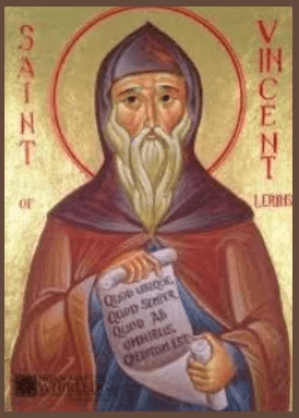
St. Vincent of Lerins (A.D. 434)
Commonitory for the Antiquity and Universality of the Catholic Faith
“For by the singular gift of Him who is our Lord and God, and withal, her own son, she is to be confessed most truly and most blessedly–The mother of God ‘Theotocos,’ but not in the sense in which it is imagined by a certain impious heresy which maintains, that she is to be called the Mother of God for no other reason than because she gave birth to that man who afterward became God, just as we speak of a woman as the mother of a priest, or the mother of a bishop, meaning that she was such, not by giving birth to one already a priest or a bishop, but by giving birth to one who afterward became a priest or a bishop. Not thus, I say, was the holy Mary ‘Theotocos,’ the mother of God, but rather, as was said before, because in her sacred womb was wrought that most sacred mystery whereby, on account of the singular and unique unity of Person, as the Word in flesh is flesh, so Man in God is God.”
Vincent of Lerins, in his work Commonitory for the Antiquity and Universality of the Catholic Faith, presents a profound examination of Mary, the mother of Jesus, highlighting her distinct and unparalleled relationship with God. This text articulates the essential belief that Mary is to be honored and acknowledged as the most truly blessed Mother of God, a title encapsulated in the Greek term ‘Theotokos,’ which translates as “God-bearer.”
In his discourse, Vincent addresses and refutes the heretical teachings of Adoptionism. This doctrine holds that Mary is designated as the Mother of God only because she gave birth to a man who later received divinity. According to this erroneous perspective, her motherhood is portrayed as a mere coincidence, suggesting that the divine nature of Jesus was not inherent from the beginning but was acquired at a later stage in His life.
Vincent vigorously counters this misconception, establishing that Mary’s role as the Mother of God is rooted in the profound unity of Person within Jesus, who exists as both fully human and fully divine. He expounds on the sacred mystery of the Incarnation, a pivotal event in Christian theology in which the Word, meaning Jesus, became flesh in the womb of Mary. This crucial moment indicates that just as the Word incarnated as flesh is inherently and fully human, Jesus, the Man who embodies both humanity and divinity, is entirely and authentically divine.
The author goes on to affirm that Mary’s motherhood of Jesus is not merely a peripheral aspect of her identity, but an essential privilege that profoundly influences the nature of Christ as both God and man. Contrary to the claims of the heretics, Mary did not simply give birth to a man who would later ascend to divinity. Instead, she is the mother of Jesus Christ, the Son of God, in whom the fullness of God’s divinity resides.
In conclusion, the text highlights Mary’s irreplaceable role as the Mother of God, which underscores the unity of God’s essence and the miraculous nature of the Incarnation. This key aspect of Christian belief affirms the reality of Jesus’ divine nature, reinforcing it as a foundational doctrine of the Christian faith. Through her unique maternal relationship with Jesus, Mary exemplifies an integral part of the divine mystery that is essential to understanding the incarnation of God into human form.
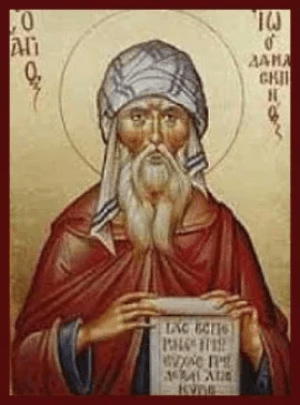
St. John of Damascus (ante A.D. 743)
An Exposition of the Orthodox Faith 111.12
That the holy Virgin is the Mother of God:
against the Nestorians
“Moreover, we proclaim the holy Virgin to be the Mother of God in strict truth. Since He who was born of her was truly God, she who bears the true God incarnate is the true mother of God. For we hold that God was born of her, not implying that the divinity of the Word received from her the beginning of its being, but meaning that God the Word Himself, Who was begotten of the Father timelessly before the ages and was with the Father and the Spirit without beginning and through eternity, took up His abode in these last days for the sake of our salvation in the Virgin’s womb, and was without change made flesh and born of her. For the holy Virgin did not bare mere man but true God: and not mere God but God incarnate, Who did not bring down His body from Heaven, nor simply passed through the Virgin as channel, but received from her flesh of like essence to our own and subsisting in Himself. For if the body had come down from heaven and had not partaken of our nature, what would have been the use of His becoming man? For the purpose of God the Word becoming man was that the very same nature, which had sinned and fallen and become corrupted, should triumph over the deceiving tyrant and so be freed from corruption, just as the divine apostle puts it, For since by man came death, came also the resurrection of the dead 1 Corinthians 15:21). If the first is true, the second must also be true.”
John Damascenes’ text is a declaration of faith in the divinity of Jesus Christ and the role of the Virgin Mary as the Mother of God. It begins by emphasizing that Mary is rightly called the Mother of God because Jesus, who was born of her, is truly God. This belief is central to the Christian faith and is known as the doctrine of the Incarnation, which holds that God became human in the person of Jesus Christ.
John elaborates on the concept of the Incarnation, emphasizing that it does not imply that the Word’s divinity originated with Mary. Rather, he asserts that God the Word, who has co-existed with the Father and the Holy Spirit eternally, chose to take on human form within the womb of Mary for the purpose of our salvation. This profound act illustrates a significant theological truth: Jesus is both fully divine and fully human, possessing two distinct natures that are perfectly united in one person. This union of natures is essential to understanding the mystery of Christ, as it allows Him to bridge the gap between God and humanity, offering redemption through His life, death, and resurrection. Thus, the Incarnation highlights the incredible love and grace of God toward His creation, affirming that He entered into our human experience to bring about salvation.
The Damascene also emphasizes that Mary did not give birth to a mere man but to the true God who became incarnate. This highlights the unique and significant nature of Jesus’ birth and his role in our salvation. He further explains that the purpose of the Incarnation was to triumph over the power of sin and death, symbolized by the deceiving tyrant. By becoming human, Jesus was able to overcome the power of sin and death and offer us the hope of eternal life.
The text concludes by referring to the words of the apostle Paul, who said, “Since death came through a man, the resurrection of the dead also comes through a man” (1 Corinthians 15:21). This means that just as Adam’s sin brought death into the world, Jesus’ death and resurrection bring new life and hope to all who believe in him. In this way, John Damascene highlights Jesus’s essential role in the Christian faith and the importance of Mary as the Mother of God in bringing about our salvation.
AVE MARIA
 Marian Catholic
Leave a comment