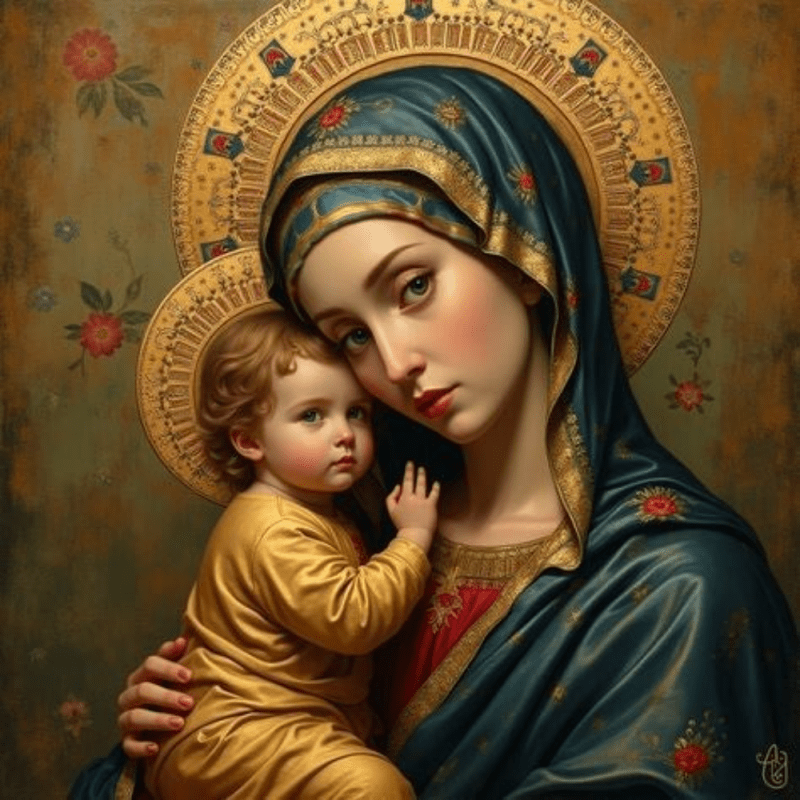
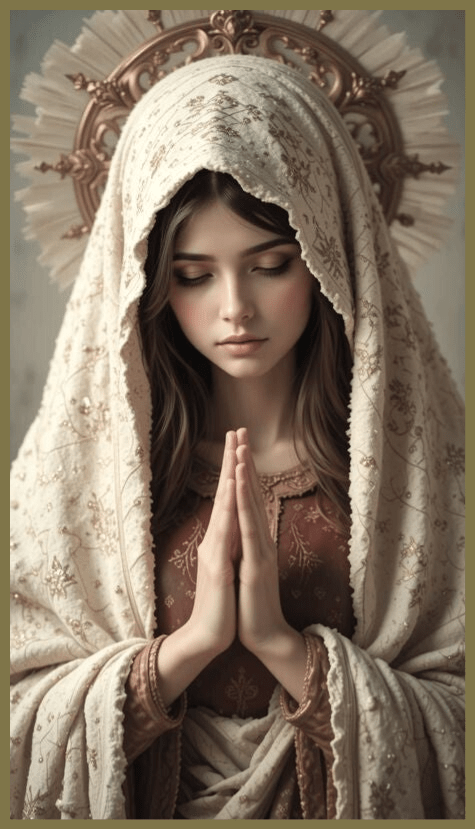
I will put enmities between thee and the woman,
and thy seed and her seed:
she shall crush thy head,
and thou shalt lie in wait for her heel.
Genesis 3, 15 (DRB)
And the angel being come in, said unto her:
Hail, full of grace, the Lord is with thee:
Blessed art thou among women.
Luke 1, 28 {DRB}
When Elizabeth heard Mary’s greeting,
the infant leaped in her womb,
and Elizabeth, filled with the Holy Spirit,
cried out in a loud voice and said,
“Most blessed are you among women,
and blessed is the fruit of your womb.”
Luke 1, 41-42 {NAB}
“Blessed are you who believed
that what was spoken to you by the Lord
would be fulfilled.”
Luke 1, 45
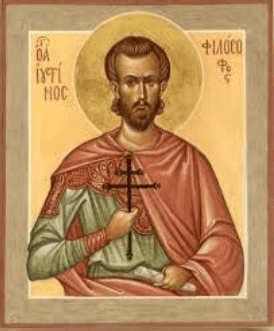
Justin Martyr (A.D. 155)
Dialogue with Trypho
“He became man by the Virgin so that the disobedience which proceeded from the serpent might receive its destruction in the same manner in which it derived its origin. For Eve, who was a virgin and undefiled, having conceived the word of the serpent, brought forth disobedience and death. But the Virgin Mary received faith and joy when the angel Gabriel announced the good tidings to her that the Spirit of the Lord would come upon her, and the power of the Highest would overshadow her: wherefore also the Holy Thing begotten of her is the Son of God; and she replied, ‘Be it unto me according to thy word.’ And by her has He been born, to whom we have proved so many Scriptures refer, and by whom God destroys both the serpent and those angels and men who are like him; but works deliverance from death to those who repent of their wickedness and believe upon Him.”
In “Dialog with Trypho,” Justin Martyr delves into a profound theological concept that elucidates the Incarnation of Jesus Christ and highlights the pivotal role of the Virgin Mary within the Christian framework of salvation. The text presents the idea that Jesus became incarnate through Mary specifically to address and rectify the disobedience that arose from the serpent’s temptation of Eve in the Garden of Eden. Eve, who is portrayed as both a virgin and an embodiment of purity, succumbed to the serpent’s guile, which subsequently introduced sin and death into the human experience, altering the course of humanity.
In stark contrast to Eve’s disobedience, Mary receives a momentous divine communication from the angel Gabriel. During this encounter, Gabriel reveals that she will conceive the Son of God by the power of the Holy Spirit, a declaration of immense theological significance. This angelic visitation not only signifies a new beginning but also underscores Mary’s readiness to accept God’s divine plan. Her response, “Be it unto me according to thy word,” reflects her unwavering faith and obedience, portraying her as a model of devotion and commitment to God’s will.
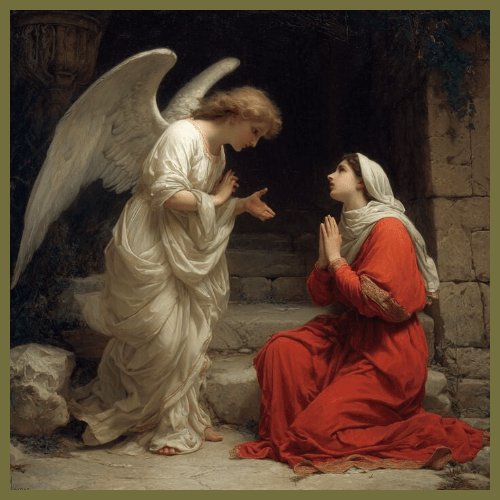
The theological interpretation offered by Justin Martyr emphasizes that Mary’s assent to God’s plan is a critical component in the unfolding narrative of salvation history. Through her acceptance, Jesus, identified as the Holy One, enters the world, fulfilling a multitude of prophecies that are woven throughout the Scriptures. He emerges as the one who stands opposed to the serpent, symbolizing the forces of evil that have plagued humanity since the Fall.
Moreover, through His sacrificial death and triumphant resurrection, Jesus offers a pathway of salvation and liberation from the clutches of sin and death. His work on the cross provides an opportunity for all who repent of their sins and place their trust in Him to attain forgiveness and eternal life. This rich narrative not only underscores Mary’s transformative role in the divine plan of redemption but also reaffirms the Christian belief in the Incarnation as a central theme of God’s redemptive work in the world.
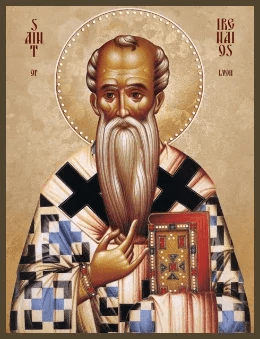
Irenaeus of Lyons (A.D. 180)
Against Heresies, 3:22
“In accordance with this design, Mary the Virgin is found obedient, saying, ‘Behold the handmaid of the Lord; be it unto me according to thy word.’ But Eve was disobedient, for she did not obey when, as yet, she was a virgin. And even as she, having a husband, Adam indeed, but being nevertheless as yet a virgin (for in Paradise ‘they were both naked, and were not ashamed,’ since they, having been created a short time previously, had no understanding of the procreation of children: for they needed to first come to adult age, and then multiply from that time onward), having become disobedient, was made the cause of death, both to herself and to the entire human race; so also did Mary, having a man betrothed [to her], and being nevertheless a virgin, by yielding obedience, become the cause of salvation, both to herself and the whole human race. And on this account, does the law term a woman betrothed to a man, his wife who had betrothed her. However, she was as yet a virgin, thus indicating the back-reference from Mary to Eve, because what is joined together could not otherwise be put asunder than by inversion of the process by which these bonds of the union had arisen; s so that the former ties be canceled by the latter, that the latter may set the former again at liberty… Wherefore, Luke, commencing the genealogy with the Lord, carried it back to Adam, indicating that He regenerated them into the Gospel of life, and not they Him. Thus, Mary’s obedience also loosened the knot of Eve’s disobedience. For what the virgin Eve had bound fast through unbelief, this did the virgin Mary set free through faith.”
The text, attributed to Irenaeus, offers a notable comparison between two central figures in Christian theology: Mary, the Virgin Mother of Jesus, and Eve, who is regarded as the first woman created according to the Genesis narrative. This analysis underscores the contrasting themes of obedience and disobedience and explores the far-reaching consequences of each woman’s choices for humanity’s course. Irenaeus emphasizes Mary’s remarkable willingness to embrace God’s divine plan, as exemplified in her poignant response to the angel Gabriel during the Annunciation: “Behold the handmaid of the Lord; be it unto me according to thy word.” This powerful declaration reflects Mary’s unwavering faith and acceptance, signaling her critical role in the incarnation of Christ and the redemption of humankind.
In stark contrast, Irenaeus portrays Eve as a figure of disobedience. In the Genesis account, Eve yields to temptation and disobeys God’s command in the Garden of Eden, which results in sin and death entering the world. Her choice to eat from the forbidden tree is framed as a destructive act that leads to the Fall, introducing a state of separation between humanity and God. This contrasting portrayal effectively establishes Mary as a paradigm of salvation and hope, while Eve represents the consequences of disobedience and the gravity of sin. Through this lens, Mary is seen not only as the bearer of Christ but also as a symbol of redemption, offering a counter-narrative to Eve’s downfall and highlighting the transformative power of faith and submission to God’s will in the narrative of salvation history.
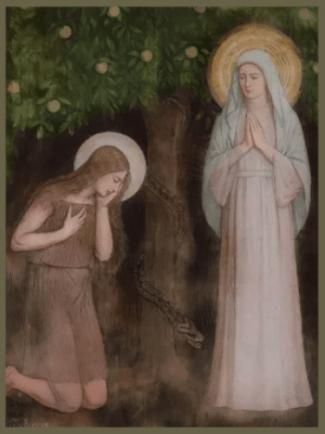
Irenaeus describes both women as “virgins,” which serves to emphasize their innocence and the importance of their roles within salvation history. While Eve’s virginity precedes her fall, Mary’s virginity is highlighted in her acceptance of God’s plan, suggesting a redemptive arc from disobedience to obedience. Irenaeus asserts that Mary’s act of obedience to God counteracts Eve’s act of disobedience. By yielding to God’s word, Mary becomes “the cause of salvation” for herself and all humanity, paralleling Eve’s role as the cause of death. This notion presents Mary as a redemptive figure, framing her role in the Gospel as one of restoration.
Irenaeus points out that Luke’s genealogy of Jesus traces back to Adam, symbolizing that humanity is regenerated through Mary and Jesus—returning to life through faith rather than being bound by sin. He emphasizes that Mary, through her faith, released humanity from the binding of Eve’s unbelief. The text discusses the notion of being “joined together,” suggesting the relationships between inheritance and salvation, sin and redemption. Irenaeus argues that Mary’s acceptance ” cancels the ties of Eve’s disobedience, allowing for a new beginning for humanity.
Overall, Irenaeus uses the figure of Mary to articulate a hopeful message of salvation and redemption. She connects her obedient faith directly to the reversal of Eve’s disobedience, framing the narrative of Christian faith in terms of transformation and renewal. This allegorical interpretation positions Mary as essential to the Gospel’s message of life, contrasting the consequences of the fall with the hope offered through Christ.
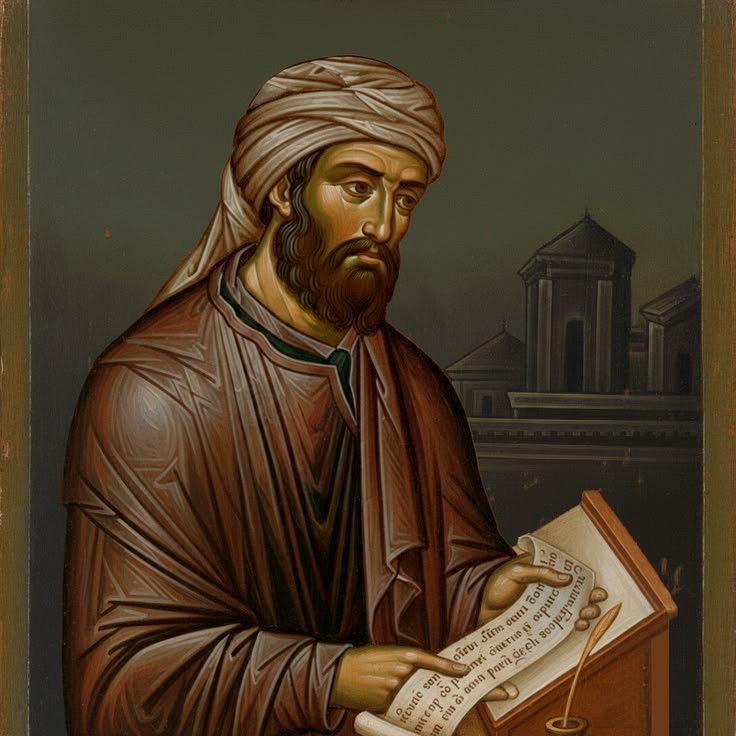
Tertullian (A.D. 212)
Flesh of Christ, 17
“Accordingly, a virgin did conceive and bear ‘Emmanuel, God with us.’ This is the new nativity; a man is born in God. And in this man God was born, taking the flesh of an ancient race, without the help, however, of the ancient seed, so that He might reform it with a new seed, that is, in a spiritual manner, and cleanse it by the re-moral of all its ancient stains. But the whole of this new birth was prefigured, as was the case in all other instances, in ancient type, the Lord being born as man by a dispensation in which a virgin was the medium. The earth was still in a virgin state, reduced as yet by no human labor, with no seed as yet cast into its furrows, when, as we are told, God made man out of it into a living soul…For it was while Eve was yet a virgin that the ensnaring word had crept into her ear, which was to build the edifice of death. Into a virgin’s soul, in like manner, must be introduced that Word of God, which was to raise the fabric of life, so that what had been reduced to ruin by this sex might by the selfsame sex be recovered to salvation. As Eve had believed the serpent, so Mary believed the angel. The delinquency which the one occasioned by believing, the other by believing effaced. But (it will be said) Eve did not, at the devil’s word, conceive in her womb. Well, she at all events conceived, for the devil’s word afterward became as seed to her that she should conceive as an outcast and bring forth in sorrow. Indeed, she gave birth to a fratricidal devil, whilst Mary, on the contrary, bore one who was one day to secure salvation to Israel, His own brother after the flesh, and the murderer of Himself. God, therefore, sent down into the virgin’s womb His Word, as the good Brother, who should blot out the memory of the evil brother. Hence, Christ needed to come forth for man’s salvation, in that condition of flesh that man had entered ever since his condemnation.”
Tertullian’s text presents a deep theological reflection on the nature of Christ’s incarnation and its implications for humanity. It explores the contrast between the stories of Eve and Mary, illustrating how each woman’s role relates to sin and redemption.
Tertullian emphasizes the miraculous nature of Jesus’ conception, asserting that a virgin bore Emmanuel, “God with us.” This points to the divine intervention in human history and the significance of the virgin birth in the Christian narrative. Tertullian emphasizes the miraculous nature of Jesus’ conception, asserting that a virgin bore Emmanuel, “God with us.” This points to the divine intervention in human history and the significance of the virgin birth in the Christian narrative. The passage suggests that, through this incarnation, God entered humanity to reform the human condition. Tertullian notes that Jesus came not through the “ancient seed,” an allusion to humanity’s sinful heritage, but rather to introduce a “new seed”—a spiritual awakening meant to cleanse and renew what sin had tainted.
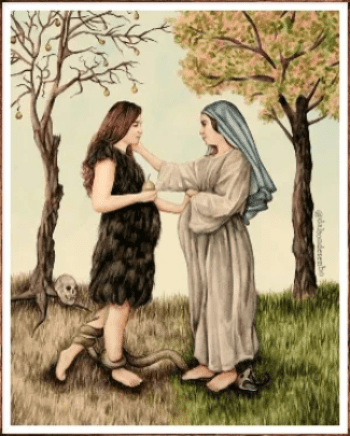
Tertullian draws a parallel between Eve and Mary. While Eve was deceived by the serpent and brought sin into the world, Mary became the bearer of salvation by believing the angel’s message. This contrast illustrates the shift from disobedience to faith, portraying Mary as a new archetype of obedience and faithfulness. He argues that Eve’s belief in the serpent led to death and separation from God, while Mary’s belief in God’s word gave birth to life and hope. Tertullian highlights that Mary’s act of faith was instrumental in counteracting the curse that Eve initiated.
The writer presents Christ as the necessary savior for humanity, born as a man to redeem the very flesh that had been condemned by sin. He alludes to the duality of human existence, where one “brother,” representing humanity’s fall, starkly contrasts the “good Brother,” who is Jesus, destined to restore and save. Meanwhile, the dichotomy between Eve and Mary underscores the theme of redemption: the possibility of salvation through faith, contrasted with the despair brought about by disobedience. Mary’s acceptance of the angel’s message symbolizes a return to divine order and intent.
In short, Tertullian’s text highlights key Christian theological concepts regarding the virgin birth and incarnation of Christ. It emphasizes the transformative power of faith and the restoration of humanity through Jesus. By contrasting Mary and Eve as opposing figures, Tertullian illustrates important themes such as sin, redemption, and the promise of new life that emerges through belief.
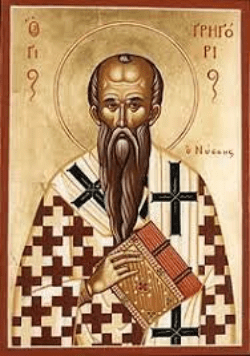
Gregory of Nyssa (A.D. 371)
On Virginity, 2
“It was, to divulge by the manner of His Incarnation this great secret; that purity is the only complete indication of the presence of God and of His coming, and that no one can, in reality, secure this for himself unless he has altogether estranged himself from the passions of the flesh. What happened in
the stainless Mary when the fullness of the Godhead, which was in Christ, shone out through her, happened in every soul that led by rule the virgin life.”
In his work “On Virginity,” Gregory of Nyssa argues that spiritual purity is the most prominent indicator of God’s presence in an individual’s life. This purity is not limited to the physical realm; rather, it embodies a deeper spiritual essence that transcends mere absence of sin or temptation. Gregory emphasizes that true purity reflects a state of existence that surpasses earthly passions and carnal desires, enabling one to foster a closer relationship with the divine.
He contends that this elevation to purity is not a passive occurrence but requires a conscious effort to distance oneself from the “passions of the flesh.” This concept encompasses the multitude of human desires and sinful tendencies, which, if indulged, can divert individuals away from their connection with God. Gregory posits that achieving a state of divine purity requires a transformative journey in which one deliberately rejects base inclinations. It involves an active choice to embrace a way of life that mirrors the holiness associated with the divine.
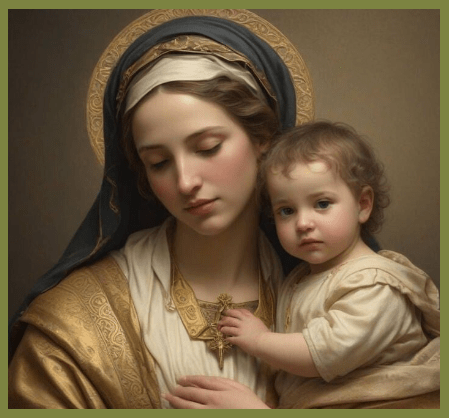
Central to Gregory’s argument is his reference to Mary, the mother of Jesus, whom he presents as the quintessential model of purity. Her “stainless” nature is depicted as the ideal condition that enables the fullness of God to dwell among humanity through Christ. Gregory suggests that Mary’s immaculate state not only highlights her unique role in salvation history but also serves as an inspiration for all believers striving toward spiritual wholeness.
Moreover, Gregory extends this notion of purity beyond the figure of Mary, proposing that any soul dedicated to a life of virginity—symbolically understood as a commitment to spiritual discipline and purity—can invite the divine presence into its own being. This framework suggests a universal calling for all individuals to aspire to a life characterized by moral and spiritual integrity, thereby drawing ever closer to God.
In summary, Gregory of Nyssa’s treatise presents a complex theology that weaves together ideas of divine mystery, human agency, and the imperative for believers to pursue a life of purity. He affirms that this pursuit is essential for experiencing and embodying God’s presence, ultimately making it a fundamental aspect of the Christian journey.
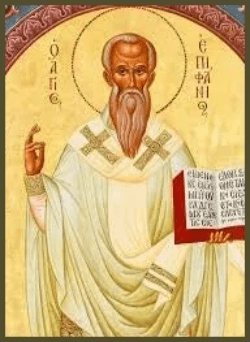
Epiphanius of Salamis (A.D. 375)
Against Heresies, 87
“But we must consider another marvelous aspect of the comparison between Eve and Mary. Eve
became, for men, the cause of death, because through her death entered the world. Mary, however,
was the cause of life, because life has come to us through her. For this reason, the Son of God
came into the world, and, ‘where sin abounded, grace super-abounded’ (Rom. 5:20). Whence death
had its origin, thence came forth life, so that life would succeed death. If death came from woman,
then death was shut out by him who, through the woman, became our life.”
Epiphanius of Salamis, in his work “Against Heresies,” presents a compelling theological analysis that draws a stark contrast between two pivotal women in the biblical narrative: Eve and Mary. These figures embody profound theological significance that shapes the understanding of human existence and salvation.
Eve, as portrayed in the Genesis creation account, represents the entry point of sin and death into the world. Through her decision to disobey God, she is often depicted as the catalyst for humanity’s fall from grace. The repercussions of her actions were far-reaching, introducing both spiritual and physical death not only for herself but for all of humankind. This narrative establishes Eve as emblematic of disobedience and its tragic consequences, underscoring the fragile state of human nature when separated from divine instruction.
In stark opposition, Mary stands as a beacon of hope and redemption. Designated as the Mother of Jesus Christ, the Son of God, she plays a crucial role in the divine plan of salvation. Epiphanius emphasizes that it is through Mary’s willing acceptance and consent to bear the incarnate Word of God that the possibility of redemption emerges. Her readiness to embrace this monumental responsibility illustrates a profound act of faith and obedience that contrasts sharply with Eve’s actions.
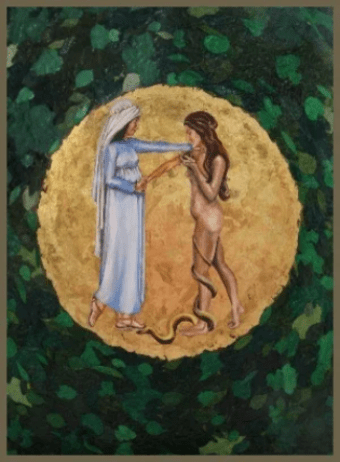
Epiphanius draws upon the biblical assertion from Romans 5:20 that “where sin abounded, grace super-abounded.” This notion reinforces the idea that, despite the gravity of sin introduced by Eve, Mary’s willingness to participate in God’s plan signifies a triumphant victory of grace over sin. The implications of this contrast are profound: from the very source of death symbolized by Eve arises a new hope of eternal life through the incarnation of Christ, facilitated by Mary.
This theological reflection by Epiphanius marks a transformative shift in the narrative; it suggests that what began with a woman as the cause of death is reversed by another woman who brings forth life in its most profound sense. By accepting her role, Mary not only counters the consequences of Eve’s actions but also plays an integral part in vanquishing death itself. Her acceptance highlights the redemptive power of Jesus Christ, who, through her faith and obedience, becomes the ultimate source of salvation and eternal life for humanity. Through this narrative of juxtaposition, Epiphanius underscores the vital role of both women in the grand scheme of redemption, ultimately conveying a message of hope and restoration.
Amphilochius of Iconium (A.D. 394)
In natalitia Domini, 1
“What a grand and most wise strategy against the devil! The world, which had
once fallen under the power of sin because of a virgin, is now restored to freedom
because of a Virgin. Through the virginal birth, many invisible demons have been
cast down to Tartarus.”
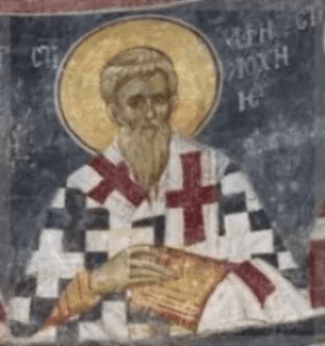
Amphilochius of Iconium, in his reflection “In Natalitia Domini,” delves deeply into the theological implications of the virgin birth of Jesus Christ within Christian doctrine, articulating a profound narrative that juxtaposes two key moments in salvation history: humanity’s Fall and its subsequent redemption.
In his discourse, Amphilochius presents the virgin birth not merely as a miraculous event but as a deliberate divine strategy against evil and sin. The text underscores how God transformed the dire circumstances of humanity—originally marred by Eve’s disobedience, which brought sin into the world—into an opportunity for redemption through the humble obedience of another woman, Mary. This transition from disobedience to obedience highlights a redemptive arc in Christian theology, suggesting that God has intricately woven a plan of salvation from humanity’s missteps.
A critical phrase in Amphilochius’ work, “the power of sin,” signifies the detrimental influence that pervaded the world as a result of Eve’s actions. This reference to sin entering through a woman evokes the narrative of her temptation and subsequent fall, establishing a cycle of disobedience that leads humanity away from divine communion and toward moral degradation. In stark contrast, the author emphasizes that true redemption emerges through Mary, who miraculously conceives Jesus while maintaining her virginity. This event transcends mere physical birth; it embodies a profound spiritual reversal of the Fall, asserting that qualities such as obedience, purity, and alignment with divine will possess the power to restore what was lost through earlier acts of disobedience.

Amphilochius further elaborates on the spiritual implications of this narrative by referencing the “many invisible demons” that are subsequently “cast down to Tartarus,” the deepest abyss of Hell, where fallen angels are imprisoned. This imagery encapsulates a cosmic battle between good and evil, positioning the virgin birth as a pivotal victory over malevolent forces. It suggests that through the incarnation of Jesus—initiated by Mary’s miraculous virgin birth—spiritual liberation and triumph over darkness are not only possible but are effectively realized.
Overall, Amphilochius’ reflections convey a rich tapestry of theological insight, wherein the virgin birth is portrayed as both a divine strategy and a significant triumph over sin and evil. By intricately linking Mary’s role in the narrative of salvation history with overarching themes of restoration and victory against the forces of darkness, Amphilochius enriches the understanding of the virgin birth within the broader context of Christian redemption.
Augustine of Hippo (A.D. 396)
The Christian Combat, 22:24
“The Lord Jesus Christ, having come to liberate human beings, including both men and women destined for salvation, was not ashamed of the male nature, for He took it upon Himself, or of the female, for He was born of a woman. Besides, there is the profound mystery that, as death had befallen us through a woman, Life should be born to us through a woman. By this defeat, the Devil would be tormented over the thought of both sexes, male and female, because he had taken delight in the defection of them both. The freeing of both sexes would not have been so severe a penalty for the Devil unless we were also liberated by the agency of both sexes.”
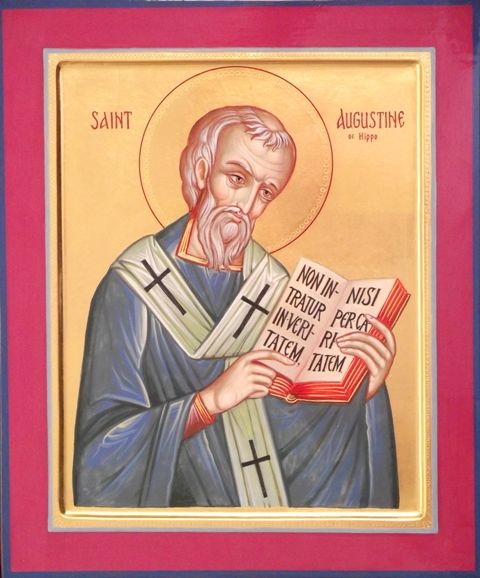
Augustine of Hippo’s work, “The Christian Combat,” particularly in section 22:24, delves into the theological implications of gender within the framework of salvation. This text emphasizes key aspects of how gender shapes spiritual understanding and the pursuit of redemption.
To begin, Augustine emphasizes that the arrival of Jesus Christ was a divine act intended to liberate all human beings, both men and women. This liberation underscores the inclusive nature of salvation, which recognizes every individual’s inherent dignity and worth, regardless of gender. The text points out that Jesus did not shy away from embracing both male and female natures. By being born of a woman, He signifies His connection to humanity and affirms the value of female existence. This highlights the importance of both genders in the divine narrative of salvation.
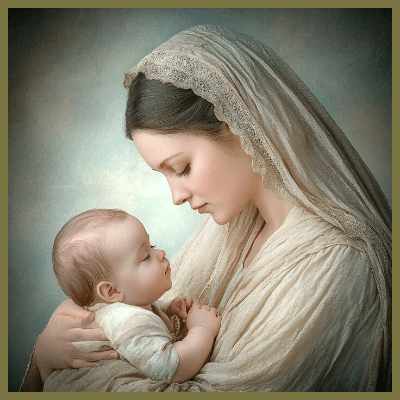
Augustine touches on the paradox that death entered the world through a woman (Eve), while another woman (Mary) makes life and redemption possible. This duality highlights an essential aspect of Christian theology: that God can bring about profound good from a situation that appeared disastrous. The text expresses the idea that the Devil finds torment not only in the liberation of humanity but particularly in the involvement of both sexes in this process. This indicates that the Devil’s delight in human sin and separation from God is countered by a redemption that embraces both men and women, illustrating a comprehensive restoration.
Ultimately, Augustine’s commentary advocates for recognizing the equal roles that both men and women play in the story of salvation. The text conveys that the defeat of evil requires the involvement of both genders, reflecting a united front against sin and oppression. Augustine’s message is one of hope and inclusivity, where the cooperative roles of men and women in salvation reflect a profound divine plan that honors and uplifts both.
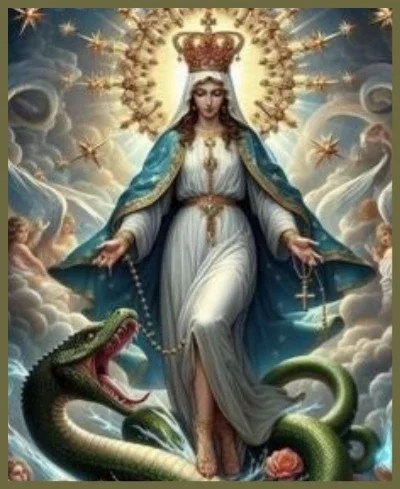
Then the dragon stood before the woman who was about to bear a child, so that he
might devour her child as soon as it was born. And she gave birth to a son, a male
child, who is to rule all the nations with a rod of iron. But her child was snatched
away and taken to God and to his throne; and the woman fled into the wilderness,
where she has a place prepared by God, so that there she can be nourished for one
thousand two hundred sixty days…. But the woman was given the two wings of
the great eagle, so that she could fly from the serpent into the wilderness, to her
place where she is nourished for a time, and times, and half a time. And the dragon
cast out of his mouth water as a flood after the woman, that he might cause her to
be carried away of the flood. And the dragon was angry with the woman:
and went to make war with the rest of her seed, who keep the commandments of God,
and have the testimony of Jesus Christ.
Revelation 12, 17
Revelation 12, 4-6, 14-15, 17

AVE MARIA
 Marian Catholic
Leave a comment