And David was afraid of the Lord that day,
saying: How shall the ark of the Lord come to me?
2 Samuel 6, 9
And when the ark of the Lord was come into the city of David, Michal the daughter of Saul,
looking out through a window, saw king David leaping and dancing before the Lord:
and she despised him in her heart.
2 Samuel 6, 16
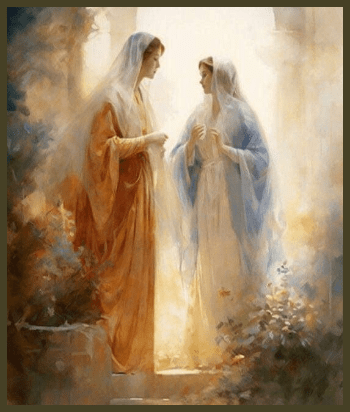
And whence is this to me, that the mother of my Lord should come to me?
For behold as soon as the voice of thy salutation sounded in my ears,
the infant in my womb leaped for joy.
Luke 1, 43-44
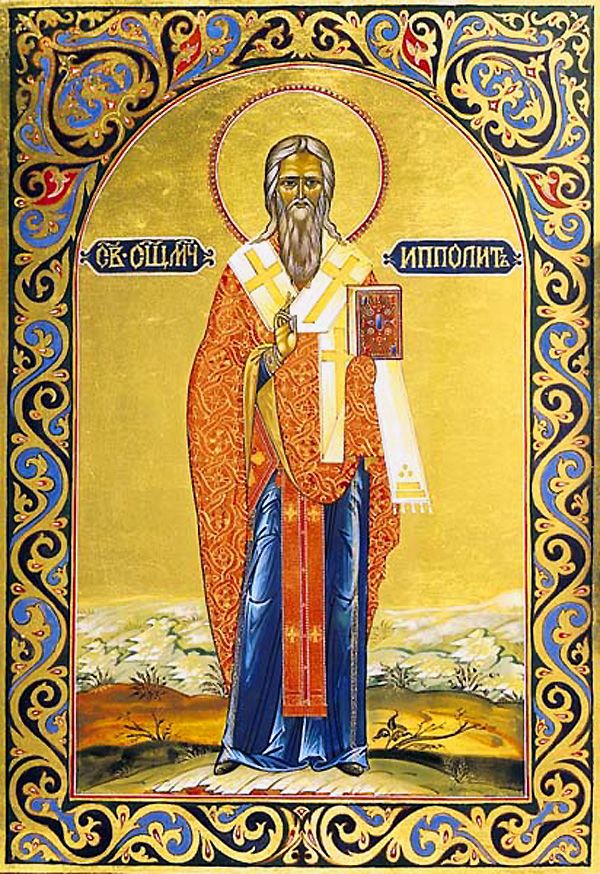
Hippolytus (A.D. 205)
In Daniel Vl
“At that time, the Savior coming from the Virgin, the Ark, brought forth His own Body
into the world from that Ark, which was gilded with pure gold within by the Word,
and without by the Holy Ghost; so that the truth was shown forth, and the Ark was manifested
…. And the Savior came into the world bearing the incorruptible Ark, His own body.”
In his writings, particularly in ‘Daniel VI,’ St. Hippolytus presents a thought-provoking comparison between the Virgin Mary and the Ark of the Covenant, a highly revered symbol from the Old Testament that served as the dwelling place of God’s divine presence among His people. This comparison is rich with theological implications and resonates deeply within the Christian tradition.
Hippolytus observes that, much like the Ark, which was crafted with extraordinary precision and beauty—gilded in pure gold both inside and out to signify its sacred importance—Mary is seen as spiritually adorned through her unique relationship with God. The Word of God and the Holy Spirit, in their divine essence, sanctified her, making her the most holy vessel. This analogy illuminates Mary’s unparalleled sanctity and holiness, portraying her as the vessel through whom Jesus Christ, the Savior of humanity, entered the world.
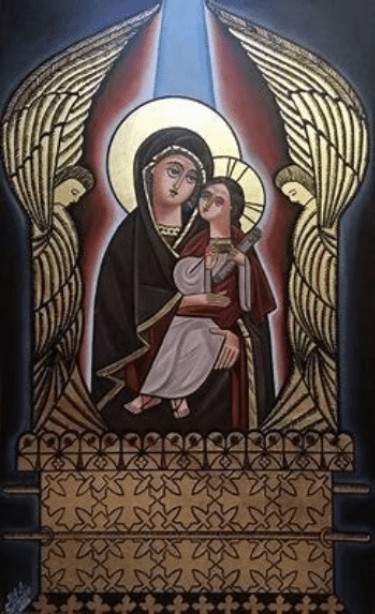
The historical and theological context of this comparison enhances its significance. The Ark of the Covenant, revered as a treasure, housed the Tablets of the Law, which embodied God’s covenant with His chosen people and guided them with divine commandments. In contrast, Mary, as the mother of Jesus, bore the Incarnate Word—Jesus being the ultimate fulfillment of that covenant. Hippolytus emphasizes the belief in the Incarnation, presenting Mary as the “incorruptible Ark,” indicating the purity and sinlessness of Jesus’s body, which distinguishes Him from all other humanity.
This passage underscores the tremendous significance of Mary’s role, not only in the miraculous birth of Christ but also within the broader narrative of salvation history. It reflects early Christian convictions about the sacred nature of the Incarnation, granting Mary a unique dignity and a pivotal position in God’s divine plan of redemption. Through this theological lens, the reverence afforded to Mary becomes clear; she is honored for her integral participation in the unfolding mystery of Christ’s advent into the world, highlighting her vital role in the reconciliation of humanity with God.
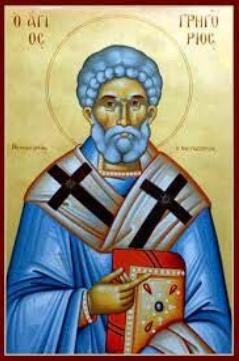
Gregory Thaumaturgus (A.D. 270)
Orat. in Deip. Annunciat.
“The ark is verily the holy Virgin, gilded within and without,
who received the treasure of universal sanctification.
Arise, O Lord, from the Father’s bosom,
to raise up again the ruined race of our first parents.”
In his eloquent oration, St. Gregory Thaumaturgus makes a profound theological assertion by referring to the Virgin Mary as the “ark.” This metaphor underscores her unparalleled and vital role as the sacred vessel entrusted with carrying and guarding Jesus Christ, who is seen as the ultimate treasure of universal sanctification and redemption. This analogy draws a direct connection to the Ark of the Covenant described in the Old Testament, which held holy relics, such as the tablets of the Law, and symbolized the manifest presence of God among His chosen people.
Gregory’s portrayal of Mary as “gilded within and without” highlights her unparalleled physical purity, her profound spiritual holiness, and the unique favor bestowed upon her by the divine. This vivid and intricate imagery conveys a dual sense of purity—both in her corporeal being and in her inner soul—suggesting that Mary is not merely a vessel but a symbol of the highest sanctity. Her role as the chosen mother of the Son of God sets her apart from all other figures, reflecting her exceptional virtue and grace. The delicate, opulent language used emphasizes the extraordinary nature of her existence, imparting a deeper understanding of her importance in the Christian tradition and her unique relationship with the divine. This portrayal invites the faithful to view Mary not only as a historical figure but as a timeless embodiment of spiritual and moral perfection.
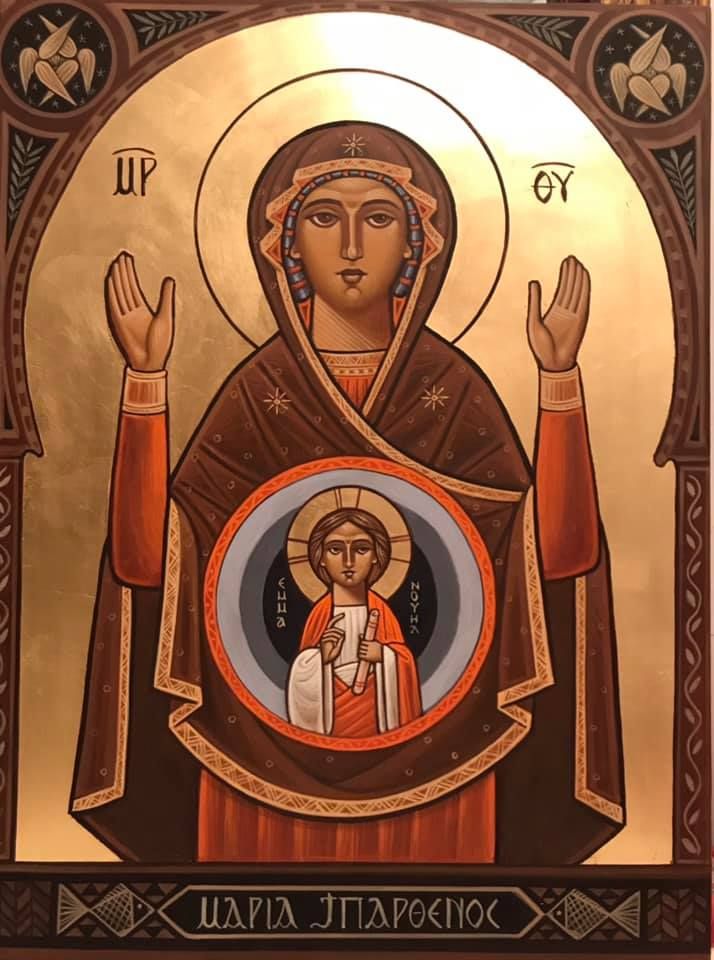
Additionally, the prayer, “Arise, O Lord, from the Father’s bosom, to raise up again the ruined race of our first parent,” is a heartfelt and impassioned plea for divine intervention in humanity’s plight. This invocation eloquently requests that God emerge from the intimate communion with the Father, emphasizing the depth of their unity, to restore humanity, believed to be in a state of profound disrepair due to the consequences of the original sin committed by Adam and Eve. This poignant prayer encapsulates the core Christian belief in redemption and salvation, encapsulating the inherent need for divine grace to mend the fissure caused by sin and to bring healing and salvation to mankind. It reflects the overarching theme of hope, portraying the deepest longing for restoration and reconciliation with God.
Overall, the text refers to the ark as a symbol of the holy Virgin, who is described as gilded both inside and out, underscoring her role in receiving universal sanctification. It calls upon the Lord to arise from the Father’s bosom to restore humanity, which has fallen since the time of the first parents.
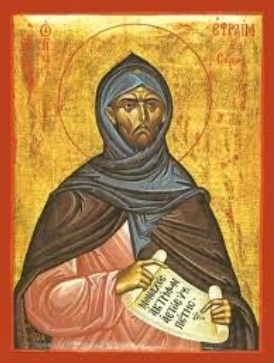
Ephrem of Syria (ante. A.D. 370)
On the Nativity, 3
“With the rib that was drawn out of Adam, the wicked one drew out the heart of Adam.
There arose from the rib [Mary], a hidden power that cut off Satan as Dagon. In that ark
[Mary again], a hidden book cried and proclaimed the Conqueror. Then, a mystery was
revealed, in that Dagon was brought low in his own place of refuge. The accomplishment
came after the type, in that the wicked one was brought low wherein he trusted…. Fulfilled
was the mystery. Blessed is He who by the true Lamb redeemed us
and destroyed our destroyer as He did Dagon”
In his writings, St. Ephrem of Syria delves deeply into the rich theological implications of both creation and redemption, particularly in his reflections on the Nativity. He presents a compelling narrative that begins with the creation of humanity, emphasizing the significance of the rib taken from Adam. Ephrem describes this rib as the point of vulnerability that the wicked one—symbolizing Satan—exploited to introduce sin and corruption into the world. By extracting this rib, Satan not only distorted Adam’s original purity but also attempted to sever humanity’s connection to divine grace.
However, Ephrem introduces a transformative figure through whom God’s grace would be revealed: Mary. He suggests that from the rib of Adam, a hidden power emerged, embodied in Mary, who serves as a channel for divine grace. In this conception, Mary is portrayed as the new Ark of the Covenant, a sacred vessel that carries the presence of the divine. Through her, a powerful force was unleashed—one that decisively cut off Satan’s influence, reminiscent of the ancient god Dagon’s defeat by the hand of God.
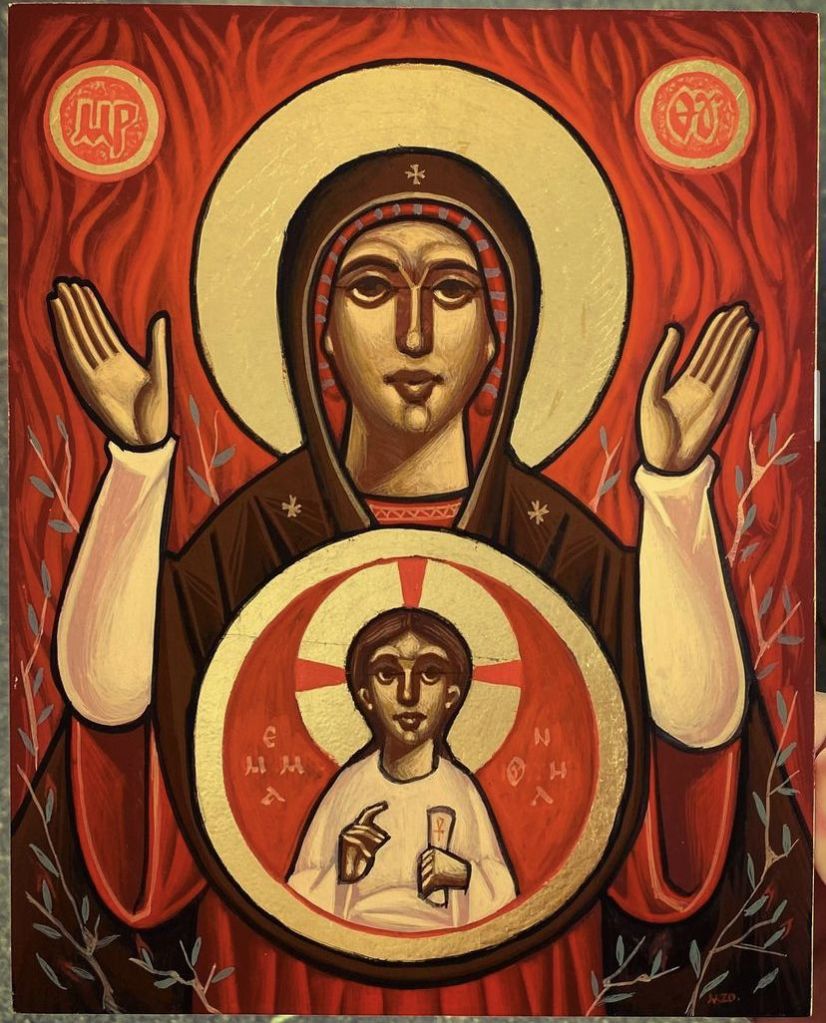
The imagery of Dagon is particularly potent in Ephrem’s discourse. Dagon, a false idol worshipped by the Philistines, represents the forces of opposition against the true God. Ephrem prophesies that, much like Dagon was once thought to be invincible in the sanctuary of his own temple, he would ultimately be brought low. This act serves as a vivid illustration of how God triumphs over evil, humbling those who oppose Him even in their presumed strongholds.
Furthermore, Ephrem asserts that this narrative of defeat is not merely historical but a powerful allegory of salvation. The culmination of this divine mystery lies in the advent of Jesus Christ, the true Lamb who offers redemption for humanity. By triumphing over sin and death, Christ mirrors the downfall of Dagon, thereby restoring hope and life to those who were lost and shackled by despair. This intertwining of Old Testament figures and events with the birth of Christ underscores the fulfillment of God’s plan and His unwavering commitment to redeem His creation from the clutches of evil. Through this rich tapestry of theological themes, Ephrem emphasizes the profound blessedness of Christ’s redemptive work and the hope it brings to a broken world.
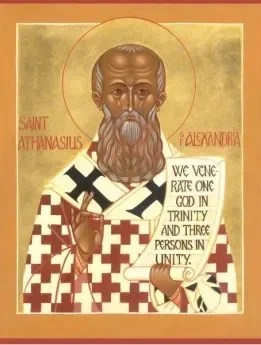
Athanasius of Alexandria (A.D. 373)
Homily of the Papyrus of Turin, 71:216
“O noble Virgin, truly you are greater than any other greatness. For who is your equal in greatness,
O dwelling place of God the Word? To whom among all creatures shall I compare you, O Virgin?
You are greater than them all, O Covenant, clothed with purity instead of gold! You are the Ark in which the golden vessel containing the true manna, the flesh in which divinity resides, is found.”
This text is a beautiful and eloquent hymn that praises the Virgin Mary, the most revered figure in Christian theology. St. Athanasius uses vivid and poetic language to describe Mary’s greatness and her unique role in the economy of salvation. The author addresses Mary as a “noble Virgin,” emphasizing her purity, grace, and virtue. He expresses deep admiration for her and recognizes her as greater than any other greatness. No worldly greatness can exceed hers. He asks, “Who is your equal in greatness, O dwelling place of God the Word?” This question highlights the uniqueness of Mary’s role as the mother of Jesus, the Word of God made flesh. Her unrivaled greatness stems from being the mother of the divine Logos.
Athanasius draws an analogy between Mary, the mother of Jesus, and the Ark of the Covenant, the most sacred object in ancient Judaism. The Ark was revered for being associated with the physical manifestation of God’s presence in the glory cloud (Shekinah) and was believed to contain the tablets of the Ten Commandments, Aaron’s staff, and a pot of manna. The author uses this analogy to highlight Mary’s unique sanctity and her role as the vessel of God incarnate. He describes Mary as the Ark that contains the “golden vessel,” which refers to the sacred human body of Jesus, in which divinity resides. This alludes to the fact that just as the sacred Ark held the sacred objects, notably the inscribed Word of God, Mary bore the Word of God in the flesh (Bread of Life and High Priest) within her sacred womb, which is the “golden vessel” or the sacred human body in which divinity resides.
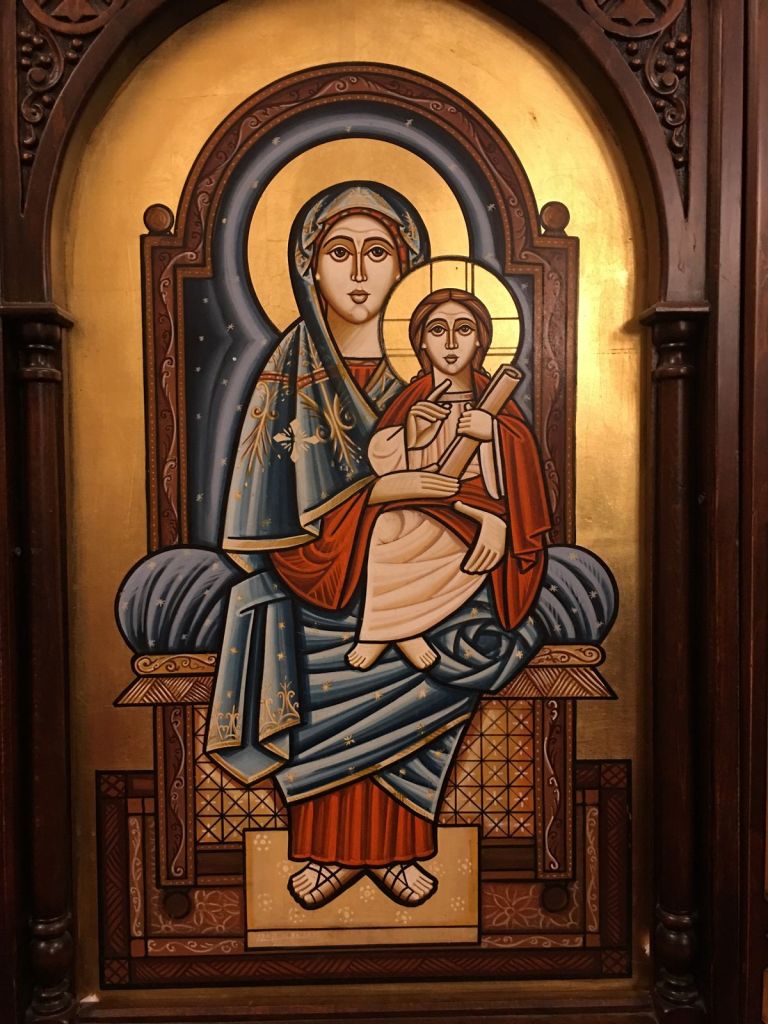
Finally, Athanasius describes Mary as the “Covenant, clothed with purity instead of gold.” This emphasizes Mary’s unparalleled holiness and worthiness to conceive and bear her divine Son. Athanasius’s poetic language highlights Mary’s exceptional qualities as a human being and her mediating role in the salvation of humanity.
Overall, His writing is a beautiful tribute to the Virgin Mary. It emphasizes her unique role in the economy of salvation and her unparalleled holiness as the mother of Jesus. His comparison with the Ark of the Covenant underscores Mary’s exceptional status as the sacred vessel that bore and carried God’s physical presence to humanity. The text celebrates the Virgin Mary as a figure of extraordinary greatness, likening her to various esteemed symbols. It emphasizes her uniqueness as the dwelling place of God the Word and contrasts her purity with material riches. Mary is referred to as the Ark, which contains the true manna, symbolizing her role as the one who houses the divine flesh.
Ambrose of Milan (ante. A.D. 397)
Serm. xlii. 6, Int. Opp., S. Ambrosiiz
“The prophet David danced before the Ark. Now, what else should we say the Ark was but holy
Mary? The Ark bore within it the tables of the Testament, but Mary bore the Heir of the same
Testament itself. The former contained in it the Law, the latter the Gospel. The one had the
voice of God, the other His Word. The Ark, indeed, was radiant within and without with the glitter
of gold, but holy Mary shone within and without with the splendor of virginity. The one was
adorned with earthly gold, the other with heavenly.”
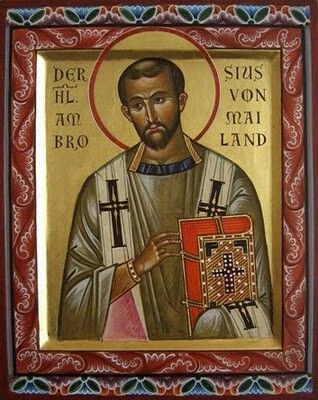
In his Sermon xlii, St. Ambrose of Milan draws a profound parallel between the Ark of the Covenant from the Old Testament and the Virgin Mary within Christian theology, illuminating the significant roles each plays in the divine narrative. The Ark of the Covenant, a sacred chest that contained the tablets of the Law given to Moses, serves as a powerful symbol of God’s enduring presence and His covenant relationship with the people of Israel. In this context, St. Ambrose posits that just as the Ark was designed to hold vital relics central to the faith, Mary became the bearer of Jesus Christ, who embodies the fulfillment of that Law and the Gospel.
Ambrose articulates a series of striking contrasts between the two vessels. He notes that the Ark is described as bearing “the tables of the Testament,” a reference to the inscribed commandments that guide moral conduct. In contrast, Mary is highlighted as bearing “the Heir of the same Testament,” emphasizing that while the Ark contained the written Law, Mary brought forth the living Word of God. This distinction underscores a critical tenet of Christian belief: Mary does not merely carry Christ; she brings to the world the embodiment of divine truth, grace, and the promise of salvation.
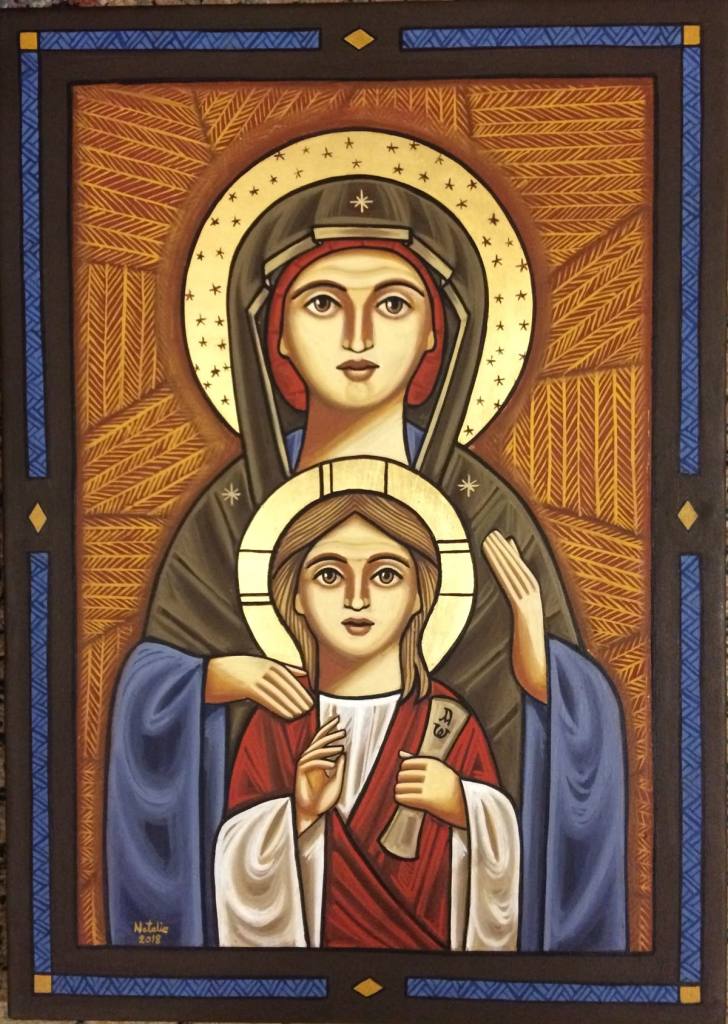
Moreover, St. Ambrose explores the contrasting materials that define each. The Ark is portrayed as “radiant within and without with the glitter of gold,” which symbolizes the earthly treasures and splendor associated with sacred objects in the Old Testament. In contrast, Mary is described as shining with the “splendor of virginity,” a depiction that alludes to her purity, holiness, and exceptional role within the Christian tradition. This imagery suggests that her significance transcends mere material worth, elevating her spiritual integrity and virtue above all.
Overall, Ambrose elevates Mary’s role in the history of salvation to a status analogous to that of the Ark, portraying her not only as a sacred vessel that carries divine significance but also as a symbol of spiritual purity of immeasurable value. The text ultimately honors Mary, framing her as a pivotal figure within the Christian faith, deserving of reverence and veneration for her unique and vital role in the incarnation of Christ. Through his discourse, Ambrose encapsulates the profound respect and veneration for Mary within the Christian tradition, recognizing her as both a nurturing mother and an enduring symbol of holiness.
Jerome (ante. A.D. 420)
Epist. Xxii.
“Behold one in truth, the handmaid of the Lord. Holy she is, in whom is no guile, all simplicity….
The spouse of Christ is the ark of the covenant, within and without overlaid with gold, a keeper of
the law of the Lord. As in the ark, there was nothing but the tables of the Testament, so too in thee
no one from outside should be thought of. Over this propitiatory, as though upon the Cherubim, the
Lord is pleased to sit…The Apostle thus defines a virgin that should be holy in body and spirit.”
The text is a theological reflection by St. Jerome that emphasizes the Virgin Mary’s purity and holiness. He acknowledges Mary as God’s true servant, highlighting her humility and dedication. He then affirms her holiness, indicating that she is pure and sincere, without deceit or complexity in her character.
Further, Jerome draws a parallel between Mary and the Ark of the Covenant from the Old Testament, which housed the tablets containing the Ten Commandments. Mary, as the mother of Jesus (the Christ), carries within her something sacred. He suggests that Mary is precious and glorious, akin to the Ark, made of valuable materials, signifying her role as one who embodies and upholds divine law.
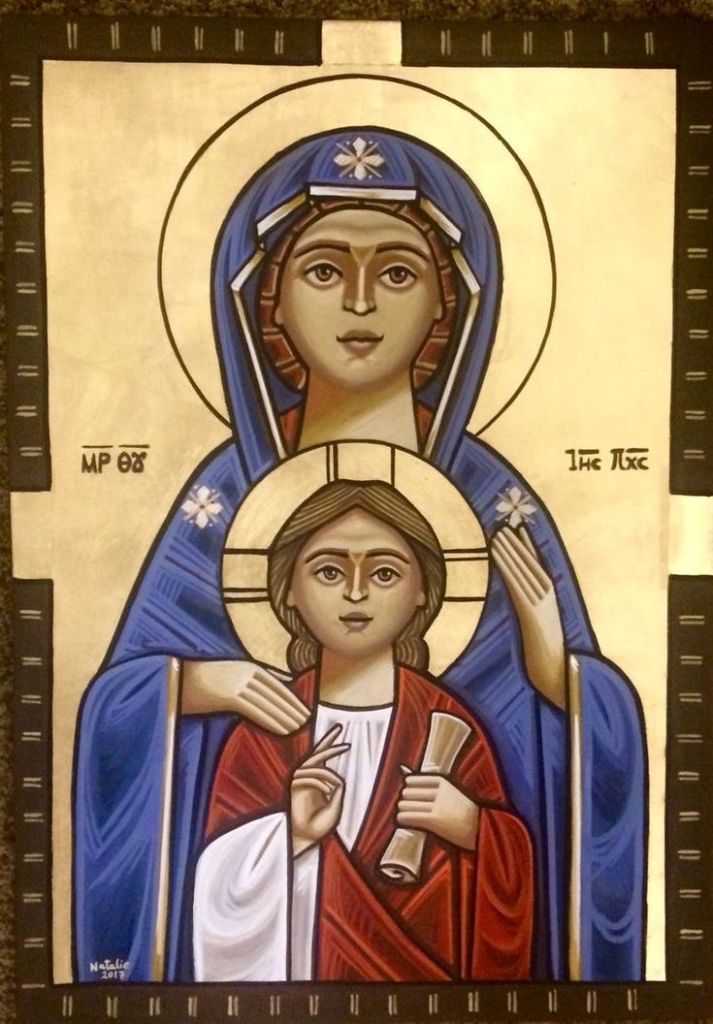
Additionally, Jerome underscores that just as the Ark contained only sacred items, Mary is to be understood as a pure vessel, free from any external or impure influences. This reinforces the idea of her singular devotion to God. He likens Mary to a space where God’s presence dwells, much as God was believed to sit over the cherubim on the Ark of the Covenant. This suggests an intimate relationship between Mary and the divine.
Jerome concludes that the expectation of a virgin dedicated to God involves both physical purity and spiritual holiness, attributes that he sees perfectly embodied in Mary. Overall, this text reflects Mary’s unique role in Christian theology as a model of holiness and purity. This role is essential to understanding her as the Mother of God and illustrates the belief in her exceptional status within the broader narrative of salvation.
John of Damascus (A.D. 747-51)
Homily 2 on the Dormition of Mary, 2, 14
“Today the holy Virgin of Virgins is presented in the heavenly temple…. Today the sacred and living Ark of the living God [the Ark], who conceived her Creator himself, takes up her abode in the temple of God, not made by human hands… “It was meet that she, who had who had sheltered the divine Logos in her own womb, should inhabit the tabernacles of her Son…. The place of the Bride whom the Father had espoused, was in the nuptial chambers of Heaven”
The text by St. John of Damascus reflects a deep theological perspective on the feast of the Presentation of the Virgin Mary in the temple, emphasizing her unique role in Christian belief.
The introduction celebrates Mary, referred to as the “holy Virgin of Virgins,” underscoring her purity and unique status among women. The “heavenly temple” suggests a divine setting, indicating that Mary is recognized in both spiritual and sacred contexts.
John continues by referring to Mary as the “sacred and living Ark.” This parallels the Ark of the Covenant in the Old Testament, which held God’s presence. By calling Mary the “living Ark,” the text highlights her role as the vessel who bore Jesus Christ, the Creator, thereby infusing her with divine significance. The phrase “…who conceived her Creator himself…” directly acknowledges the belief in the Incarnation, where Mary conceived Jesus, the Son of God. It emphasizes Christ’s mystery and divine nature, as Mary is the one who gave birth to her Creator.
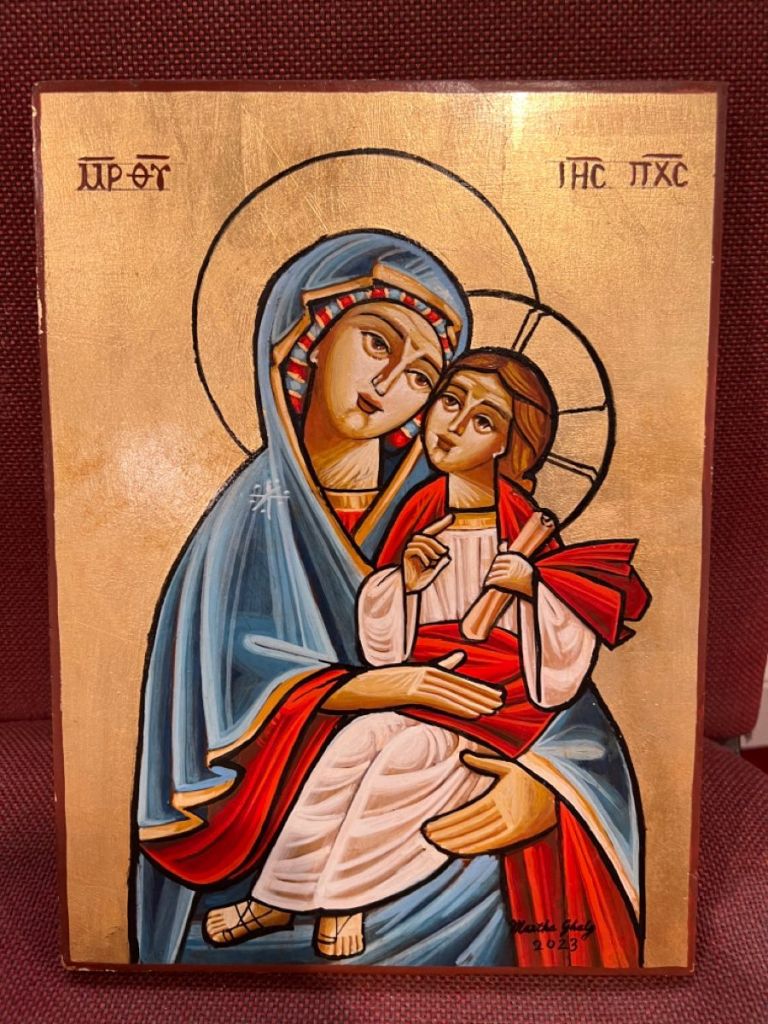
The description of Mary as one who “takes up her abode in the temple of God, not made by human hands…” suggests that she is being placed in a divine context, beyond earthly structures. The phrase “not made by human hands” implies a transcendent reality, pointing to the spiritual nature of Mary’s existence and her association with God’s presence. Additionally, the term “meet” implies that it is appropriate or fitting. This indicates that Mary’s role as the mother of Jesus is honored, as she housed the “divine Logos,” or Word of God, in her womb, illustrating the significance of her motherhood.
The Damascene connects Mary to the broader idea of communion with Christ. “Tabernacles” can symbolize places of worship and divine presence, suggesting that Mary has a special position in the relationship between humanity and Jesus. The metaphor “the place of the Bride whom the Father had espoused, was in the nuptial chambers of Heaven” portrays Mary as a bride to God, signifying a covenantal relationship. The “nuptial chambers of Heaven” evoke imagery of intimacy and closeness to God, reinforcing her elevated status and her role within the divine plan.
In essence, John of Damascus celebrates Mary’s special place in Christian theology as the mother of Jesus and highlights her significance in the broader context of salvation history. It emphasizes her divine favor, purity, and the unique relationship she holds with both God and Christ.
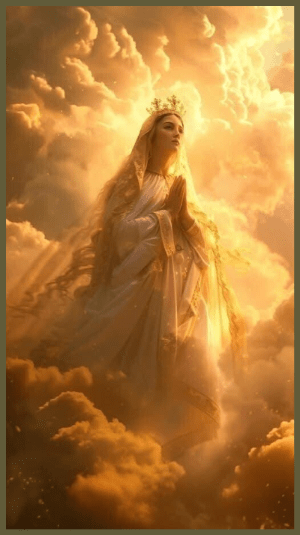
And the temple of God was opened in heaven: and the ark of his
testament was seen in his temple, and there were flashes of lightning,
and voices, and an earthquake, and great hail… And a great sign appeared
in heaven: A woman clothed with the sun, and the moon under her feet,
and on her head a crown of twelve stars.
Revelation 11, 19… 12, 1
AVE MARIA
 Marian Catholic
Leave a comment