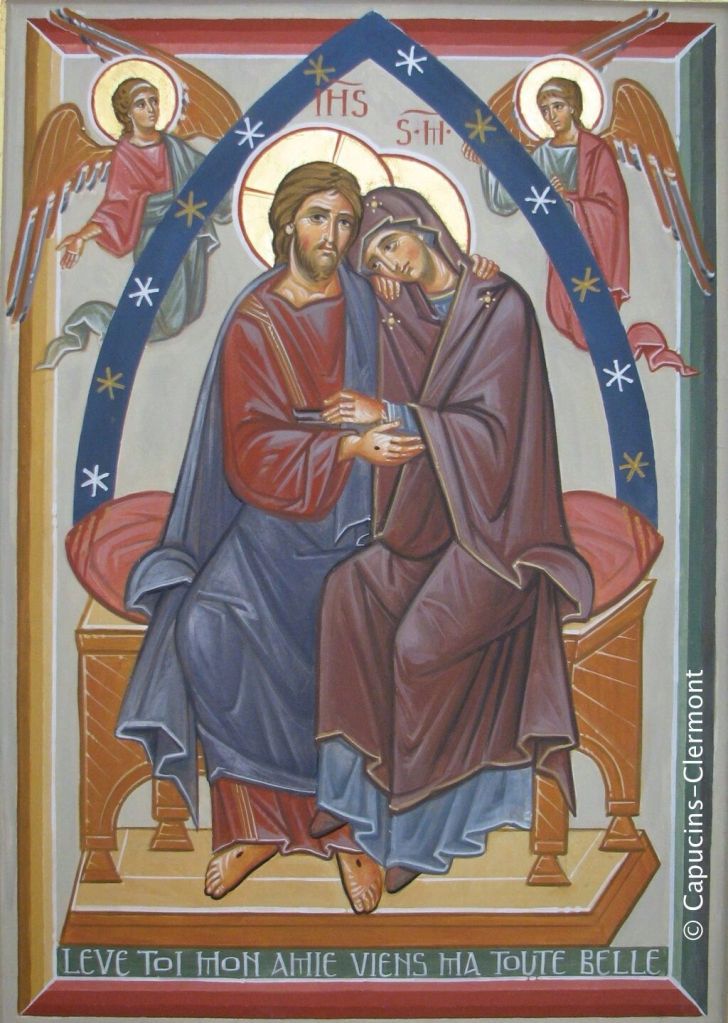
My beloved spoke and said to me,
“Arise, my darling, my beautiful one,
come with me.
See! The winter is past;
the rains are over and gone.”
Song of Solomon 2, 10-11
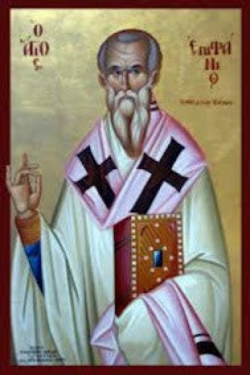
Epiphanius of Salamis (A.D. 377)
Panarion 78.23
“If the Holy Virgin had died and was buried, her falling asleep would have been surrounded with honor, death would have found her pure, and her crown would have been a virginal one…Had she been martyred according to what is written: ‘Thine own soul a sword shall pierce,’ she would shine gloriously among the martyrs, and her holy body would have been declared blessed, for by her did the light come to the world.”
In this text, Epiphanius, Bishop of Salamis, elaborates on the belief in the “falling asleep” (Dormition) of the Holy Virgin Mary, a theological conviction that holds that she did not experience a conventional death but was instead assumed into heaven following her earthly life. Epiphanius posits that, had Mary died and been laid to rest like ordinary mortals, such an event would have been an occasion of immense honor and reverence, acknowledging her unparalleled purity, unwavering virtue, and profound devotion to God throughout her life.
He further argues that if she had indeed faced martyrdom for her faith, her passing would be elevated in significance, symbolizing not merely death but a noble sacrifice for her beliefs. In such a scenario, her holy body would be venerated, affirming her status as a martyr whose sacrifice bears witness to the strength of her faith.
Nonetheless, Epiphanius emphasizes that the cornerstone of Mary’s significance is rooted in her divine role as the mother of Jesus Christ, who brought light and salvation to the world. He highlights her maternal love and vital role in the Incarnation, suggesting that her contributions extend far beyond her earthly life and into the spiritual legacy she left for generations to come. Therefore, this understanding of her Dormition speaks to her personal sanctity and her crucial role in the tapestry of Christian salvation history.
In summary, Epiphanius, the Bishop of Salamis, discusses the belief in the Dormition of the Holy Virgin Mary, emphasizing that she did not experience an ordinary death but was assumed into heaven. He argues that if Mary had died, it would have been a moment of great honor, highlighting her purity and devotion. If she had faced martyrdom, her death would symbolize a significant sacrifice for her faith, enhancing her status as a martyr. Ultimately, Epiphanius stresses that Mary’s true importance lies in her role as the mother of Jesus Christ, which contributes to her spiritual legacy and significance in Christian salvation history.
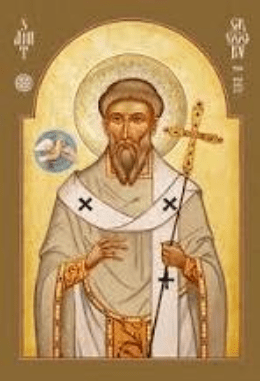
Gregory of Tours (575-593 A.D.)
Eight Books of Miracles
“The course of this life having been completed by Blessed Mary, when now she would be called from the world, all the Apostles came together from their various regions to her house. And when they had heard that she was about to be taken from the world, they kept watch together with her. And behold, the Lord Jesus came with His angels, and taking her soul, He gave it to angel Michael and withdrew.”
At daybreak, however, the Apostles took up her body on a bier, placed it in a tomb, and guarded it, expecting the Lord to come. And behold, again the Lord stood by them. Having received the holy body, he commanded that it be taken in a cloud into paradise, where now, rejoined to the soul, [Mary] rejoices with the Lord’s chosen ones, and is the enjoyment of the good of an eternity that will never end.”
Gregory of Tours recounts the events following the completion of the Blessed Mary’s life on earth. Upon hearing that she was about to depart, the Apostles gathered together from their various regions at her house. They kept watch together with her, knowing that her passing was imminent. At that moment, the Lord Jesus arrived with His angels, took Mary’s soul, and gave it to the angel Michael before departing. It was a profound moment that affirmed Mary’s exceptional status as the Mother of God.
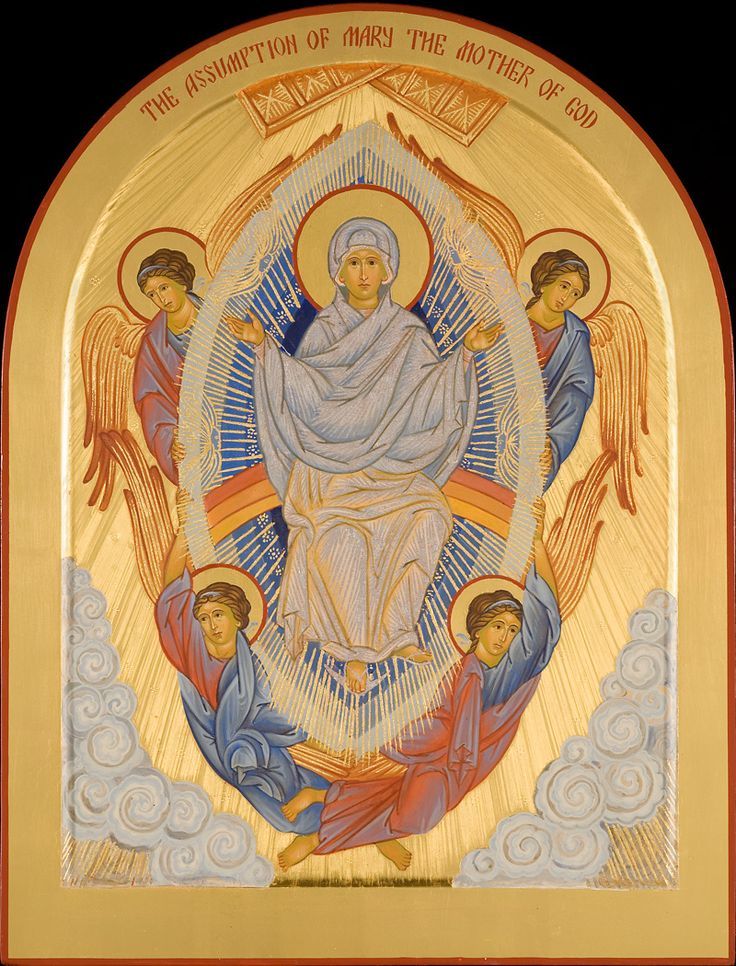
The following day, the Apostles placed Mary’s body on a bier and laid it in a tomb. They guarded it with great care, expecting the Lord to come. The scene is one of deep reverence and devotion, as the Apostles recognized the importance of Mary’s body and its connection to her life and spirit. And behold, once again, the Lord stood by them. He commanded that the holy body be taken in a cloud into paradise, where it was rejoined to her soul. This momentous event confirmed Mary’s unique place in salvation history and affirmed the belief in the afterlife and the idea of eternal life in paradise. Mary is now in paradise, enjoying eternity with the Lord’s chosen ones, but in body and soul.
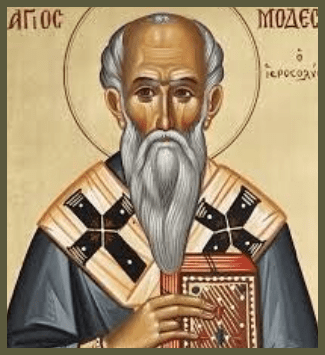
Modestus of Jerusalem (ante A.D. 634)
Encomium in dormitionnem Sanctissimae Dominae nostrae Deiparae semperque Virginis Mariae
“As the most glorious Mother of Christ, our Savior and God and the giver of life and immortality, has been endowed with life by him, she has received an eternal incorruptibility of the body together with him who has raised her up from the tomb and has taken her up to himself in a way known only to him.”
Modestus, Bishop of Jerusalem, emphasizes the profound significance of Mary, the Mother of Christ, who occupies a cherished position in the hearts of Christians around the globe. As the divine Mother of our Savior and God, Mary not only gave birth to Jesus but also stands as a symbol of life and immortality for all believers. According to tradition, following her earthly life, God granted Mary eternal life, bestowing upon her an incorruptible body after her death. This miraculous elevation is believed to have occurred when Christ, having triumphed over death through His resurrection, raised Mary from the tomb and took her up to Himself in a manner known only to Him.
In Catholic Christian doctrine, Mary holds a unique place. She is the only figure, alongside Jesus, who exists in both body and soul in heaven until the final resurrection of the dead. Mary’s assumption into heaven is not merely a historical event; it is a powerful testimony to her unwavering faith and profound devotion to God throughout her life. Her Assumption symbolizes hope, inspiring all who strive to follow her example of steadfast faith and unwavering dedication in their spiritual journeys.
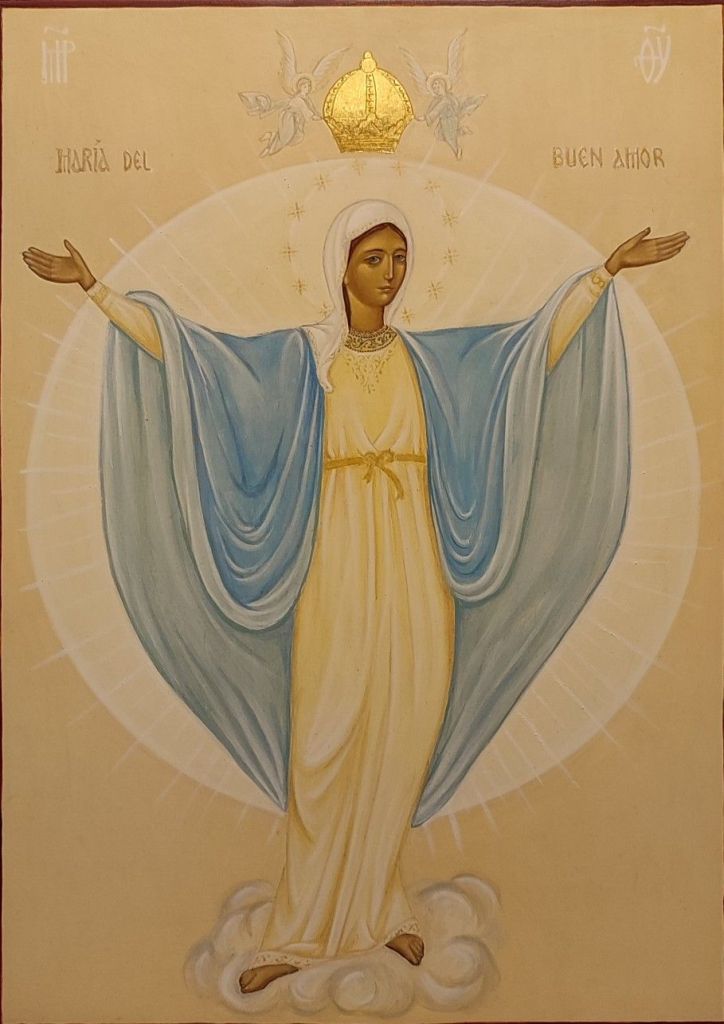
The mystery and magnificence of Mary’s assumption into heaven continue to be a source of wonder, contemplation, and theological reflection for believers worldwide. This event invites the faithful to reflect on the themes of resurrection, divine love, and the ultimate call to eternal life, thereby reinforcing Mary’s role as a guiding light for those seeking to deepen their relationship with God.
Overall, Modestus, Bishop of Jerusalem, highlights the significant role of Mary, the Mother of Christ, in Christianity. She symbolizes life and immortality and is believed to have been granted eternal life by God after her earthly existence. This miraculous event, known as her Assumption, signifies her unique place in Catholic doctrine as the only figure besides Jesus who is in heaven in both body and soul. Mary’s Assumption reflects her unwavering faith and serves as a source of hope and inspiration for believers, encouraging them to deepen their relationship with God. The event invites contemplation on themes of resurrection, divine love, and the call to eternal life.
Theoteknos of Livias (ante A.D. 650)
Homily on the Assumption
The text from Theoteknos of Livias discusses the Assumption of Mary, a significant event in Christian theology, particularly within the Catholic and Orthodox traditions. It presents several key themes and concepts highlighting Mary’s importance in the context of salvation and her unique role as the Mother of God.
The phrase “it was fitting” suggests a theological rationale for Mary’s Assumption. It implies that her being taken up into heaven is appropriate and just, given her role as the Mother of Jesus Christ. This establishes a sense of divine order and intention behind the event. The term “God-bearing” (Theotokos in Greek) underscores Mary’s significant role in the Incarnation—bearing Jesus Christ, who is both fully divine and fully human. This title affirms her as a key figure in Christian belief, acknowledging the divine element present within her.
By referring to Mary’s body as “most holy,” the text emphasizes her purity and sanctity. This sets Mary apart from all humans, highlighting her as a special vessel chosen by God. These descriptors, “Divinized, Incorruptible, Illuminated by Divine Grace,” attribute to Mary’s transformed and glorified state. “Divinized suggests that she shares in the divine nature through grace, “incorruptible” indicates freedom from sin and decay, and “illuminated by divine grace” points to the presence of God’s grace in her life. Together, these terms reflect a belief in the sanctity of Mary’s entire existence.
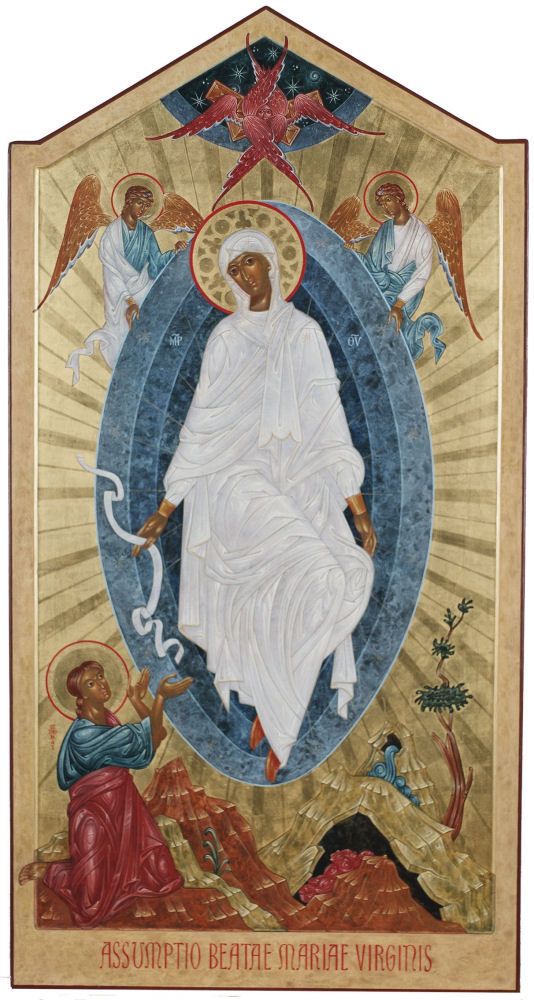
The phrase “Entrusted to the Earth for a Little While” conveys the temporality of Mary’s earthly existence, underscoring that her time on Earth was brief compared to her eternal glory. It suggests that her earthly life served a purpose in God’s plan. “Raised Up to Heaven in Glory” refers to the culmination of Mary’s earthly life and her Assumption into heaven. It underscores the belief in Mary’s glorification, where she is rewarded for her unique life and role.
The final point, “Her Soul Pleasing to God,” emphasizes the profound and intimate relationship that Mary shares with the divine. This concept suggests that her entire life—her actions, decisions, and the very essence of her being—are in perfect harmony with God’s will. Through her unwavering faith and virtuous conduct, she exemplifies the qualities that resonate with divine purpose and love. This alignment not only highlights her significant role in the spiritual realm but also indicates that she is revered and elevated in the heavenly hierarchy, receiving honor for her steadfast commitment to faithfulness and grace.
In summary, Theoteknos of Livias presents a theological reflection on Mary’s Assumption, portraying her as a pivotal figure honored by God. The text underscores her purity, divine mission as the mother of Jesus, and eventual glorification, all of which are key elements in understanding her significance within the Christian faith.
Germanus of Constantinople (ante A.D. 733)
Sermon 1
“You are she who, as it is written, appears in beauty, and your virginal body is all holy, all chaste, entirely the dwelling place of God so that it is henceforth completely exempt from dissolution into dust. Though still human, it has been changed into a heavenly life of incorruptibility, truly living and glorious, undamaged and sharing in perfect life.”
In the first sermon delivered by Germanus of Constantinople, composed before A.D. 733, a profound and elaborate portrayal of the Virgin Mary unfolds. The Bishop meticulously describes her as the epitome of beauty and purity, notably captured in the evocative phrase “she who appears in beauty.” This characterization hints not only at her physical allure but also at a deeper, spiritual radiance that sets her apart as a figure of virtue.
Germanus expounds upon the holiness and chastity of Mary’s body, reinforcing the notion that she embodies both moral and physical integrity. By doing so, he suggests that her very being is imbued with divine qualities, marking her as a blessed vessel chosen by God. This sanctification transcends mere description; it implies a profound spiritual connection in which Mary’s body becomes a dwelling place for the divine presence.
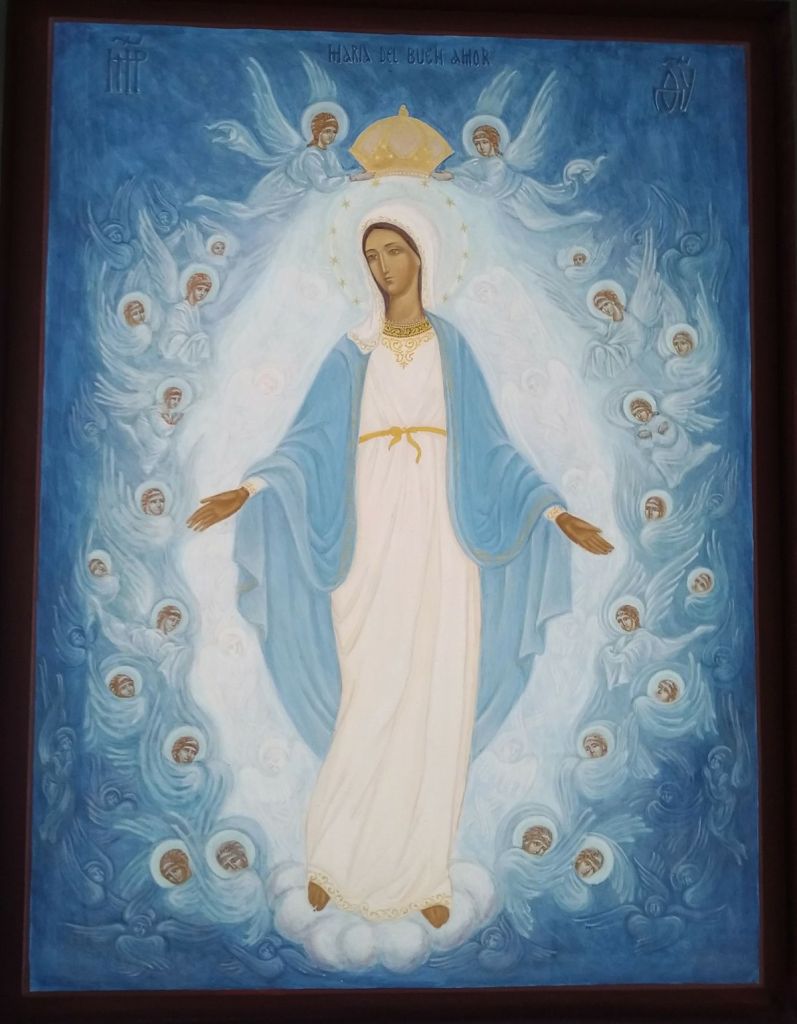
Through this extraordinary transformation, Germanus asserts that Mary’s body is exempt from the decay that afflicts all human beings. In effect, her physical form has been elevated beyond the confines of earthly mortality, signifying an extraordinary state of existence. He posits that, while she is undeniably human, the nature of her body has been altered to achieve incorruptibility in the heavenly realm. This transformation is not merely cosmetic; it suggests a total purification and perfection, elevating her to a state of glory and sublime life.
Moreover, Germanus emphasizes that Mary’s body is not only free from damage but is also intertwined with the concept of perfect life. This connection suggests that she shares in an eternal existence, one filled with timeless joy and bliss. The implications of such profound elevation and transformation paint Mary as a unique and exalted figure in the Christian faith, embodying the ultimate union of humanity and divinity.
In short, Germanus describes the Virgin Mary as the embodiment of beauty and purity, emphasizing her holiness and chastity as a divinely chosen vessel. He asserts that her body is incorruptible and symbolizes perfect life, connecting her to an eternal existence filled with joy. This positions her as a unique and exalted figure in Christianity, representing the union of humanity and divinity.
John of Damascus (ante A.D. 749)
Dormition of Mary
“It was fitting that the she, who had kept her virginity intact in childbirth, should keep her own body free from all corruption even after death. It was fitting that she, who had carried the Creator as a child at her breast, should dwell in the divine tabernacles. It was fitting that the spouse, whom the Father had taken to himself, should live in the divine mansions. It was fitting that she, who had seen her Son upon the cross and who had thereby received into her heart the sword of sorrow which she had escaped when giving birth to him, should look upon him as he sits with the Father. It was fitting that God’s Mother should possess what belongs to her Son and that she should be honored by every creature as the Mother and handmaid of God.”
The passage, attributed to John of Damascus, offers a deeply reflective examination of the life, death, and ultimate destiny of the Virgin Mary, the revered mother of Jesus Christ. John begins by highlighting Mary’s unparalleled and profoundly significant role within the tapestry of Christian history. He articulates that Mary remained a virgin even after giving birth to Jesus, an event regarded as miraculous and emblematic of her extraordinary purity and unwavering devotion to God.
In his discourse, the author emphasizes that Mary’s life was characterized by an unwavering faithfulness, deep devotion, and profound suffering. He poignantly reflects on the miraculous aspect of Mary nourishing Jesus, who is both her son and the Creator of the universe. This divine relationship, he suggests, merits her rightful place in the celestial realms, emphasizing that it is fitting for her to dwell eternally in the divine presence.
Moreover, John sheds light on Mary’s motherhood as an indispensable aspect of her identity and purpose. He argues that her role in Jesus’s life goes beyond simple parenthood; it is fundamentally intertwined with the fulfillment of divine prophecy and the embodiment of God’s ultimate plan for salvation. This reverence implies that all of creation should honor her as the mother and servant of God, acknowledging her integral part in the Incarnation.
The text further delves into the profound depths of Mary’s suffering, particularly as she stood at the foot of the cross, witnessing the crucifixion of her son. John reflects on the heart-wrenching sorrow she endured, suggesting that this suffering serves as a testament to her faithfulness and complete devotion to God’s will. He poignantly notes that it is fitting for Mary to behold her son, now glorified and seated at the right hand of the Father, having triumphed over death and sin, thereby escaping the ‘sword of sorrow’ that accompanied his birth.
In conclusion, John asserts that as the Mother of God, Mary possesses certain rights and honors that naturally belong to her son, Jesus. He highlights the unique, intimate, and transformative relationship they share, illustrating that her life is a model of purity, devotion, and faithfulness that every Christian should aspire to emulate. Ultimately, this passage from The Dormition of Mary stands as a powerful homage to Mary’s life and legacy, imparting a resonant message of hope, enduring faith, and unwavering devotion to God. It encapsulates the essence of her role not merely as a historical figure but as a spiritual beacon for all believers.
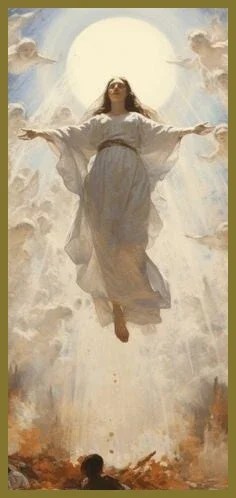
And Mary said:
My soul does magnify the Lord.
And my spirit rejoices in God my Saviour.
For he has regarded the lowliness of his handmaid;
behold from henceforth all generations shall call me blessed.
Because he that is mighty has done great things to me;
and holy is his name.
Luke 1, 46-49 {DRB}
AVE MARIA
 Marian Catholic
Leave a comment