Fear not, for I have redeemed you.
I have called you by name, you are mine.
Isaiah 43, 1
And the angel being come in, said unto her:
Hail, full of grace, the Lord is with thee:
blessed art thou among women.
Luke 1, 28 {DRB}
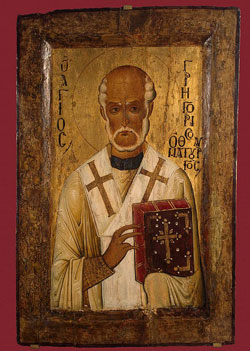
Gregory Thaumaturgus (A.D. 262)
On the Holy Mother of God
“Holy and wise in all things was the all-blessed Virgin, peerless among all nations,
and unrivaled among women. Not as the first virgin Eva, who being alone in the garden, was
in her weak mind led astray by the serpent; and so took his advice and brought death into the
world, and because of that hath been all the suffering of saints. But in her alone, in this Holy
Virgin Mary, the Stem of Life hath shot up for us. For she alone was spotless in soul and body.”
The text is a detailed statement that extols the virtues of the Virgin Mary and underscores her significance in Christian theology. St. Gregory describes Mary as holy and wise, implying she possessed unparalleled moral and intellectual excellence. He also notes that Mary is peerless among all nations and unrivaled among women, making her the most esteemed and admirable woman in human history.
The author then compares Mary with Eve, our primordial fallen mother, highlighting their differences. Eve was led astray by the serpent and brought death into the world, whereas Mary was spotless in both soul and body. This purity made Mary the only person capable of bringing forth the Stem of Life, a reference to Jesus Christ.
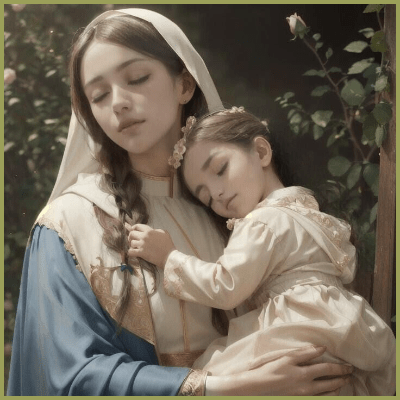
Gregory emphasizes that Mary’s purity was a necessary prerequisite for giving birth to Jesus, the savior of humanity. The passage shows Mary’s importance in Christian theology. It highlights her purity, wisdom, and moral excellence and compares her with Eve to demonstrate her unique qualities and the profound difference between the two women. The author’s use of language, such as “all-blessed” and “Stem of Life,” contributes to the text’s devotional tone and reinforces Mary’s central role in Christian doctrine.
In summary, the text highlights the virtues of the Virgin Mary, emphasizing her unparalleled moral and intellectual excellence as described by St. Gregory. It positions Mary as the most esteemed woman in history, contrasting her purity with Eve, who brought death into the world through disobedience. Mary’s spotless nature made her uniquely capable of giving birth to Jesus Christ, the Savior of humanity. The text underscores her significance in Christian theology through her wisdom, purity, and moral excellence, using devotional language to reinforce her central role in Christian doctrine.
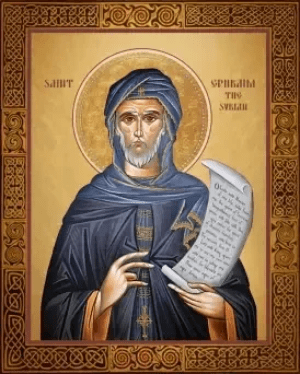
Ephraem the Syrian (A.D. 370)
Hymns on the Nativity, 15:23
Nisibene Hymns, 27:8
“Let women praise Her, the pure Mary – that as in Eve their mother, great was their reproach — lo!
In Mary, their sister — greatly magnified was their honor.”
“Thou alone and thy Mother are fair in all things;
there is no flaw in thee and no stain in thy Mother.”
The passage from the Hymns on the Nativity serves as a poetic tribute to Mary, the mother of Jesus, highlighting her esteemed role within the narrative of Christianity and among women in general. It draws a poignant comparison between Mary and Eve, the first woman introduced in the Biblical account of creation. The text acknowledges that both women occupy significant positions in the story of humanity, yet points out a stark contrast in how they are perceived. While Eve is often blamed for bringing sin and downfall to humanity by succumbing to temptation, Mary is celebrated as the embodiment of purity and virtue. This juxtaposition elevates Mary to a revered status, distinguishing her as a righteous figure and a sister to all women, whose honor is not only restored but magnified through her actions and choices.
The passage beautifully captures the essence of Mary’s character, underscoring her role in the miraculous event of Jesus’s birth. Her qualities of purity, unwavering humility, and inner strength set her apart from the broader lineage of women who, as daughters of Eve, fell from divine grace. Mary’s narrative symbolizes selflessness, grace, and profound compassion, making her a role model and source of inspiration.
Moreover, the phrase “Blessed is He Who sprang from women!” underscores the significance of Mary’s role in the salvation narrative, acknowledging that through her, the Savior entered the world. This statement not only honors Mary but also affirms her pivotal contribution to the unfolding of divine grace and the transformative impact she has had on Christian theology. Thus, Mary stands as a figure of great significance, representing faith, redemption, and the enduring legacy of motherhood.
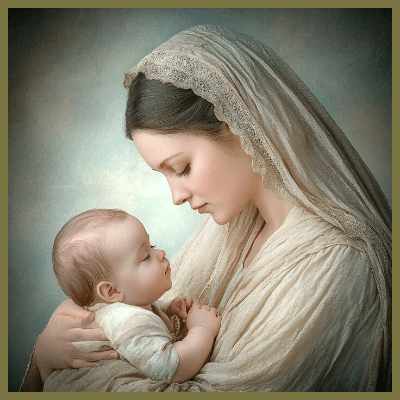
The ode from the Nisibene Hymns celebrates the Virgin Mary and her son, Jesus Christ. The line “Thou alone and thy Mother are in all things fair” conveys the idea that Mary and Jesus are pure and free of imperfections. The phrase “there is no flaw in thee and no stain in thy Mother” emphasizes that they are both perfect without any blemish or moral impurity. The praise of Mary without any stain or imperfection is a common theme in Catholic theology and is called the doctrine of the Immaculate Conception. The idea is that Mary was preserved from the stain of original sin from the moment of her conception, making her wholly pure and sinless.
In addition to its religious significance, the quote also has poetic value. Alliteration in the phrase “Thou alone and thy Mother” emphasizes the idea of the two beings being inextricably linked and united in their purity and perfection. The repetition of the word “no” in the phrase “no flaw in thee and no stain in thy Mother” creates a sense of completeness and finality, emphasizing the absolute purity of Mary and Jesus in their shared humanity. We find such a celebration of the Mother and the Son in the Gospel of Luke 1:42 in the words of Mary’s cousin Elizabeth: “Most blessed (eulogemene) are you among women, and blessed (eulogomenos) is the fruit of your womb.”
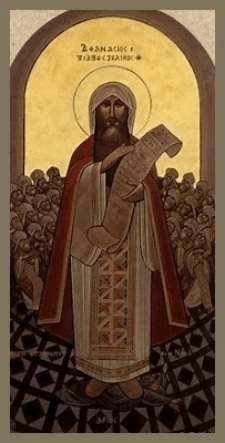
“O noble Virgin, truly you are greater than any other greatness. Who is your equal in greatness, O dwelling place of God the Word? To whom among all creatures shall I compare you, O Virgin? You are greater than them all, O Covenant, clothed with purity instead of gold! You are the Ark in which the golden vessel contains the true manna, the flesh in which divinity resides.”
Athanasius of Alexandria (A.D. 373)
Homily of the Papyrus of Turin, 71:216
This text is a beautiful and eloquent hymn that praises the Virgin Mary, the most revered figure in Christian theology. Athanasius uses vivid and poetic language to describe Mary’s greatness and her unique role in the economy of salvation. The author addresses Mary as a “noble Virgin,” emphasizing her purity, grace, and virtue. He expresses deep admiration for her and recognizes her as greater than any other greatness. No worldly greatness can exceed hers. He asks, “Who is your equal in greatness, O dwelling place of God the Word?” This question highlights the uniqueness of Mary’s role as the mother of Jesus, the Word of God made flesh. Her unrivaled greatness stems from being the mother of the divine Logos.
Athanasius draws an analogy between Mary, the mother of Jesus, and the Ark of the Covenant, the most sacred object in ancient Judaism. The Ark was revered for being associated with the physical manifestation of God’s presence (Shekinah) and was believed to contain the tablets of the Ten Commandments, Aaron’s staff, and a pot of manna. The author uses this analogy to highlight Mary’s unique sanctity and her role as the vessel of God incarnate. He describes Mary as the Ark that contains the “golden vessel,” which refers to the sacred human body of Jesus, in which divinity resides. This alludes to the fact that just as the sacred Ark held the sacred objects, notably the inscribed Word of God, Mary bore the Word of God in the flesh (Bread of Life and High Priest) within her sacred womb, which is the “golden vessel” or the sacred human body in which divinity resides.
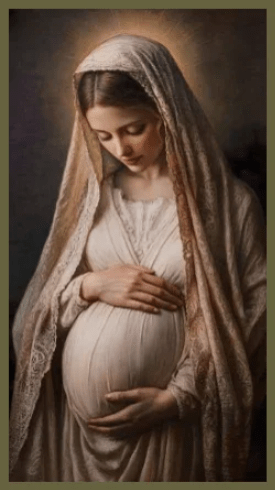
Finally, Athanasius describes Mary as the “Covenant, clothed with purity instead of gold.” This emphasizes Mary’s unparalleled holiness and worthiness to conceive and bear her divine Son. Athanasius’s poetic language highlights Mary’s exceptional qualities as a human being and her mediating role in humanity’s salvation. Overall, His writing is a beautiful tribute to the Virgin Mary. It emphasizes her unique role in the economy of salvation and her unparalleled holiness as the mother of Jesus. His comparison with the Ark of the Covenant underscores Mary’s exceptional status as the sacred vessel that bore and carried God’s physical presence to humanity.
In summary, the text is a hymn praising the Virgin Mary, highlighting her purity, grace, and unique role in the economy of salvation as the mother of Jesus. Athanasius emphasizes her unrivaled greatness, comparing her to the Ark of the Covenant, which signifies her as a sacred vessel containing the divine Logos. He describes Mary as the “golden vessel” that bears the Word of God in the flesh. Furthermore, he underscores her unparalleled holiness by referring to her as the “Covenant, clothed with purity instead of gold,” showcasing her mediating role in humanity’s salvation. Overall, the writing serves as a tribute to Mary’s exceptional status and significance in Christian theology.
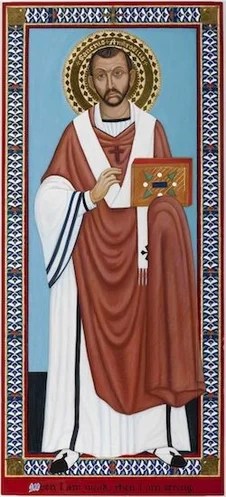
Ambrose of Milan (A.D. 388)
Sermon 22:30
“Come… receive Me in that flesh that fell in Adam. Receive Me not from Sara, but from Mary, an incorrupt virgin, a virgin by grace, entirely free from every stain of sin… since she alone obtained
a grace that none other can claim: to be filled with the very Author of grace.”
In this rich and contemplative homily, Ambrose elaborates on the profound significance of Christ’s relationship with His mother, Mary. He presents the invitation from Christ to receive Him in the very flesh that fell in Adam, underscoring the essential truth that we must embrace His divinity through our common humanity. This invitation serves as a reminder that Christ came into the world precisely to redeem our fallen nature and elevate us to a more sublime existence—a transformation that calls us to partake in His divine grace.
Ambrose emphasizes that our Lord’s call to receive Him is particularly rooted in His incarnation through Mary, who is described as an incorrupt virgin, untouched by sin in any form. By highlighting her purity, Christ illustrates the profound importance of holiness in our lives and the necessity of being free from sin in order to fully accept Him into our hearts and souls. The magnitude of this call is not merely about physical reception; it extends into the spiritual realm, inviting us to reflect upon our own lives and the obstacles that sin presents in our journey toward Christ.
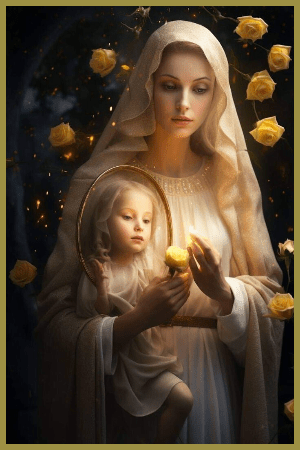
The text probes deeper into the essence of Mary’s virginity, noting that it encompasses more than just a physical state; it is also rooted in a profound spiritual dedication to God. Mary’s virginity was a gift of grace, indicating her complete commitment and total surrender to God’s will, allowing her to possess a heart that was pure and wholly oriented towards divine love.
In this light, Mary emerges as the singular human vessel chosen to bear the Son of God, capable of giving birth to Him without any trace of sin or imperfection. This unique role underscores the extraordinary grace bestowed upon her—Mary stands as the one full of grace, a title that highlights her unparalleled position in the history of salvation. She embodies the fullness of grace that no other being can claim, as she was filled with the very Author of grace Himself, God incarnate.
Ambrose’s reflections invite us to contemplate the immense significance of Mary’s role in the mystery of the incarnation and the overall redemption of humanity. As we ponder these truths, we are called not only to honor and venerate Mary but also to aspire to her example of purity and holiness in our own lives. Ultimately, this text encourages each of us to strive toward a deeper relationship with Christ, emulating Mary’s dedication to God as we seek to rid our lives of sin and embrace the path of grace.
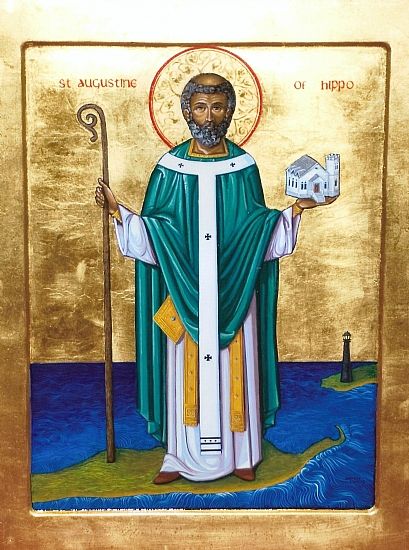
Augustine of Hippo (A.D. 415)
Nature and Grace,4 2
“We must except the Holy Virgin Mary, concerning whom I wish to raise no question when it touches the subject of sins, out of honor to the Lord; for from Him we know what abundance of grace for overcoming sin in every particular was conferred upon her who had the merit to conceive and bear Him who undoubtedly had no sin.”
Augustine of Hippo presents a thoughtful reflection on the complex relationship between sin and divine grace in his writings, particularly regarding the figure of the Holy Virgin Mary. In his discourse, Augustine makes a profound declaration: aside from Mary, he hesitates to question the sinlessness of any other individual. This assertion reflects the unparalleled veneration afforded to Mary within Christian theology and the wider faith community.
Augustine elaborates on his perspective by emphasizing the extraordinary divine grace that he believes was bestowed upon Mary. He argues that such grace empowered her to triumph over sin in every aspect of her life. This assertion positions Mary not only as the mother of Jesus Christ, who is affirmed to be sinless, but also as a figure whose own purity indicates her divine favor and her unique role in salvation history.
This passage is pivotal as it aligns with the doctrine of the Immaculate Conception, a belief held primarily within the Catholic Church. This doctrine posits that Mary was conceived without original sin, a conviction that has been a cornerstone of Christian theology for centuries. Augustine’s contemplations echo the reverence that many believers feel towards Mary, who is esteemed as a paragon of holiness and devotion.
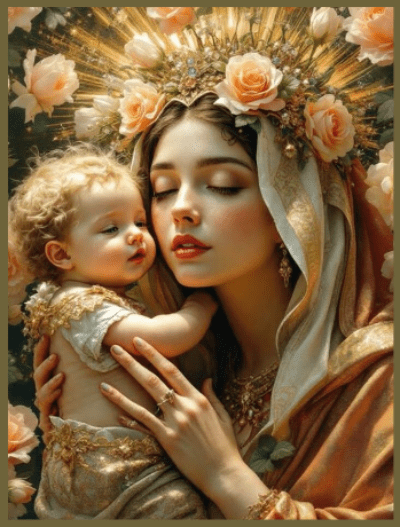
Moreover, Augustine’s reflections underscore the transformative power of divine grace, which he asserts enables individuals to overcome the inherent struggles of sin and embody virtuous living. Through Mary’s exemplary life, he illustrates how grace not only purifies but also elevates individuals to a state of integrity and moral strength.
Thus, Augustine’s words highlight Mary’s pivotal role in the Christian faith and devotion, presenting her as a significant model of righteousness. His insights deepen the understanding of the relationship between humanity and divine grace, illuminating the ongoing spiritual endeavor against sin and affirming the elevated status of Mary within the broader narrative of Christian salvation.
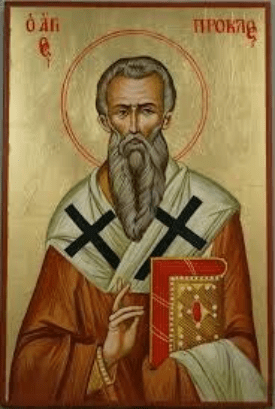
Proclus of Constantinople (ante A.D. 446)
Homily 1
“As he formed her without any stain of her own, so He proceeded from her, contracting no stain.”
Proclus of Constantinople (ante A.D. 446) offers a profound commentary in his Homily 1, which explores the intricacies of the Gospel of John. A particularly striking excerpt states, “As he formed her without any stain of her own, so He proceeded from her, contracting no stain.” This phrase encapsulates foundational Christian beliefs regarding the Virgin Mary and her pivotal role in the incarnation of Jesus Christ.
The first part of the quote, “He formed her without any stain of her own,” points to the developed doctrine of the Immaculate Conception. This doctrine posits that Mary was conceived without the stain of original sin—a condition believed to have been transmitted to all humanity following the transgression of Adam and Eve. The Catholic Church teaches that Mary’s preservation from original sin was a divine grace, equipping her to be a pure vessel for the Son of God. This belief underscores Mary’s exceptional sanctity and her unique readiness to bear the Messiah.
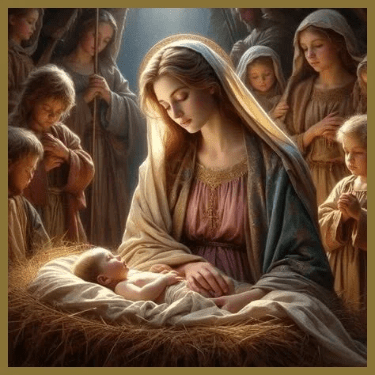
In the latter part of the quote, “so He proceeded from her contracting no stain,” Proclus addresses the doctrine of the Virgin Birth. This tenet asserts that Jesus, born of Mary, did not inherit any sinful nature from her. Instead, it emphasizes that Jesus entered the world pure and untouched by sin. This belief is critical to Christian theology, as it affirms the divine nature of Christ; His birth from Mary is viewed as a miraculous event that underscores His role as both fully divine and fully human.
Ultimately, Proclus’s reflection highlights the immaculate purity and sinlessness of both Mary and Jesus, illustrating their extraordinary roles within the Christian narrative. Their unique natures are fundamental to understanding the core beliefs about salvation and the divine incarnation in Christian theology. Through this lens, the homily not only clarifies theological concepts but also celebrates the holiness inherent in the figures of Mary and Jesus.
St. Theodotus of Ancyra (ante A.D. 446)
Homily VI:11
Innocent virgin, spotless, without defect, untouched, unstained, holy in body and in soul, like a lily flower sprung among thorns, unschooled in the wickedness of Eve, unclouded by womanly vanity… Even before the Nativity, she was consecrated to the Creator. . . Holy apprentice, guest in the Temple, disciple of the law, anointed by the Holy Spirit, clothed with divine grace as with a cloak, divinely wise in your mind; united to God in your heart. . . . Praiseworthy in your speech, even more praiseworthy in your action. . . . Good in the eyes of men, better in the sight of God.
Theodotus highlights Mary’s spiritual qualities, starting with her consecration to the Creator even before the Nativity – the birth of Jesus Christ. He further describes Mary as a “holy apprentice,” a “guest in the Temple,” and a “disciple of the law,” signifying her devotion to God and her understanding of religious teachings. Mary is also described as “anointed by the Holy Spirit” and “clothed with divine grace as with a cloak,” emphasizing her divine and supernatural nature. The author notes that Mary was “divinely wise in [her] mind” and “united to God in [her] heart,” indicating her spiritual wisdom and her connection to God.
The Bishop of Ancyra underscores Mary’s spiritual qualities, starting with her consecration to the Creator even before the Nativity – the birth of Jesus Christ. He further describes Mary as a “holy apprentice,” a “guest in the Temple,” and a “disciple of the law,” signifying her devotion to God and her understanding of religious teachings. Mary is also described as “anointed by the Holy Spirit” and “clothed with divine grace as with a cloak,” emphasizing her divine and supernatural nature. The author further notes that Mary was “divinely wise in your mind” and “united to God in your heart,” indicating her spiritual wisdom and her connection to God.
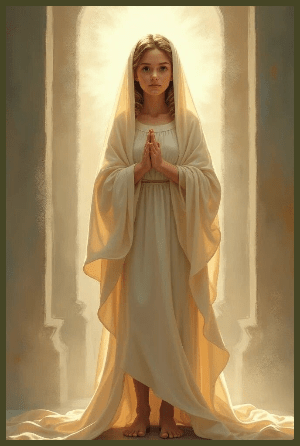
Theodotus concludes by praising Mary’s praiseworthy speech and actions, noting that she was “praiseworthy in your speech” and “even more praiseworthy in your action.” He further notes that Mary was “good in the eyes of men, better in the sight of God,” signifying her moral and spiritual excellence. Overall, the text portrays Mary as a model of Christian devotion and virtue, embodying purity, humility, and obedience to God. The text is a testament to Mary’s importance in Christian theology and her role as the mother of Jesus Christ.
Overall, the text emphasizes Mary’s spiritual qualities, highlighting her consecration to God before the Nativity and referring to her as a “holy apprentice,” “guest in the Temple,” and “disciple of the law.” It notes that she is “anointed by the Holy Spirit” and “clothed with divine grace,” reflecting her divine nature. Mary is depicted as “divinely wise” and “united to God,” highlighting her spiritual wisdom and her connection to Him. Theodotus concludes by praising her speech and actions, stating she is “praiseworthy” and morally excellent, positioning her as a model of Christian devotion, purity, humility, and obedience. The text underscores Mary’s significant role in Christian theology as the mother of Jesus Christ.
Theoteknos of Livias (ante A.D. 650)
Panegyric for the feast of the Assumption, 5:6
“She is born like the cherubim, she who is of a pure, immaculate clay.”
Theoteknos of Livias, a bishop active before A.D. 650, composed a notable panegyric for the feast of the Assumption, in which he articulates profound theological views regarding the purity and sanctity of Mary, the mother of Jesus Christ. In this work, he states, “She is born like the cherubim, she who is of a pure, immaculate clay,” which encapsulates his belief in the exceptional nature of Mary’s birth.
Bishop Theoteknos posits that Mary was born without sin, paralleling the creation of the first man, Adam, who was also conceived in a state of innocence. This comparison underscores a critical theological perspective that Mary’s origin and existence were marked by divine grace from the very beginning. In other passages of his panegyric, he employs descriptions such as “holy and all-fair,” “pure and stainless,” and emphasizes that her birth was not merely significant but “pure and immaculate.” The term “clay” metaphorically signifies her human origin and the divine formation that occurred within her womb before her birth, underscoring the sacredness of her being.
The phrase “pure and immaculate clay” succinctly conveys the dogma that Mary was conceived and born free from the stain of original sin, aligning with the Catholic Church’s de fide doctrine known as the Immaculate Conception. This doctrine asserts that from the moment of her conception, Mary was preserved from sin by God’s grace, allowing her to be a fitting vessel for the incarnation of Christ.
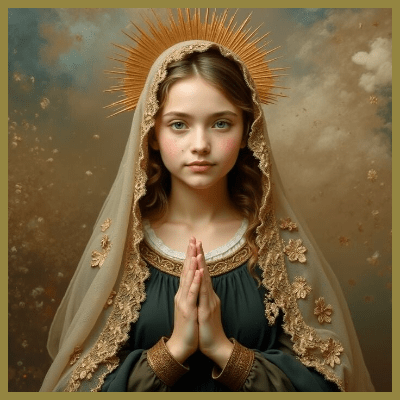
Furthermore, the specific reference to the cherubim carries substantial theological weight. In Jewish traditions, cherubim represent the highest order of angels, known for their purity and closeness to the divine. By likening Mary to the cherubim, Theoteknos accentuates her extraordinary holiness and divine selection for a pivotal role in salvation history – that of divine maternity, as she was chosen to bear the Son of God.
Theoteknos’s articulation of Mary’s sinlessness marks a significant development in the theological reflection on her character and contributions within the Catholic faith. His insights reflect the growing veneration of the Virgin Mary during the early centuries of Christianity, highlighting her essential role in the salvation narrative. This understanding of Mary’s purity and immaculate birth not only enriches Christian theology but also reinforces the importance of Marian devotion, which became increasingly prevalent in the first millennium of the Church. Through his writings, Theoteknos lays the groundwork for future theological discourse on Mary’s role and significance in Christianity.
Andrew of Crete (A.D. 733)
Sermon I, On the Birth of Mary
“Today humanity, in all the radiance of her immaculate nobility, receives its ancient beauty. The shame of sin had darkened the splendor and attraction of human nature. Still, when the Mother of the Fair One par excellence is born, this nature regains in her person its ancient privileges and is fashioned according to a perfect model truly worthy of God…. The reform of our nature begins today, and the aged world, subjected to a wholly divine transformation, receives the first fruits of the second creation.”
Andrew of Crete, in his Sermon I, On the Birth of Mary, offers a deep reflection on the significance of Mary’s birth, viewing it as a pivotal moment in human history. As an Eastern Catholic bishop in the 8th century, Andrew held that Mary’s arrival into the world heralds a new era of hope and transformation for all of humankind.
He refers to Mary as the “Mother of the Fair One,” a term that emphasizes her unique role as the mother of Jesus Christ, the embodiment of divine beauty and grace. Andrew passionately believes that the birth of Mary marks a critical shift in the cosmic order, signifying the restoration of human nature marred by sin. He asserts that human beings were once endowed with an ancient beauty, a reflection of God’s perfect creation, which was tragically overshadowed by the shame and degradation brought about by sin. This deviation from the original state left humanity diminished and marked by suffering.
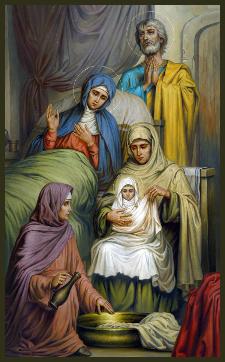
However, the birth of Mary represents a divine intervention that restores this lost beauty. Andrew eloquently describes how Mary is fashioned after the ideal model—a perfect archetype truly worthy of God. In his theological perspective, Mary’s entrance into the world symbolizes a definitive moment in the reformation of human nature. He posits that with her birth, the world is gifted with the first fruits of a second creation, a transformation that reinvigorates the divine essence within humanity.
According to Andrew, this new creation ushers in an age of renewal where the power of God actively works to reform and elevate the human condition. Through Mary, the aged world is revitalized, and the signs of divine grace begin to manifest, leading to a profound metamorphosis in the lives of individuals and the broader community. Thus, for Andrew of Crete, the celebration of Mary’s birth is not merely a commemorative act; it is a joyous acknowledgment of God’s transformative power, heralding the beginning of a new journey to restore human dignity and beauty to their rightful place, aligned with the divine vision.
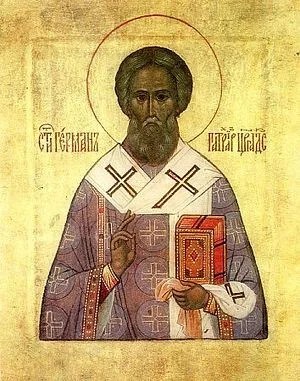
Germanus of Constantinople (ante A.D. 733)
Marracci in S. Germani Mariali
The quote by Germanus, the Bishop of Constantinople, sheds light on the esteemed position of the Virgin Mary within the Christian faith, particularly in Catholicism. Germanus states that she is “truly elect and superior to all,” which signifies that she is not just any figure but is uniquely chosen by God for a specific and extraordinary purpose. This election is pivotal, as it asserts that Mary’s divine selection is not arbitrary but rooted in her exemplary character and virtues.
What sets the Virgin Mary apart from all others, according to Germanus, is not the presence of grand or monumental external attributes, but the profound greatness and purity of her inner self. He emphasizes that her superiority stems from sublime and divine virtues—the qualities that reflect her holiness, such as compassion, humility, and unwavering faith. In this context, Germanus portrays her not merely as a historical figure but as a paragon of moral excellence that transcends physical appearances or societal status.
Another crucial aspect mentioned by Germanus is the assertion that Mary has “no affinity with sin whatever.” This profound declaration underscores her complete purity and moral integrity; she is depicted as having led a life free of sin. This notion of her sinlessness holds immense significance in Catholic theology, which views it as a direct manifestation of God’s grace at work in her life. It posits that God infused Mary with the ability to respond to His call with perfect obedience, thereby enabling her to fulfill her role as the Mother of God beyond human capacity.
The quote, therefore, encapsulates the reverence and veneration associated with the Virgin Mary in Christian thought. It serves to highlight her unique role not only as the Mother of Jesus Christ but also as a lasting symbol of virtue and holiness. For many Christians, Mary serves as an ideal model to emulate—someone whose life of obedience and purity illuminates the path to a deeper relationship with God. Germanus’s reflections thus contribute significantly to understanding and appreciating Mary’s identity and her revered status within the Catholic Church.
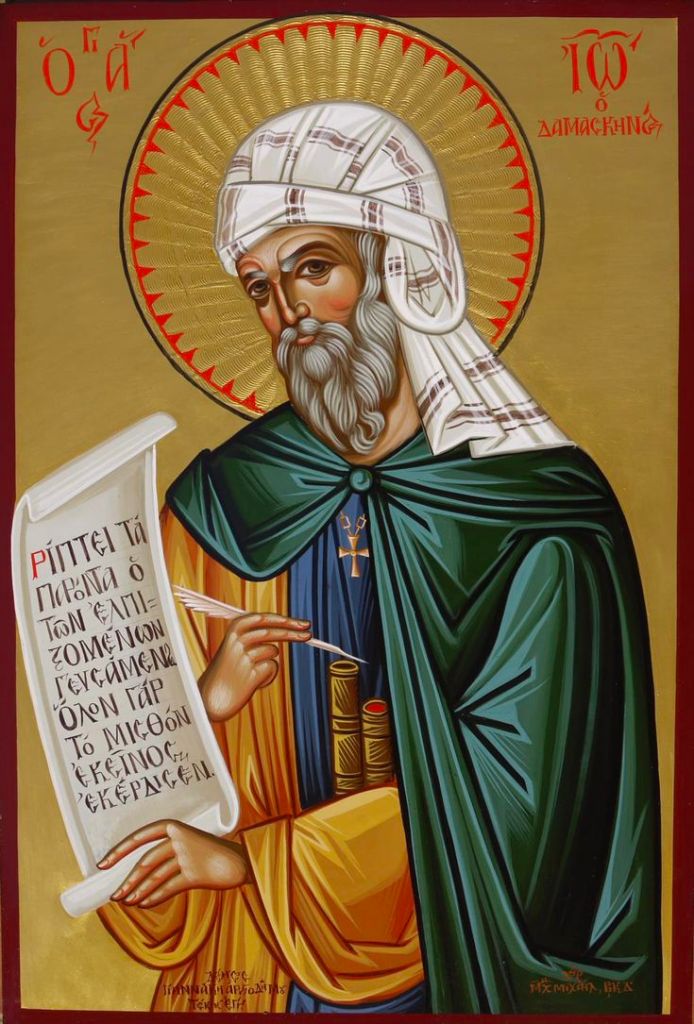
John of Damascus (ante A.D. 749)
On the Nativity of Mary
“O most blessed loins of Joachim from which came forth a spotless seed!
O glorious womb of Anne in which a most holy offspring grew.”
The quote, therefore, encapsulates the reverence and veneration associated with the Virgin Mary in Christian thought. It serves to highlight her unique role not only as the Mother of Jesus Christ but also as a lasting symbol of virtue and holiness. For many Christians, Mary serves as an ideal model to emulate—someone whose life of obedience and purity illuminates the path to a deeper relationship with God. Germanus’s reflections thus contribute significantly to understanding and appreciating Mary’s identity and her revered status within the Catholic Church.
This poignant text reflects on the miraculous birth of Mary, the revered mother of Jesus Christ. In these words, John of Damascus articulates his deep admiration and profound reverence for Mary’s parents, Joachim and Anne. He vividly praises these holy figures for their pivotal role in the divine plan that led to the birth of Mary, the one who would be chosen as the Mother of God.
Joachim’s “blessed loins” symbolize not just a biological function but a sacred vocation, underscoring that God endowed him with a special grace to father a child destined for greatness. Similarly, the “glorious womb” of Anne represents the sanctity of her motherhood, a vessel carefully chosen by divine providence to nurture the pure and holy child. As Anne carried the most holy fetus, it grew and developed within her, signifying an incredible union of the divine and human and highlighting the mystery and reverence surrounding this extraordinary pregnancy.
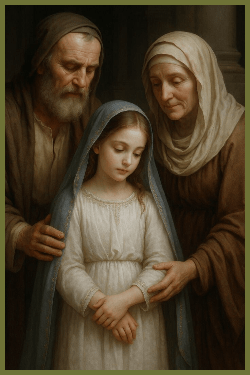
John of Damascus acknowledges the sanctity of these organs, viewing them as instruments of divine will. Through their blessed lineage, Joachim and Anne were divinely selected to bring forth Mary, who would be the instrument through which Jesus Christ, the Savior, would enter the world. The references to Joachim’s reproductive organs and Anne’s uterus not only underscore their biological roles but also elevate them to a spiritual plane, signifying the miraculous nature of Mary’s origin.
This text serves as a beautiful expression of gratitude and reverence for Mary’s parents, acknowledging their essential contribution to the Christian faith. Their obedience and faith highlight the importance of Mary’s birth as a critical event within Christian theology, paving the way for the birth of Jesus, who is viewed as the cornerstone of Christianity. In essence, John of Damascus encapsulates the sanctity of Mary’s lineage, honoring the holy couple whose lives were intertwined with the divine narrative of salvation.
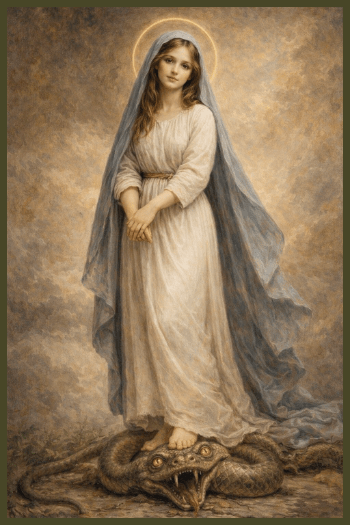
I will put enmities between thee and the woman,
and thy seed and her seed:
she shall crush thy head,
and thou shalt lie in wait for her heel.
Genesis 3, 15 (DRB)
AVE MARIA
 Marian Catholic
Leave a comment