A garden enclosed is my sister, my spouse;
a spring dried up, a fountain sealed.
Song of Solomon 4, 12
Then the angel told her, “Do not be afraid, Mary, for you have found favor with God. Behold, you will conceive in your womb and bear a son, and you shall name him Jesus… But Mary asked the angel, “How can this be, since I have no relations with a man?” And the angel said to her in reply, “The holy Spirit will come upon you, and the power of the Most High will overshadow you. Therefore, the child to be born will be called holy, the Son of God.”
Luke 1, 30-35
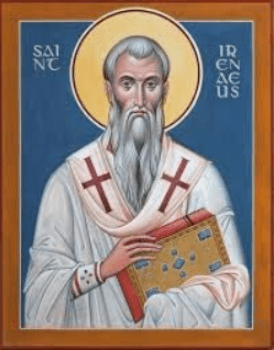
Irenaeus of Lyons (A.D. 190)
Proof of the Apostolic Preaching, 54
“And concerning His birth, the same prophet [Isaiah] says in another place,
‘Before she who was in labor gave birth, and before the birth-pains came on,
she was delivered of a male child’ (Isaiah 66:7). Thus, he indicated His unexpected
and extraordinary birth from the Virgin.”
In Irenaeus of Lyons’s treatise Proof of the Apostolic Preaching, he provides a significant interpretation of prophecy regarding the birth of Jesus. He refers to a poignant passage from the book of Isaiah, which states: “Before she who was in labor gave birth, and before the birth-pains came on, she was delivered of a male child” (Isaiah 66:7). This scriptural excerpt is understood by Irenaeus as a prophetic foreshadowing of the remarkable and miraculous birth of Jesus from the Virgin Mary.
Irenaeus emphasizes the extraordinary nature of this event, pointing to the divine intervention that characterized Jesus’ arrival into the world. The prophetic language suggests an unusual occurrence, specifically the absence of the typical birth pains that accompany labor. This absence is interpreted as indicative of the miraculous nature of Jesus’ birth, which stands apart from ordinary human experience.
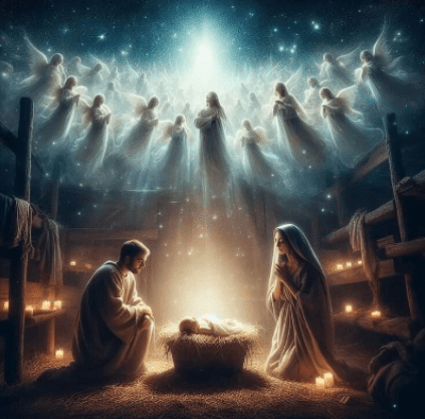
This interpretation has profound significance within the tradition of the Catholic Church, which has upheld the belief regarding Mary’s perpetual virginity since the earliest days of Christianity. According to this teaching, when Mary bore Jesus, her physical virginity remained wholly intact. The Church asserts that there was no rupture of the hymen, no physical discomfort or pain typically endured by a woman during childbirth, and critically, no expulsion of blood or other bodily fluids commonly associated with natural childbirth.
Instead, Mary’s experience is viewed through the lens of her spiritual integrity, which remained unblemished. The Catholic doctrine further teaches that the miraculous nature of Jesus’ birth did not involve the usual biological processes of labor, such as the detachment of the placenta or the presence of an umbilical cord. This belief asserts that Mary’s physical condition remained inviolate, thereby allowing for the untainted birth of Jesus without compromising the holiness and sanctity of her soul, which is believed to be exempt from original sin.
In summary, Irenaeus’ citation of Isaiah provides foundational evidence for the divine origin of Jesus’ birth, reinforcing the Church’s long-standing teaching that Mary’s motherhood was both miraculous and pure, free from the corrupting influences of natural childbirth, thereby protecting the purity of both mother and child.
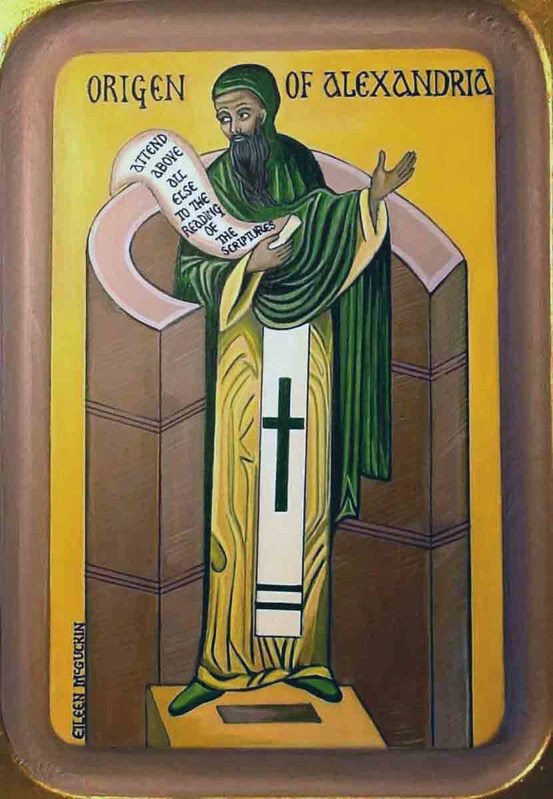
Origen (A.D. 232)
Commentary on John, I:6
“For if Mary, as those declare who with sound mind extol her, had no other son but Jesus, and yet
Jesus says to His mother, Woman, behold thy son,’ and not Behold you have this son also,’ then He
virtually said to her, Lo, this is Jesus, whom thou didst bear.’ Is it not the case that everyone who is
perfect lives himself no longer, but Christ lives in him; and if Christ lives in him, then it is said of
him to Mary, Behold thy son Christ.’”
Origen, in his Commentary on the Gospel of John, offers a nuanced perspective on the relationship between Mary, the mother of Jesus, and the concept of spiritual kinship among believers. According to Origen, those who reflect deeply on this matter recognize that Mary is understood to have had only one biological child—her son, Jesus. He posits that the references to Mary’s “children” in various contexts do not denote biological offspring but rather signify a spiritual lineage.
The text delves into the profound implications of Jesus’ words to His mother when He addressed her with, “Woman, behold thy son,” in a moment of deep significance at the foot of the cross. Origen interprets this statement not just as a directive to the disciple John but also as a symbolic acknowledgment that all believers are, in essence, her spiritual children. This interpretation suggests that there exists a unique and intimate relationship between Mary and believers, which mirrors that of a mother and her offspring. Consequently, if Mary serves as the spiritual mother of these believers, then Jesus must be understood as their spiritual brother, drawing support from Romans 8:29, which speaks of all believers being conformed to the image of Christ.
Furthermore, Origen elaborates on the idea that Christ dwells within each believer, highlighting the deep and abiding spiritual connection among Christ, the believer, and Mary. This triad forms a spiritual family, united in faith and divine grace. Origen’s interpretation also emphasizes the significant theological notion that believers are seen as the offspring of the New Adam (Christ) and the New Eve (Mary). Through the Sacrament of Baptism, they experience a rebirth from above and enter into this sacred relationship.
In his theological exploration, Origen argues for Mary’s purity and sinlessness. He contends that, as the second Eve, Mary could not have given birth to children who were conceived in original sin, as would be the case through typical marital relations. His views underscore the belief that Mary’s role transcends traditional motherhood, positioning her as a vital figure in the spiritual rebirth and salvation of all believers. Through this comprehensive interpretation, Origen reveals the intricate layers of connection that bind Jesus, Mary, and the faithful together within the framework of Christian doctrine.
John Chrysostom (A.D. 370)
Gospel of Matthew V:5
“And when he had taken her, he knew her not, till she had brought forth her first-born Son.’ He hath here used the word till,’ not that thou shouldest suspect that afterward, he did know her, but to inform thee that before the birth, the Virgin was wholly untouched by man. But why then, it may be said, hath he used the word, till’? Because it is usual in Scripture to do this often and to use this expression without reference to limited times. For so concerning the ark likewise, it is said, The raven returned not till the earth was dried up.’ And yet it did not return even after that time. And when discoursing also of God, the Scripture saith, From age until age Thou art,’ not as fixing limits in this case. And again, when it is preaching the Gospel beforehand and saying, In his days shall righteousness flourish, and abundance of peace, till the moon be taken away,’ it doth not set a limit to this fair part of creation. So then, likewise, it uses the word “till,” to make certain what was before the birth, but as to what follows, it leaves thee to make the inference.”
John Chrysostom, an influential Greek Father of the Church, offers a thorough examination of the term “till” in its biblical context, particularly as it appears in Matthew 1:25. He elucidates that the use of the word “till” serves to highlight the state of affairs existing prior to a specific event, without necessarily suggesting that a transformation occurs afterward. Chrysostom provides insights into various instances within Scripture where “till” is employed, demonstrating that it often functions without imposing a definitive limit on the events that follow. This linguistic nuance suggests that “till” may be interpreted more flexibly; it does not inherently indicate a change in circumstances following the designated timeframe.
In his Gospel, Matthew aims to communicate the profound truth of the Incarnation—an assertion that posed significant challenges for many in the Jewish community to accept. Importantly, Matthew does not need to imply that Joseph and Mary abstained from marital relations until after Jesus’ birth in order to effectively convey his message. Rather, his focus lies in clearly stating that they had no conjugal relations “before” or “up until” the birth of Jesus. This assertion powerfully emphasizes that Mary conceived Jesus through the miraculous and supernatural agency of the Holy Spirit. Such a statement inherently carries implications about the divine nature of Jesus’ conception and serves as a significant contrast to prevailing traditional Jewish beliefs about lineage and messiahship.
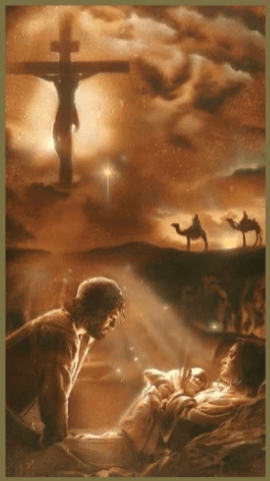
Furthermore, within the Gospel of Matthew, the Greek translation utilizing the term “heos” (ἕως) for “until” plays a critical role in elucidating the timeframe relevant to these events. This particular word denotes a period leading up to a significant occurrence and translates to meanings such as “up to the time of” or “hitherto,” yet it does not imply any definitive outcome or change that may follow. Matthew’s primary concern is to explore the dynamic between Mary and Joseph before the conception and birth of Jesus, a concern underscored by his reference to Isaiah 7:14 in verses 22-23 of his Gospel.
The overarching message is clear: Jesus is presented as the long-awaited Messiah anticipated by the Hebrew people, yet he fundamentally diverges from the expectations of a messiah stemming from a typical paternal human lineage. Matthew’s narrative emphasizes this divine origin and its implications for a redefined understanding of messiahship within Jewish tradition.
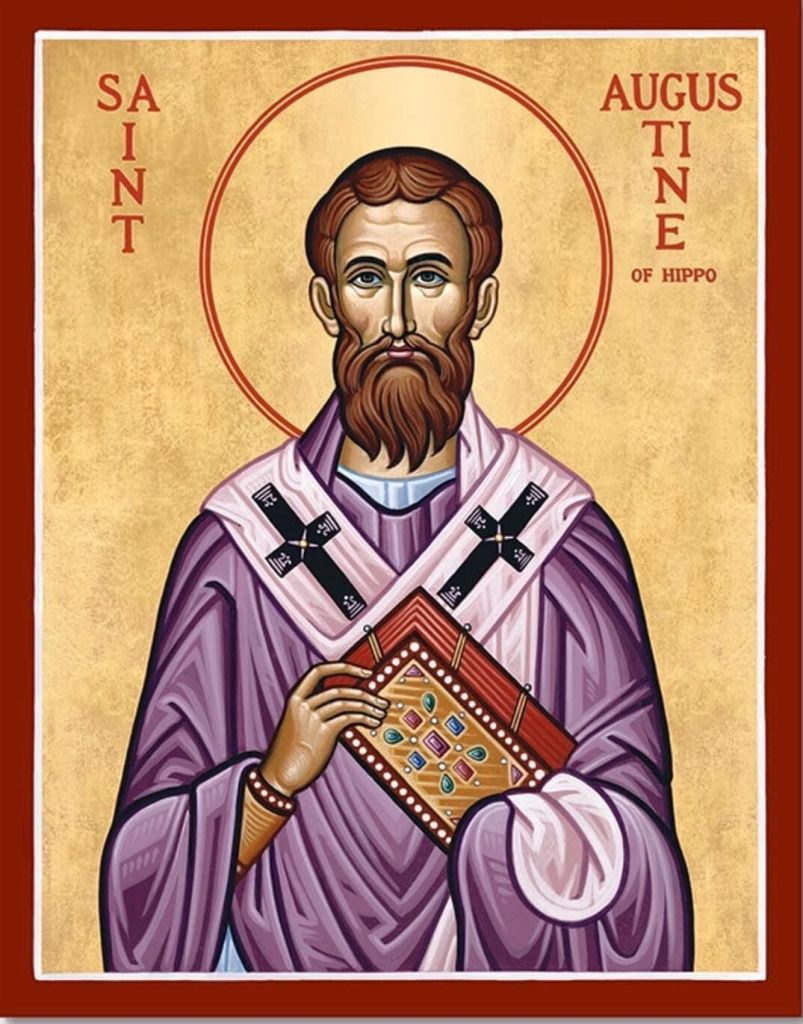
Augustine of Hippo (A.D. 401)
Of Holy Virginity, 4
“Her virginity also itself was on this account more pleasing and accepted, in that it was not that Christ, being conceived in her, rescued it beforehand from a husband who would violate it, Himself to preserve it; but, before He was conceived, chose it, already dedicated to God, as that from which to be born. Mary’s words show this in answer to the Angel announcing her conception; How,’ saith she, shall this be, seeing I know not a man?’ Which assuredly she would not say unless she had before vowed herself unto God as a virgin.”
In “Of Holy Virginity,” Augustine of Hippo delves into the profound and multifaceted significance of the Virgin Mary’s purity and her conscious commitment to virginity as an offering to God. He presents her choice as not made in isolation, but rather as a deliberate and sacred vow taken long before the miraculous conception of Christ. This underscores the remarkable nature of her devotion, positioning Mary as a model for others who aspire to a life of holy virginity.
Augustine emphasizes that Mary’s virginity is not merely a physical state, but a deep spiritual commitment that serves as a guiding light for those who seek to dedicate their lives to God. He highlights the importance of her decision, particularly in her reaction to the Angel Gabriel’s announcement of her impending conception. Her question, “How shall this be, seeing I know not a man?” reflects her prior dedication to God and her solemn vow to remain a virgin. Through this inquiry, Mary denotes an existing commitment to her purity, which was integral to her identity even before the angelic proclamation.
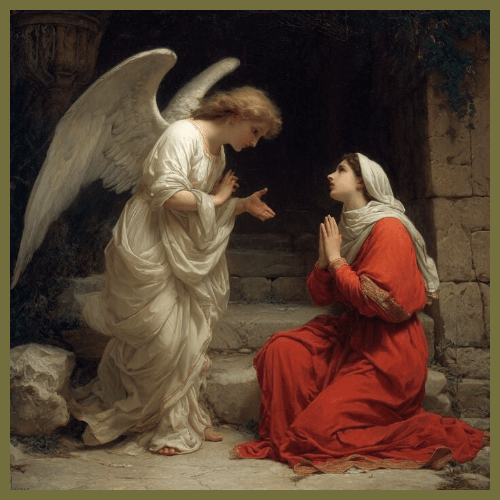
Furthermore, Augustine explores the theological implications of Christ’s birth from a virgin, framing it as a potent affirmation of the sanctity and value of virginity. He posits that this miraculous event serves as a profound testament to the holiness of Mary’s choice rather than imposing virginity as a mandatory condition for righteousness. In Augustinian thought, the Virgin Mary’s unique status transcends mere compliance with a requirement; it embodies the highest expression of love and fidelity to God, illustrating that holy virginity can lead to extraordinary acts of divine grace. Thus, Augustine portrays Mary not only as a symbol of purity but also as an inspirational figure for those who choose to follow a path of spiritual dedication and commitment to God.
Overall, the text discusses the significance of the Virgin Mary’s purity and her deliberate choice to remain a virgin as an offering to God prior to Christ’s conception. It highlights her virginity as a symbolic example for those pursuing a life of holy virginity and explores the theological implications of Christ’s virgin birth, emphasizing it as a celebration of virginity rather than a requirement. Augustine emphasizes that Mary’s commitment to God was evident in her response to the Angel, showcasing her vow of virginity even before the miraculous event of Christ’s conception.
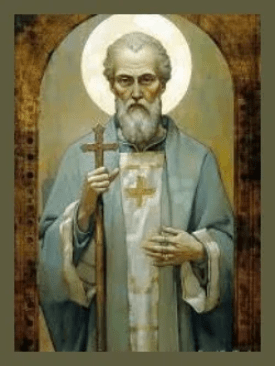
Peter Chrysologus (A.D. 432)
Sermon 117
“Where are they who think that the Virgin’s conception and giving birth to her child are to be likened to those of other women? This latter case is one of the earth, and the Virgin’s is one from heaven. One is a case of divine power, the other of human weakness. One case occurs in a body subject to passion; the other in the tranquillity of the divine Spirit and peace of the human body. The blood was still, and the flesh astonished; her members were put at rest, and her entire womb was quiescent during the visit of the Holy One until the Author of flesh could take on His garment of flesh and until He, who was not merely to restore the earth to man but also to give him heaven, could become a heavenly Man. The Virgin conceives, and she brings forth her child, and she remains a virgin.”
The text presents a theological reflection on the virgin birth of Mary and its significance, contrasting it with the natural conception and childbirth experienced by other women.
Peter Chrysologus emphasizes the distinction between the Virgin Mary’s conception and those of ordinary women, asserting that Mary’s experience is rooted in divine power rather than human limitations. This establishes a foundational theological premise: Mary’s motherhood is miraculous. The phrase “one from heaven” highlights the supernatural aspect of Mary’s conception, suggesting that it is a divine act rather than a result of human desire or passion. This asserts that Mary’s experience is unique and distinct from the common experiences of humanity.
The author describes Mary’s body during the conception as being tranquil and “quiescent,” implying that her physical state was serene and untroubled by the typical pains and struggles associated with childbirth. This description underscores the event’s miraculous nature, portraying it as serene and imbued with divine presence rather than chaos or struggle.
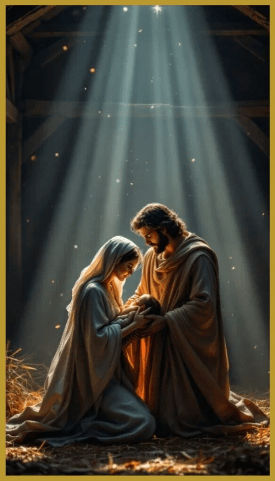
The “Holy One” refers to the Holy Spirit’s role in the conception of Jesus. This signifies that the act was guided by divine will and purpose, further distinguishing Mary’s experience from regular childbirth, which is characterized by human involvement and natural processes. Moreover, Chrysologus notes that the child born of Mary is here to restore earthly existence and offer humanity a connection to heaven. This indicates Jesus’ dual nature—fully divine and fully human—which is a core belief in Christian theology.
The final assertion that “the virgin conceives the Virgin brings forth her child, and she remains a virgin” reinforces the doctrine of Mary’s perpetual virginity, suggesting that despite giving birth, she retains her virginity, further emphasizing her unique position in Christian belief. Overall, the text exudes Mary’s role in the Christian faith, framing her as a pivotal figure in the divine narrative of salvation. It portrays her experience as a hymn to divine intervention, purity, and the miraculous nature of Christ’s incarnation.
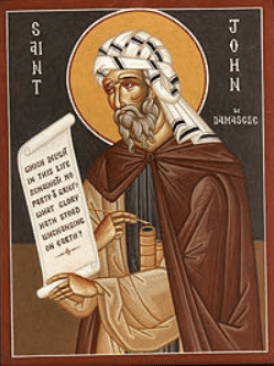
John of Damascus (A.D. 743)
The Orthodox Faith, 4:14
John of Damascus dives into the concept of the perpetual virginity of Mary, the mother of Jesus. He elucidates the belief that Mary remained a virgin throughout her life, including after giving birth to Jesus, as she did not engage in marital relations with a man until her passing.
He addresses the term “firstborn” in reference to Jesus, explaining that it does not necessarily imply the subsequent birth of other children. According to Jewish law or custom, primogeniture is the right of the legitimate, firstborn son (bekhor) to inherit his parents’ entire or principal estate, in preference to daughters, younger sons, stepsons, and illegitimate sons. Even the son of a deceased elder brother inherits before a surviving younger brother of his father by right of substitution of the deceased heir. This institution’s legal, social, and religious features were reflected in the norms and practices of ancient Hebrew society. Mosaic law granted the firstborn male a privileged status concerning inheritance rights and cultic regulations.
When addressing his father, a son might refer to his status as a firstborn son (Gen. 27:19, 32). The composition of Biblical genealogies illustrates that the status of the bekhor was a pervasive feature of Israelite social life. Many genealogies specify the status of the first-named son. Even in genealogies that do not specifically indicate the status of the first son listed, it was understood that he was the firstborn son. The Bible indicates that primogeniture carried certain duties and privileges in addition to the estate rights (Gen. 27; 48:13; Judg. 8:20; 1 Chron. 26:10). Even though the firstborn son would logically have to be the first son that was born, the one who “opens the womb” as the “first issue,” it doesn’t necessarily mean that his parents subsequently had other children, sons or daughters (My emphasis).
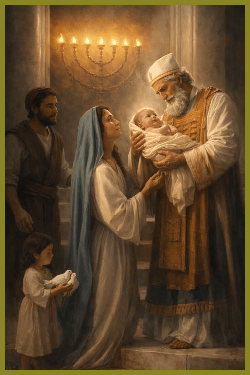
Returning to the text, the phrase “ever-virgin One” suggests that Mary maintained her virginity not just before but also after the birth of Jesus. The author argues that her virginity is integral to her identity and that she did not engage in marital relations, thus remaining a virgin until her death.
Furthermore, the Damascene interprets the word “till” to signify a time limit rather than the exclusion of time (of the virginity of Mary) thereafter, citing biblical references to support this interpretation. He refers to the phrase “and knew her not till she had brought forth her firstborn son.” The author argues that the term “firstborn” does not imply that Mary had more children afterward. The emphasis here is that being “firstborn” signifies the singularity of Jesus as the onlyborn in that context. The word “till” is analyzed to show that it denotes a time limit rather than an ongoing condition. He compares this to biblical phrases, such as Jesus stating, “I am with you always, even until the end of time,” suggesting that just because he will be with us until a certain point does not mean he will not be with us afterward. The reference to the Apostle’s statement about being “ever with the Lord” extends the idea of continuity beyond a single event (in this case, the resurrection). It reinforces that the relationship with the divine is ongoing, just as Mary’s virginity is seen as enduring.
Overall, the text seeks to clarify and defend the doctrine of Mary’s perpetual virginity while drawing on scriptural interpretation to support its claims. This reflects the broader theological discussions within Christianity regarding the nature of Mary and her role in salvation history.
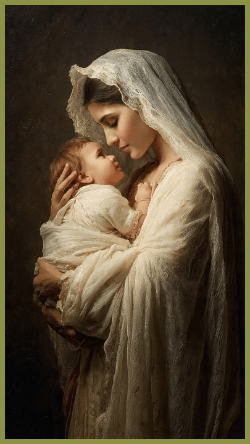
Then he brought me back to the outer gate of the sanctuary, which faces east; and it was shut.
And he said to me, “This gate shall remain shut; it shall not be opened, and no one shall enter by it;
for the Lord, the God of Israel, has entered by it; therefore, it shall remain shut.”
Ezekiel 44, 1-3
AVE MARIA
 Marian Catholic
Leave a comment